Accelerating Industrial Transformation Through Zambian IoT Software Engineering

Finding IoT Software Developers in Zambia
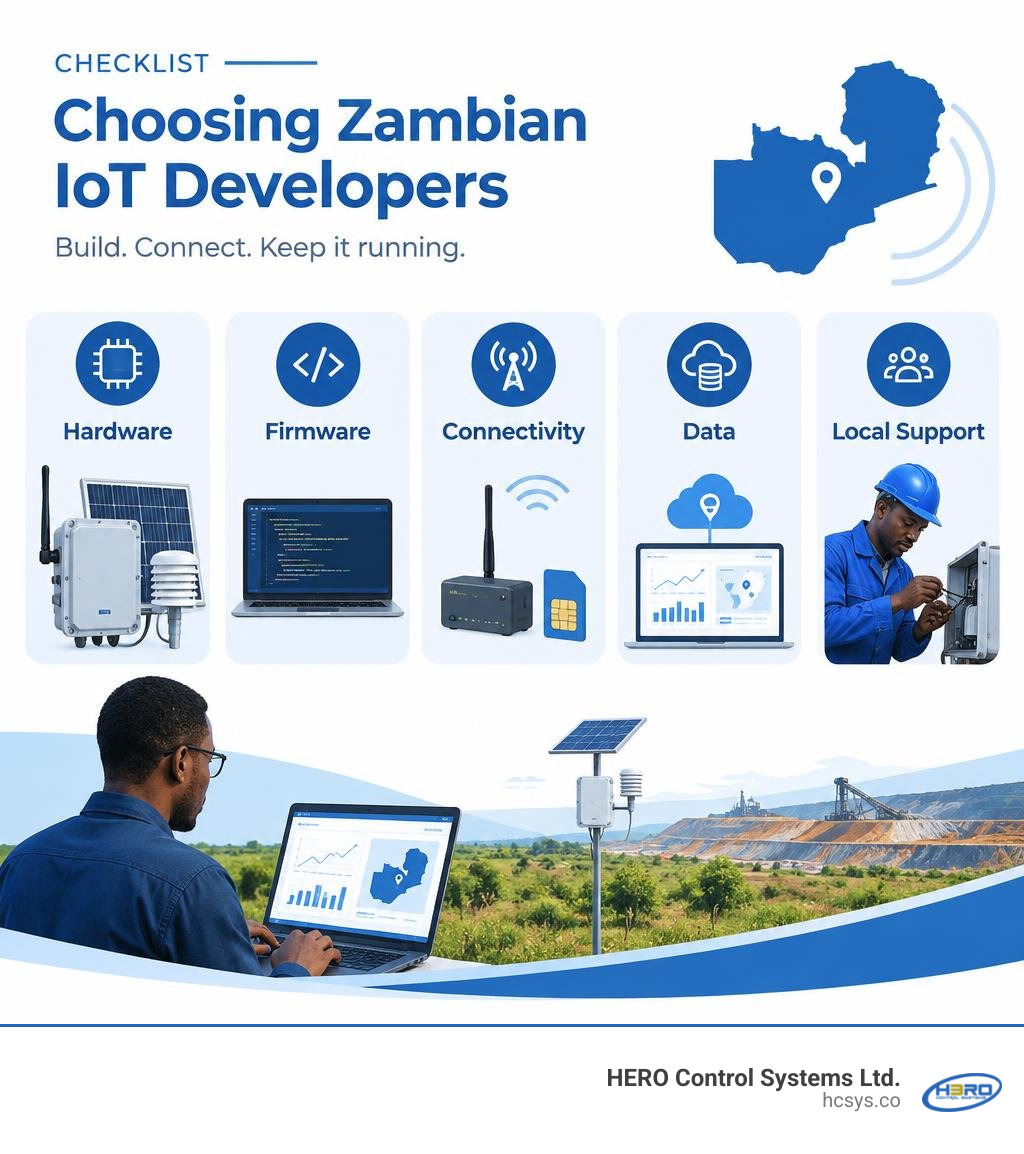
Need an IoT developer in Zambia? Look for a team that can build the device software, connect it to your existing equipment, and support it after installation. For a mine or utility, ask how the system will keep collecting data when power or mobile service fails. Also check who will repair the hardware locally. A dashboard is only useful if the sensors behind it keep working.
This guide covers the skills, design choices, and questions that matter when choosing a local partner. I’m Eng. Cephas Kalembo, founder and CTO of HERO Control Systems in Lusaka, with over a decade of experience in electronics engineering and business. My work in PCB design, embedded firmware, and IoT cloud platforms informs this guide to IoT software development in Zambia.
The article editor does not render LaTeX. Do not write LaTeX commands or math delimiters in article copy. Explain calculations in plain language, or use an ordinary-text formula when useful, such as watts = volts × amps. Write units as readable text, such as ft³/hour or gallons/kWh. When asked to remove formulas or confusing mathematical notation, replace them with prose; do not substitute different equations or hide the notation in code.
The Landscape of IoT Software Development in Zambia
Industrial digital transformation in Southern Africa cannot rely on off-the-shelf software stacks developed for continuous grid power and unlimited high-speed fiber. In Zambia, connected systems must endure intense seasonal weather, periodic load shedding, and variable cellular connectivity across expansive rural terrains. The growth of smart infrastructure across Lusaka, the Copperbelt, and agricultural regions has sparked a shift toward locally engineered embedded systems and cloud platforms that operate reliably within these physical conditions.
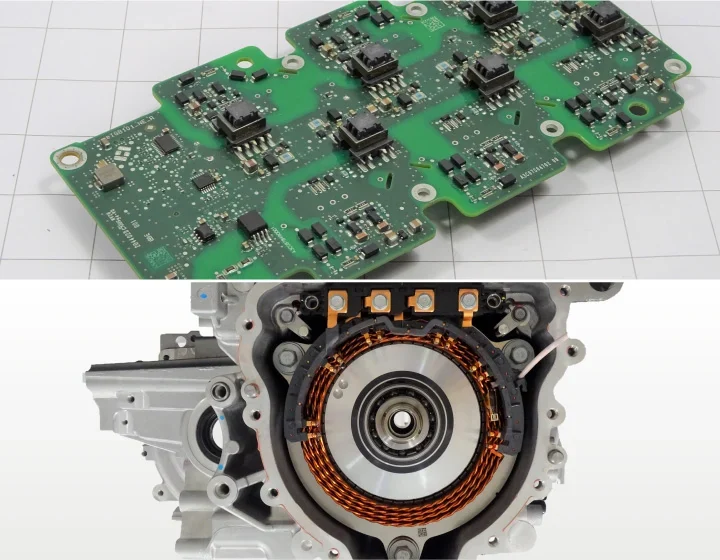
Deploying Internet of Things systems here requires regulatory compliance with the Zambia Information and Communications Technology Authority (ZICTA), alongside a practical understanding of how hardware and software communicate in demanding settings. Developing robust applications begins at the hardware level with custom PCB design solutions that protect sensitive microelectronics against voltage spikes and thermal stress before any code is flashed to memory.
| Architecture Factor | Cloud-Native Deployment | Edge-First Zambian Deployment |
|---|---|---|
| Primary Processing Location | Centralized Data Center (AWS / Azure) | On-Device Microcontroller / Local Gateway |
| Connectivity Dependency | Continuous 4G / 5G or Fiber required | Asynchronous GSM, LoRaWAN, or Offline Buffer |
| Power Fault Resilience | Data lost if connection drops during outage | Non-volatile flash storage preserves logs locally |
| Latency for Control Loops | 200 ms to 2000 ms depending on routing | Under 10 ms for critical automated shutdowns |
| Bandwidth Consumption | High (streams continuous raw metrics) | Ultra-Low (transmits parsed, batched events) |
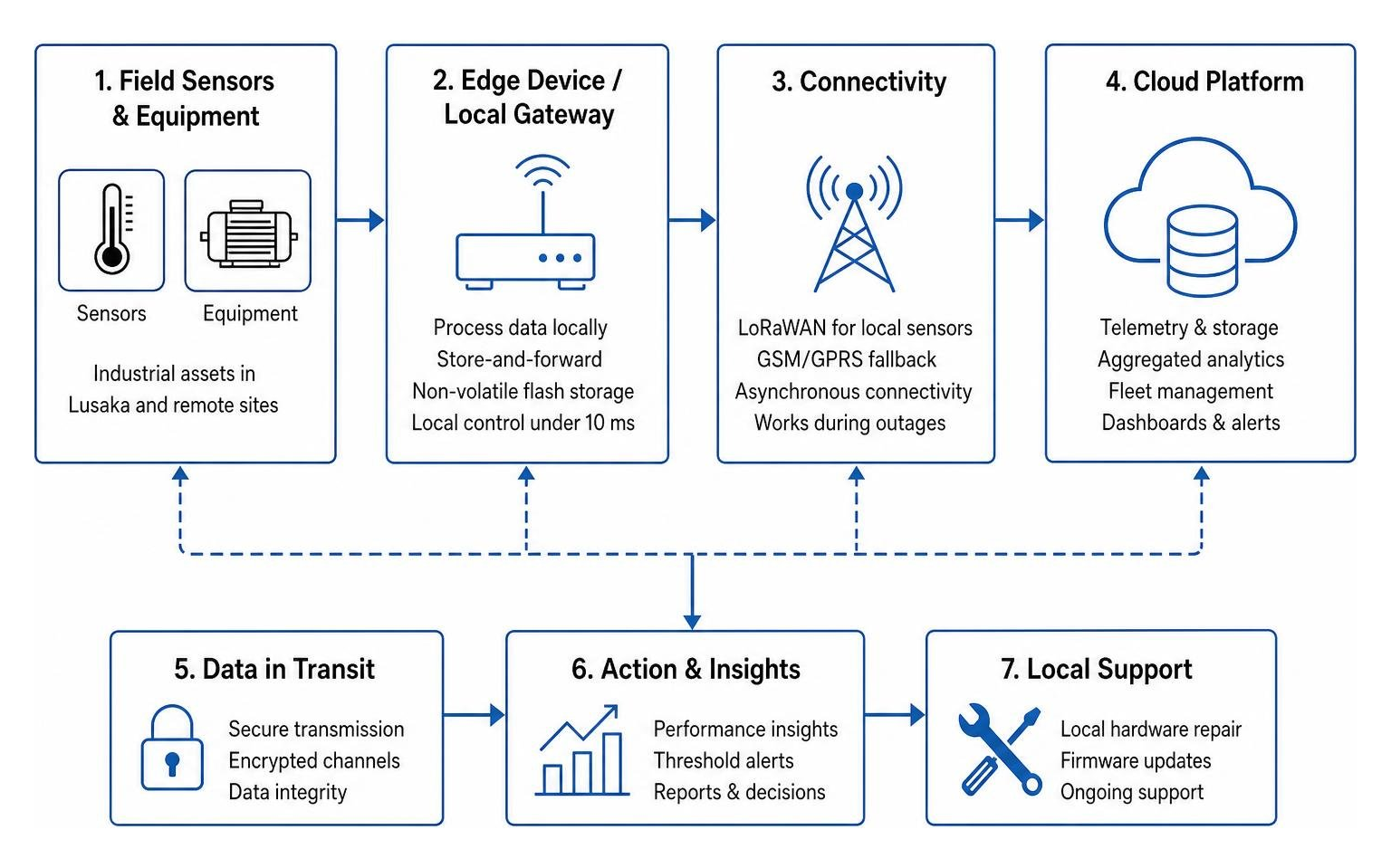
By prioritizing edge computing architectures, engineering teams ensure that field assets perform autonomous logic and safety-critical control locally, using cloud connections primarily for telemetry reporting, aggregated business intelligence, and fleet management.
Engineering for Local Power and Connectivity Realities
When power interruptions occur or regional cell towers face congestion, a standard cloud-dependent sensor node frequently crashes, drops data packets, or drains its battery attempting to reconnect. To build resilience into our IoT systems, we implement store-and-forward mechanisms across non-volatile flash memory on every deployed controller.
Telecommunication gateways combine long-range, low-power radio protocols such as LoRaWAN for dense localized sensor clusters with industrial GSM/GPRS fallback channels. Paired with reliable IT network support, these setups give factories, remote pump stations, and field sensors dependable connectivity even during extended infrastructure outages.
Full-Stack Architecture for Zambian Environments
Building a functional IoT system requires close integration across four distinct layers: physical hardware, embedded firmware, communication protocols, and cloud software.
- Embedded Firmware: Developed in bare-metal C or C++ with lightweight real-time operating systems (RTOS), incorporating watchdog timers to recover automatically from transient brownouts.
- Transport Protocols: Lightweight publish-subscribe messaging using MQTT over TLS or CoAP, minimizing packet overhead over bandwidth-limited 2G and 3G cellular connections.
- Application Programming Interfaces (APIs): Secure RESTful and GraphQL endpoints that bridge field sensor telemetry with existing Enterprise Resource Planning (ERP) and SCADA systems.
- User Interfaces: Web dashboards and responsive mobile applications designed with low-bandwidth offline caching, enabling field operators to view system states without high-speed data access.
For teams addressing legacy machine integration and edge communication hurdles, our technical breakdowns provide answers to firmware and IoT deployment challenges to keep critical hardware operational.
Industry-Specific Applications Across the Zambian Economy
Economic sectors across Zambia are replacing manual data collection and periodic site inspections with automated remote telemetry. The demand for localized software engineering spans diverse industries, from securing national grain reserves to monitoring heavy mining machinery operating deep underground.
Agricultural Monitoring and Post-Harvest Loss Prevention
Agriculture forms the backbone of employment in Zambia, yet post-harvest losses remain a persistent challenge due to undetected temperature fluctuations, moisture ingress, and pest infestations within storage facilities. Addressing this issue requires modern warehousing technology that monitors environmental trends in real time.
For instance, academic research on remote sensor networks for grain storage demonstrates how distributed sensor networks tracking humidity, temperature, and motion can protect strategic grain reserves for institutions like the Food Reserve Agency. At the farm level, automated agritech systems connect soil moisture sensors to solar-powered variable-rate irrigation valves, conserving water while optimizing crop yields through predictive environmental models.
Mining Engine Diagnostics and Heavy Industrial Telemetry
In the Copperbelt and Northwestern provinces, mining vehicles and heavy processing plants face demanding operating conditions involving heavy vibration, abrasive dust, and continuous mechanical load. Unplanned equipment breakdowns cost operations thousands of dollars per hour.
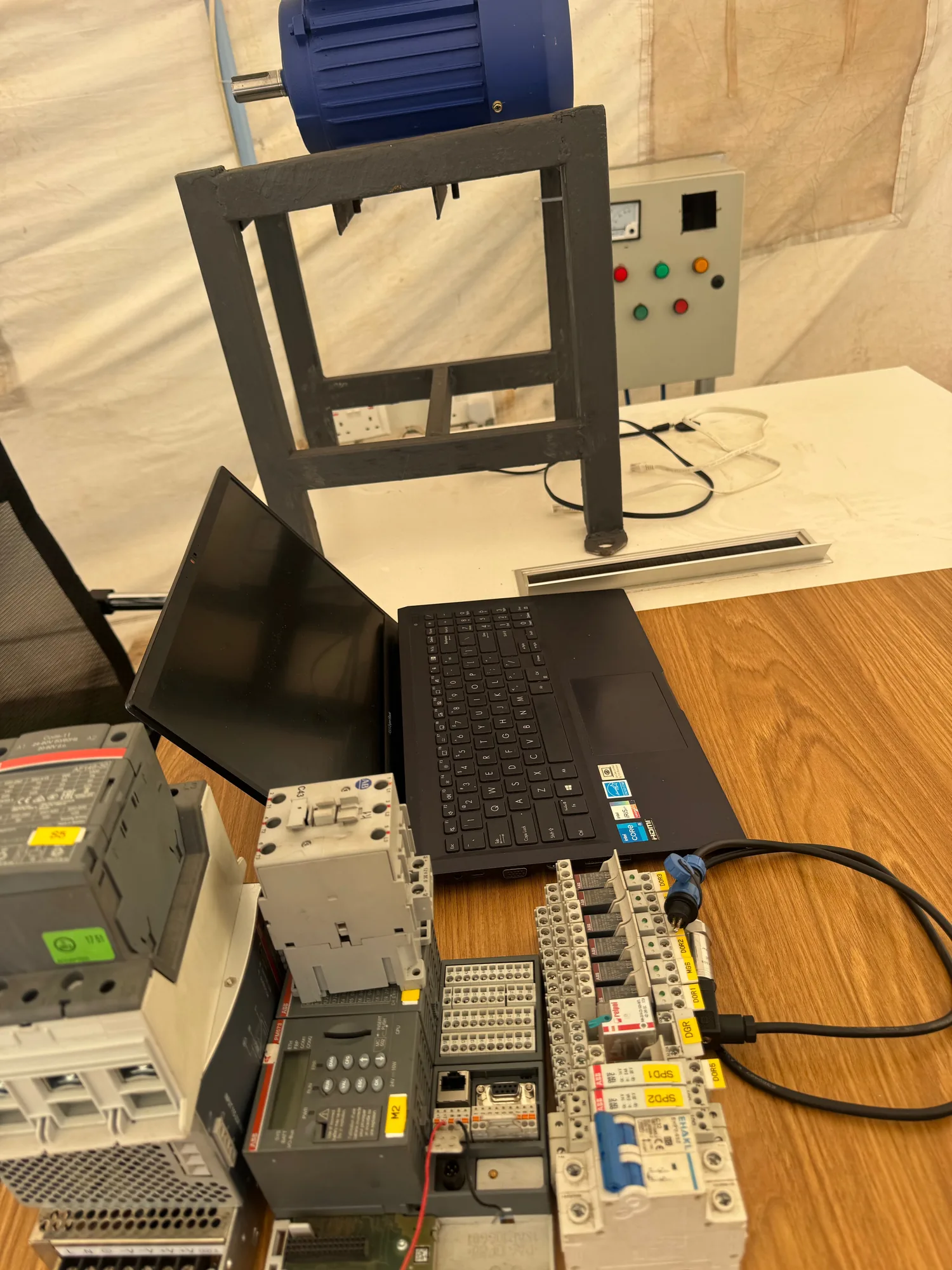
Integrating engine Electronic Control Unit (ECU) diagnostics over CAN bus interfaces with real-time exhaust and particulate filtration telemetry enables proactive maintenance workflows. By combining industrial edge gateways with ruggedized sensors, systems automatically capture fault codes, analyze engine stress markers, and alert maintenance personnel before catastrophic failures occur. Aligning these data pipelines with industrial PLC programming ensures that critical conveyor drives, ventilation fans, and slurry pumps shut down safely when operating parameters exceed safe thresholds.
Industrial Use Cases for IoT Software Development Zambia
Municipal water utilities and commercial manufacturers require direct visibility into distributed physical infrastructure. In Lusaka, municipal water pumping stations frequently encounter voltage fluctuations that can damage pump motors and disrupt community supply networks.
We tackle these municipal and industrial challenges by designing dedicated control hardware and telemetry software. For example, at Lusaka Water Supply & Sanitation Co., we engineered and installed a replacement contactor control card in February 2026 that has achieved zero failures to date. Through continuous applied electronics research and development, we build custom hardware and software platforms that connect legacy electro-mechanical switchgear directly to modern cloud dashboards. These systems give utility operators real-time alerts on pump pressure, contactor health, and energy consumption across distributed facilities.
Overcoming Technical Barriers in Zambian IoT Deployments
Deploying connected devices across vast territories involves technical challenges that cannot be resolved using standard software alone. Developers must address data sovereignty, protect endpoints from physical tampering, and bridge legacy operational technologies with modern cloud architectures.
| Protocol | Typical Range | Data Throughput | Power Consumption | Primary Zambian Use Case |
|---|---|---|---|---|
| LoRaWAN | 5 km to 15 km | 0.3 kbps – 50 kbps | Extremely Low (Multi-year battery) | Agricultural soil arrays, grain silo clusters |
| GSM / GPRS (2G/4G) | Tower dependent | 40 kbps – 100+ Mbps | Moderate to High | Remote utility pumps, fleet vehicle tracking |
| BLE (Bluetooth) | Up to 100 m | 1 Mbps – 2 Mbps | Very Low | In-depot inventory tracking, local configuration |
| Industrial Wi-Fi | Up to 250 m | 11 Mbps – 1 Gbps+ | High (Continuous mains required) | Factory floor SCADA bridges, workshop telemetry |
Embedded Hardware Integration and Rapid Prototyping
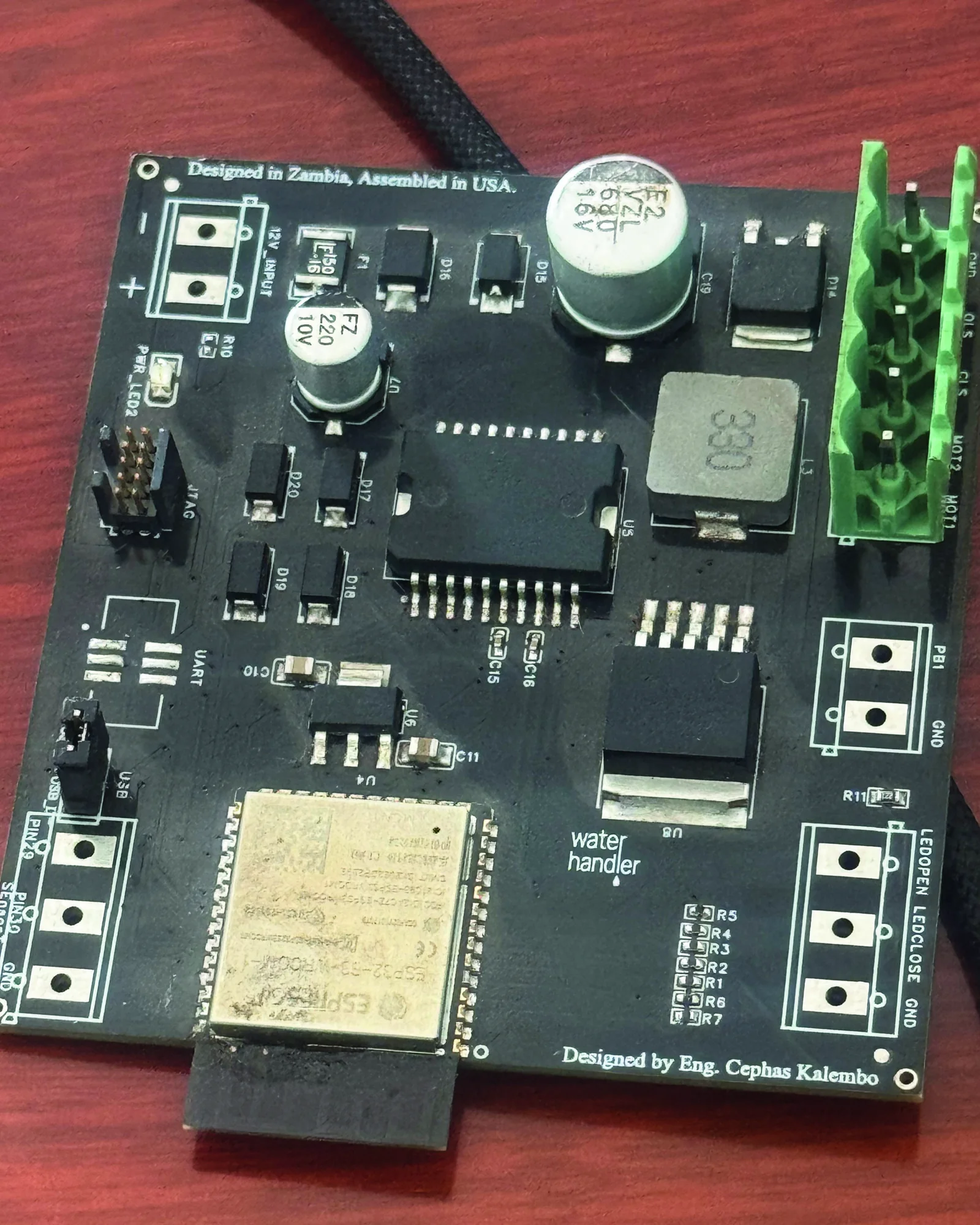
Software quality depends directly on the reliability of the underlying physical hardware. Effective IoT engineering teams avoid fragile ribbon cables and breadboard prototypes in production environments. Instead, they use ruggedized microcontrollers, such as ESP32 and ARM Cortex-M silicon, mounted on custom printed circuit boards with transient voltage suppression and industrial optoisolation.
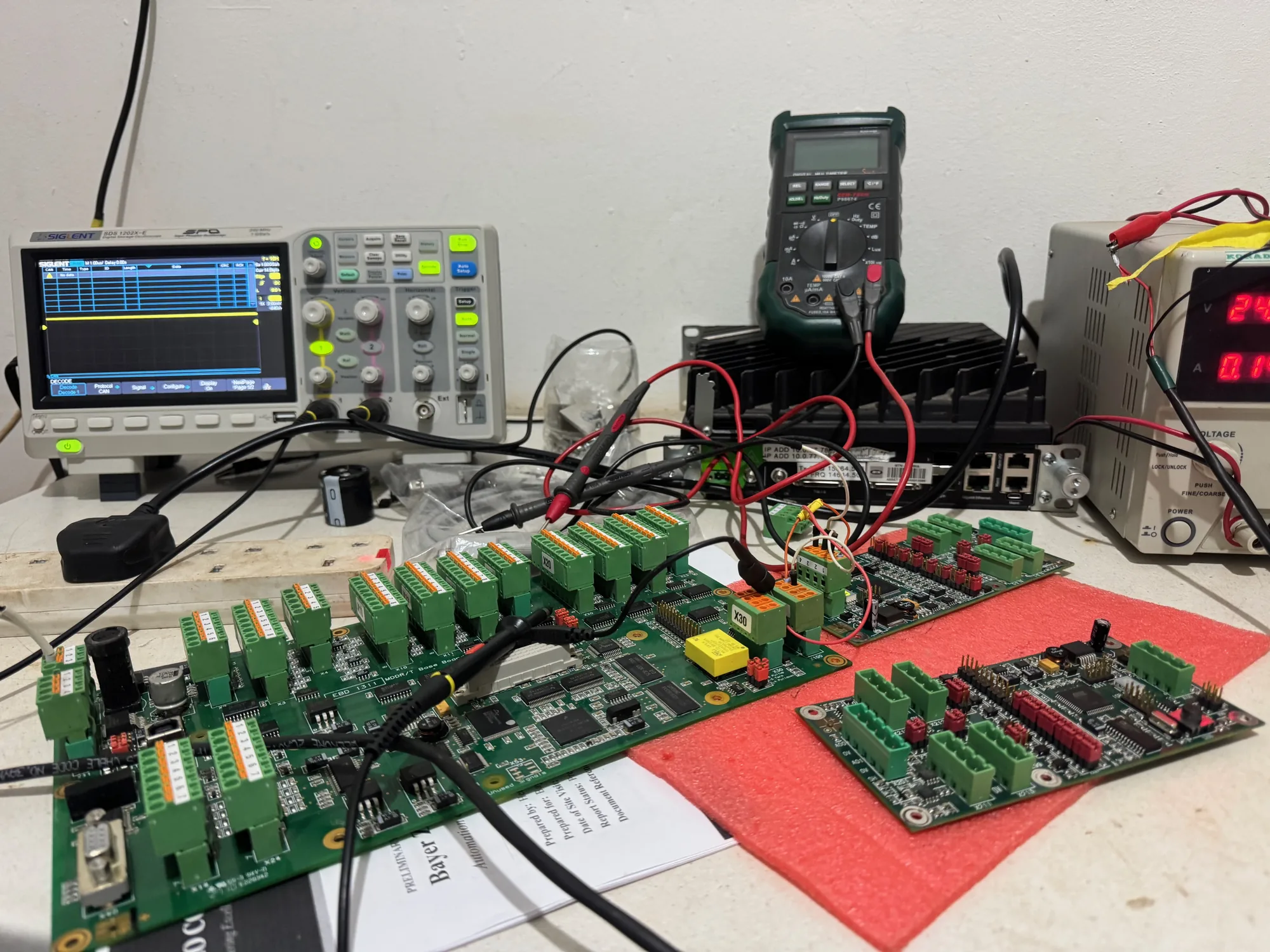
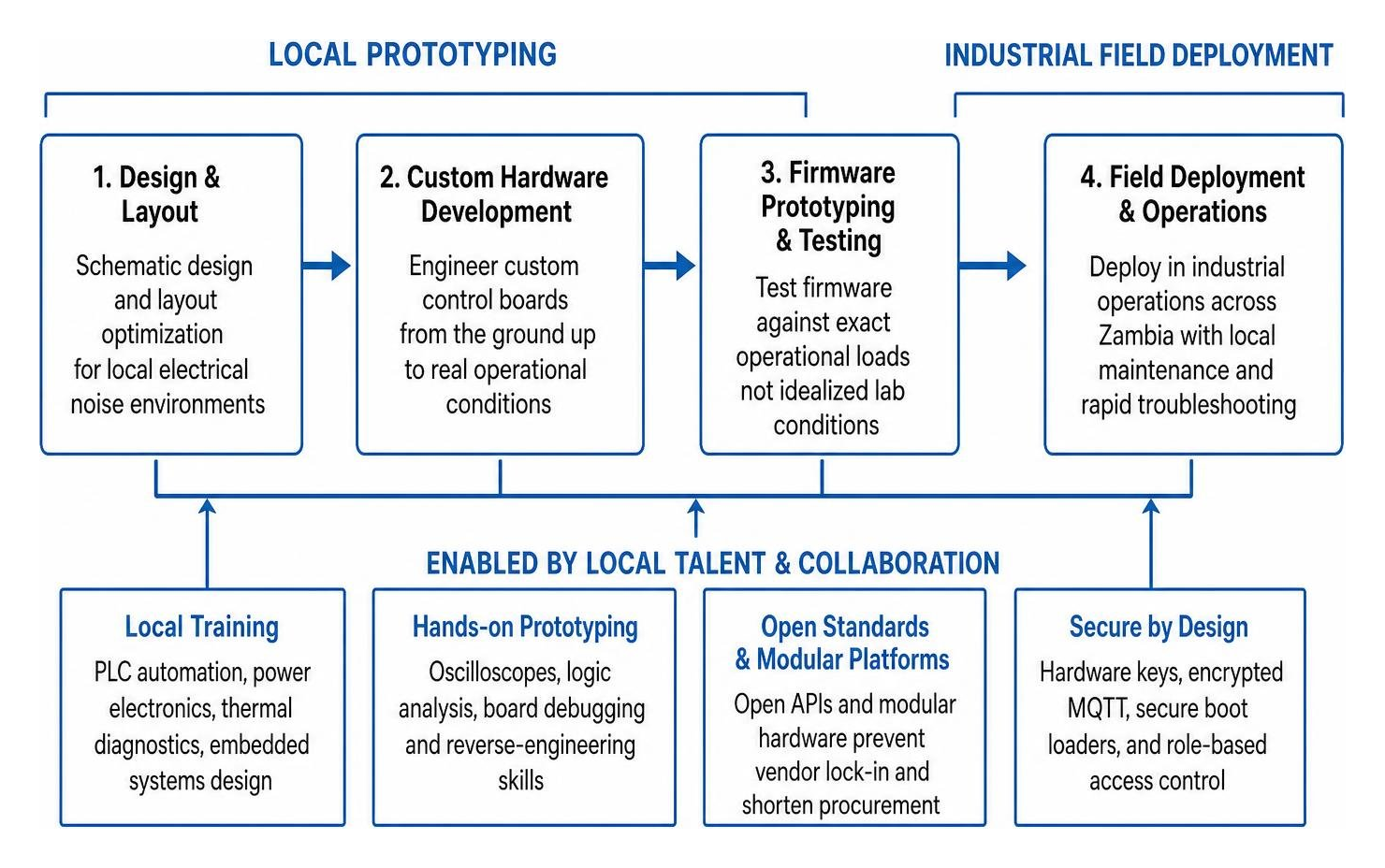
Prototyping starts with schematic design and layout optimization tailored to local electrical noise environments. Through our custom electronics design services, we engineer custom control boards from the ground up, allowing software developers to test firmware against exact operational loads rather than idealized lab conditions.
Building Sustainable Local Engineering Talent
A major bottleneck to technology adoption in Southern Africa has been the scarcity of practical embedded systems training. When industrial enterprises rely entirely on overseas vendors for software adjustments or board repairs, simple hardware failures can stall operations for months while waiting for international shipments.
Building a resilient engineering ecosystem requires structured local training pipelines. To date, we have trained over 300 engineers and technicians across Zambia in PLC automation, power electronics, thermal diagnostics, and embedded systems design. We also introduced the Zabble STEM training kit to 57 Zambian schools to inspire the next generation of engineers. For working professionals, our professional PLC training and hands-on electronics engineering training provide the technical foundations needed to maintain complex industrial systems. These skills match the practical qualifications required for agritech systems developers and industrial automation engineers across modern African enterprises.
Future Outlook and Strategic Opportunities for Zambian Tech Ecosystems
Zambia is well-positioned to evolve from a consumer of imported technology into an active exporter of industrial electronics and edge software tailored for emerging markets. Supported by national modernization initiatives, local engineering firms are developing cross-platform operational tools that integrate embedded hardware with familiar communication channels like WhatsApp for field automation and offline dispatching.
Core Skills for IoT Software Development in Zambia
Building industrial-grade IoT solutions in the region requires a multidisciplinary skill set spanning several technical domains:
- Low-Level Systems Programming: Proficiency in C, C++, and Rust to write performant, memory-efficient firmware for resource-constrained microcontrollers.
- High-Level Cloud & API Engineering: Experience with Python, Go, Node.js, and time-series databases (such as InfluxDB or TimescaleDB) to process high-volume sensor streams.
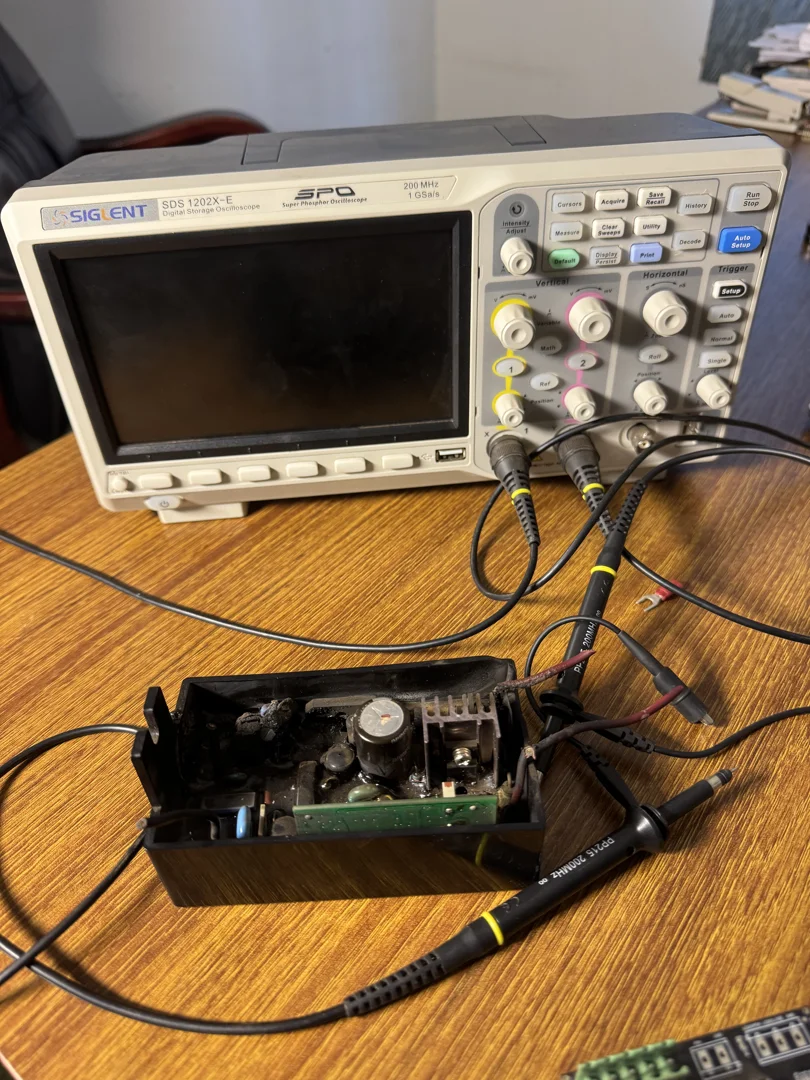
- Hardware Diagnostics and Reverse-Engineering: The ability to trace circuit boards with oscilloscopes, debug logic signals, and replace discontinued OEM sub-assemblies locally.
- Cybersecurity Best Practices: Implementing hardware-based cryptographic keys, encrypted MQTT channels, secure boot loaders, and role-based access control across all operational dashboards.
Collaborative Frameworks for Scaling Local Innovations
Scaling industrial connectivity nationwide depends on collaboration between local innovators, established industrial operators, and municipal utilities. Standardizing on open APIs and modular hardware platforms prevents vendor lock-in, shortens procurement cycles, and ensures critical infrastructure remains repairable by local teams.
Frequently Asked Questions About IoT Software Development in Zambia
What platforms and protocols are best suited for Zambian IoT deployments?
Deployments in Zambia perform best using edge-first frameworks that communicate via MQTT over lightweight GSM or LoRaWAN networks. Rather than streaming raw sensor feeds continuously to the cloud, devices process and filter readings locally, transmitting only structured event logs and urgent alerts. This approach minimizes data costs and keeps critical control loops running during network dropouts.
How do Zambian developers handle frequent power and network disruptions?
Resilient systems combine hardware-level battery backup circuits, non-volatile onboard memory, and store-and-forward firmware logic. When mains power fails or cellular networks disconnect, edge controllers log sensor readings to local flash storage while operating in low-power sleep modes. Once power and connectivity return, the device automatically synchronizes its queued telemetry with the central server without data loss.
How can organizations find qualified IoT software developers in Zambia?
Organizations should look for engineering teams that provide integrated hardware and software services rather than pure mobile or web app agencies. A qualified partner must demonstrate direct experience in microcontroller programming, custom PCB layout, industrial network protocols, and local on-site system integration.
Conclusion
Accelerating industrial development across Zambia requires practical, locally supported engineering solutions. Importing generic IoT gadgets that cannot withstand lightning strikes, power surges, or remote connectivity limits often results in abandoned systems and wasted investments. Sustainable industrial transformation depends on systems designed, coded, and maintained by engineers who understand local operational constraints firsthand.
HERO Control Systems provides full-stack engineering across electronics design, PCB manufacturing, firmware programming, and custom IoT software development in Zambia. Whether you need to retrofit remote telemetry onto municipal pumping infrastructure, deploy sensor networks across commercial farms, or automate heavy industrial plants, explore our comprehensive industrial IoT and engineering services to build reliable, high-performance systems for your operations.