
Zambia's leading component-level repairer of mine power electronics
Drives, starters, rectifiers, UPS systems and control boards repaired on our own bench in Lusaka, with a presence on the Copperbelt. Every unit is load-tested before it goes back, returns with a written report and a 6-month workmanship warranty, and breakdown response is written into an SLA. When the OEM has discontinued the card, we design the replacement.
The equipment that stops production.
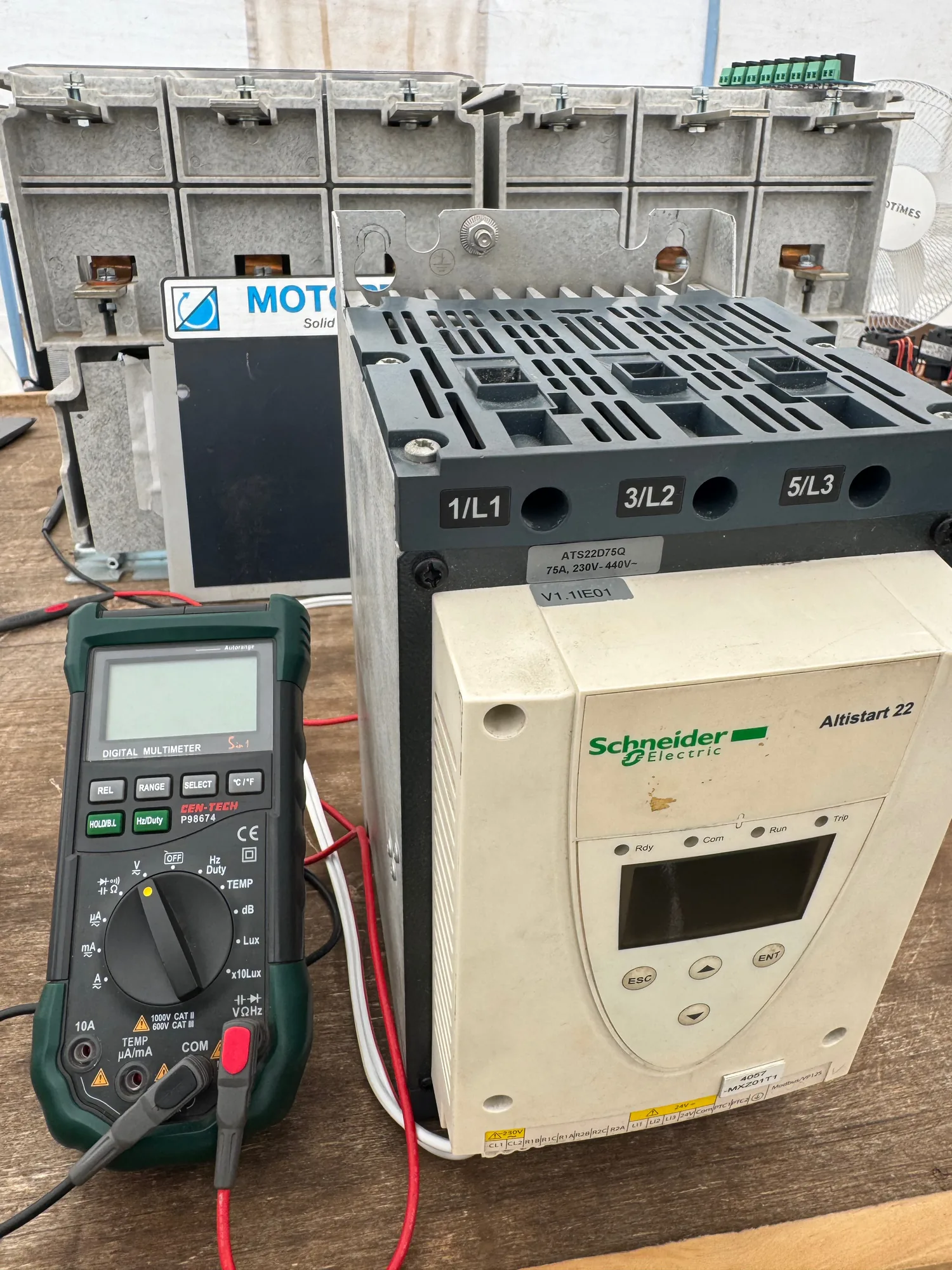
Drives and starters
Variable frequency drives and soft starters on mills, pumps, conveyors, fans, compressors and thickeners — power stages, gate and firing boards, control cards.
DC and rectifier systems
Rectifiers, chargers, excitation and DC power supplies, thyristor stacks, and the control electronics around them.
UPS and battery systems
Uninterruptible supplies, inverters, battery management and charger modules protecting control rooms and instrumentation.
Control and automation
PLC systems, I/O and communication cards, HMI and SCADA stations, motor control centres, and the instrumentation feeding them.
Discontinued boards
Cards the OEM no longer supplies: reverse-engineered, redesigned with current components, built and tested in Lusaka.
Motors and machines
Three-phase, submersible and DC motors, generator stators and transformer windings — strip-down, rewinding, balancing and megger testing.
Lusaka bench, Copperbelt presence, site work across Zambia.
Lusaka workshop
Plot No. 34, Harrison Chongo Road, Nyumbayanga — our own premises, where board-level repair, redesign and load testing are done.
Copperbelt presence
We are present on the Copperbelt, so collection, site attendance and breakdown response do not start with a 350 km drive.
Site work anywhere in Zambia
Fault-finding, commissioning, thermal inspections and PLC work are carried out on site; units needing board-level work come back to the bench.
Regional delivery
Work delivered for JCHX Mining in Botswana — the same capability, across the border.
Four reasons that survive a procurement review.
Downtime, not unit price, is the cost
A stopped mill or dewatering pump costs more per hour than any repair. Standard turnaround is 5–7 business days and priority is 48–72 hours, against 4–12 weeks to import a replacement.
No forex, no freight, no customs
Repairs are quoted and invoiced in Kwacha from Lusaka. No dollar exposure, no freight, no clearing delays, no two-way logistics to a foreign repair centre.
We fix what others condemn
Where a supplier says "obsolete, replace the unit", we read the schematic and design the replacement board. That is the capability the rest of the market does not have.
Evidence, not promises
Every unit returns with a report and a 6-month workmanship warranty, and we work against a published fee schedule — the same basis on which MTN Zambia contracted us.
Load-tested, not bench-cleared
Repairs are run under load before they go back to site. A unit that passes a no-load test and trips on the mill the next week has cost you the downtime twice.
An SLA, not a best effort
Emergency breakdown response, priority turnaround and escalation contacts are written into a service level agreement, so the commitment is contractual.
How a repair contract with us works.
Full bench diagnostics and fault isolation to component and board level, with the unit logged and photographed on intake.
A written repair report per unit: what failed, the root cause, what was replaced, and the test results.
6 months (180 days) workmanship warranty. If the unit fails for the same root cause inside that window, we re-repair at no charge.
Standard 5–7 business days from drop-off; priority 48–72 hours under a maintenance agreement. Importing a replacement typically takes 4–12 weeks.
A flat assessment fee (ZMW 950 per unit) covers diagnostics and the report. No repair fee is charged for a unit we cannot save.
No advance payment. Payment due within 21 days of delivery and sign-off against an approved purchase order.
A published fee schedule per unit type, fixed for two years once a framework agreement is signed — not a quotation per incident.
Repaired units are run under load before return, with the results recorded on the repair report.
Breakdown response, priority turnaround and escalation contacts written into a service level agreement.
These are the standard framework terms on which MTN Zambia contracted us. A mine-specific fee schedule is prepared per equipment list.
A utility runs on a board we designed.
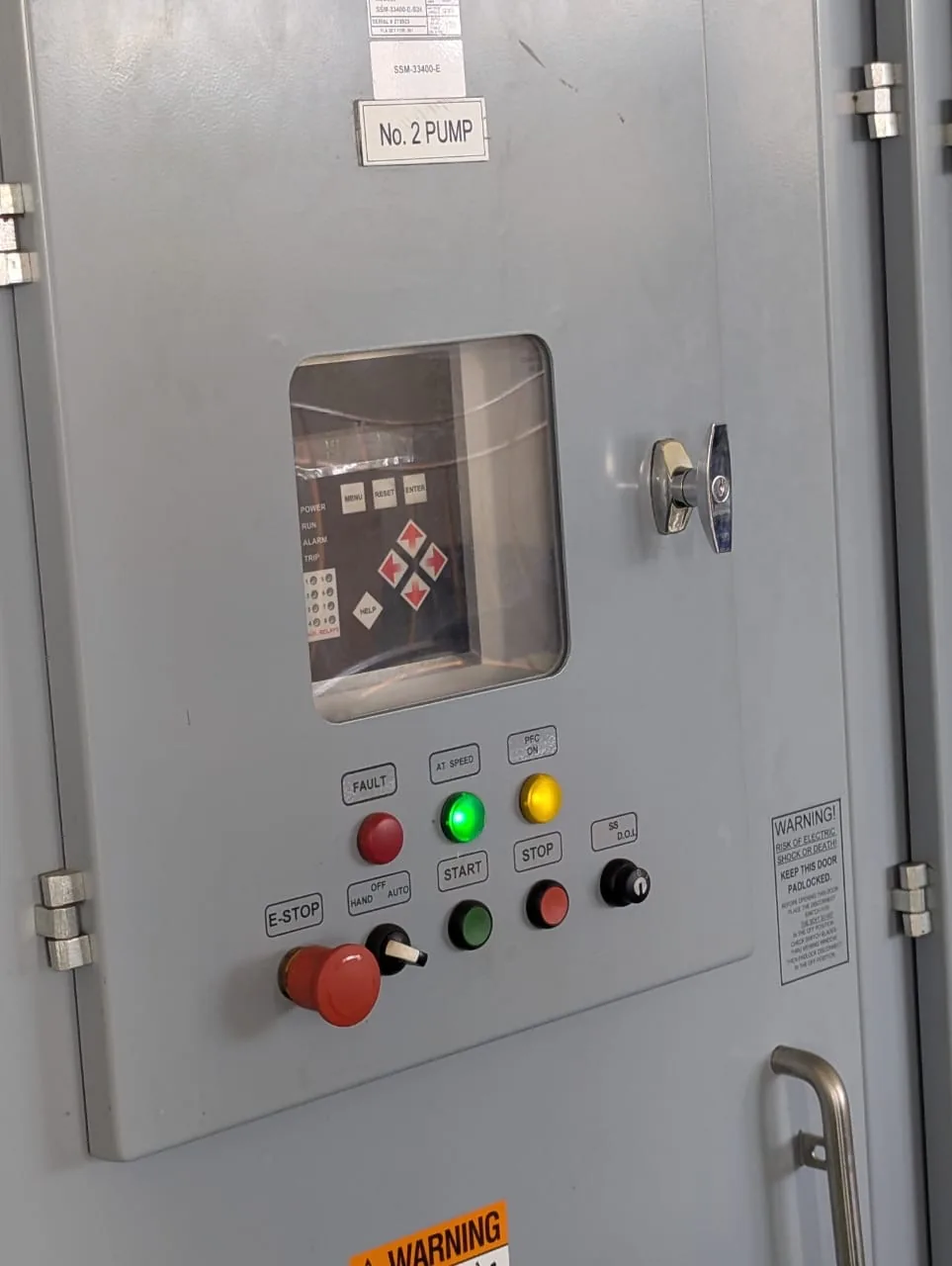
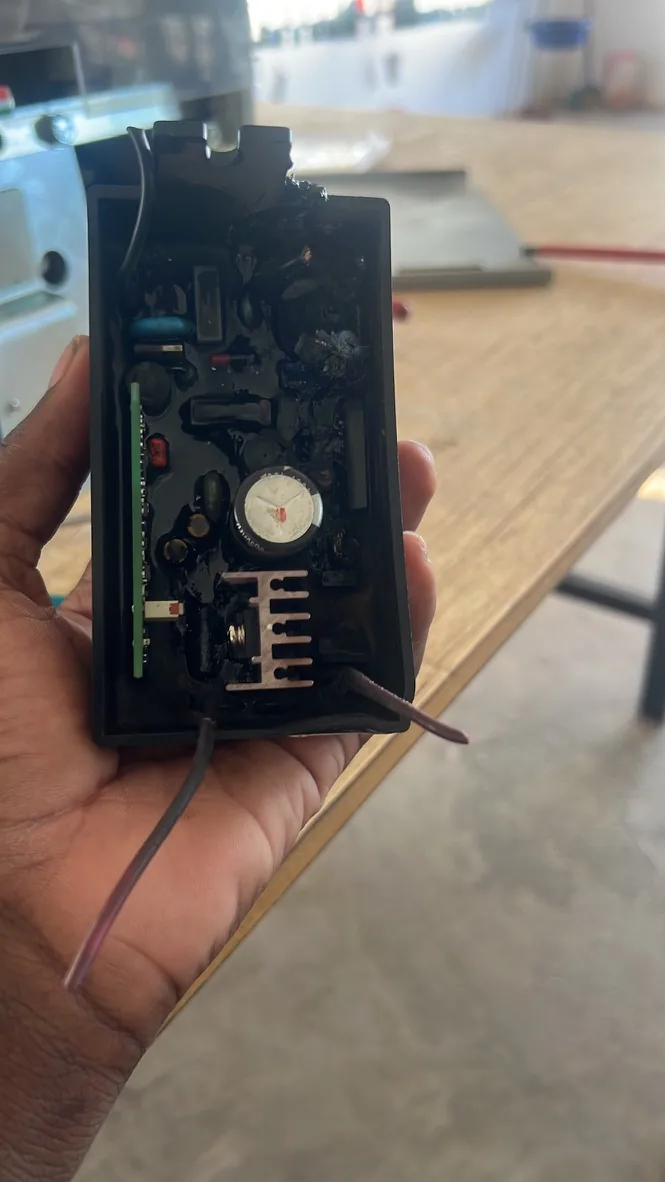
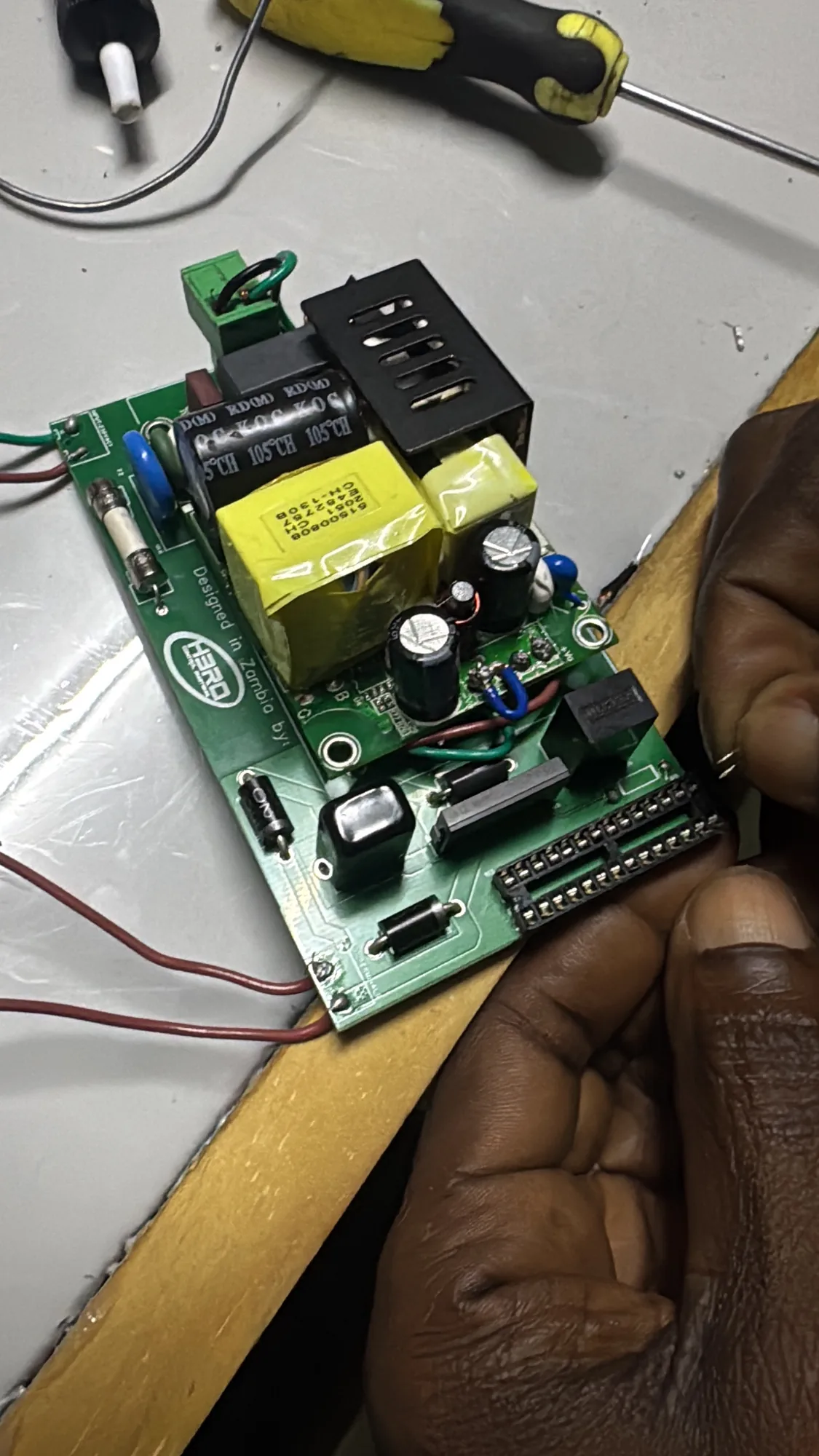
Lusaka Water's pump-station contactor cards were burning out and the manufacturer had discontinued them worldwide. We reverse-engineered the card, designed a new PCB with modern components, wrote the firmware and built it in Lusaka. Deployed February 2026 — zero failures since. The comparative study behind it has been submitted to MDPI Electronics.
Put us on your vendor list.
Send the equipment list and we will return a fee schedule per unit type.