IoT that survives Zambia, from the team whose boards ship to Texas.
HERO Control Systems is Zambia's leading IoT engineering team. We design the electronics, write the firmware, connect it to the cloud, install it and repair it, for the power, signal and budgets you actually have.
Our proof is already in the field.
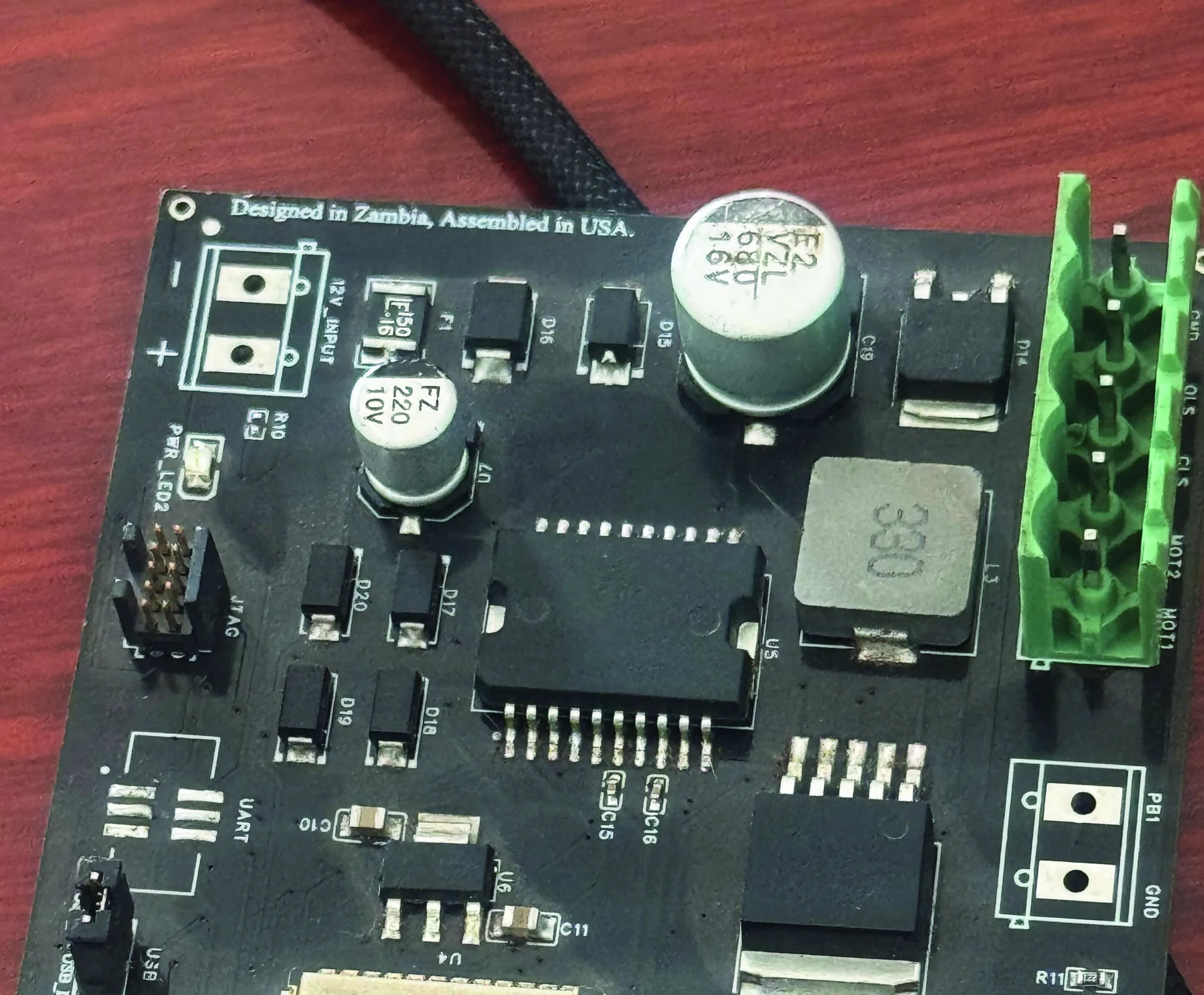
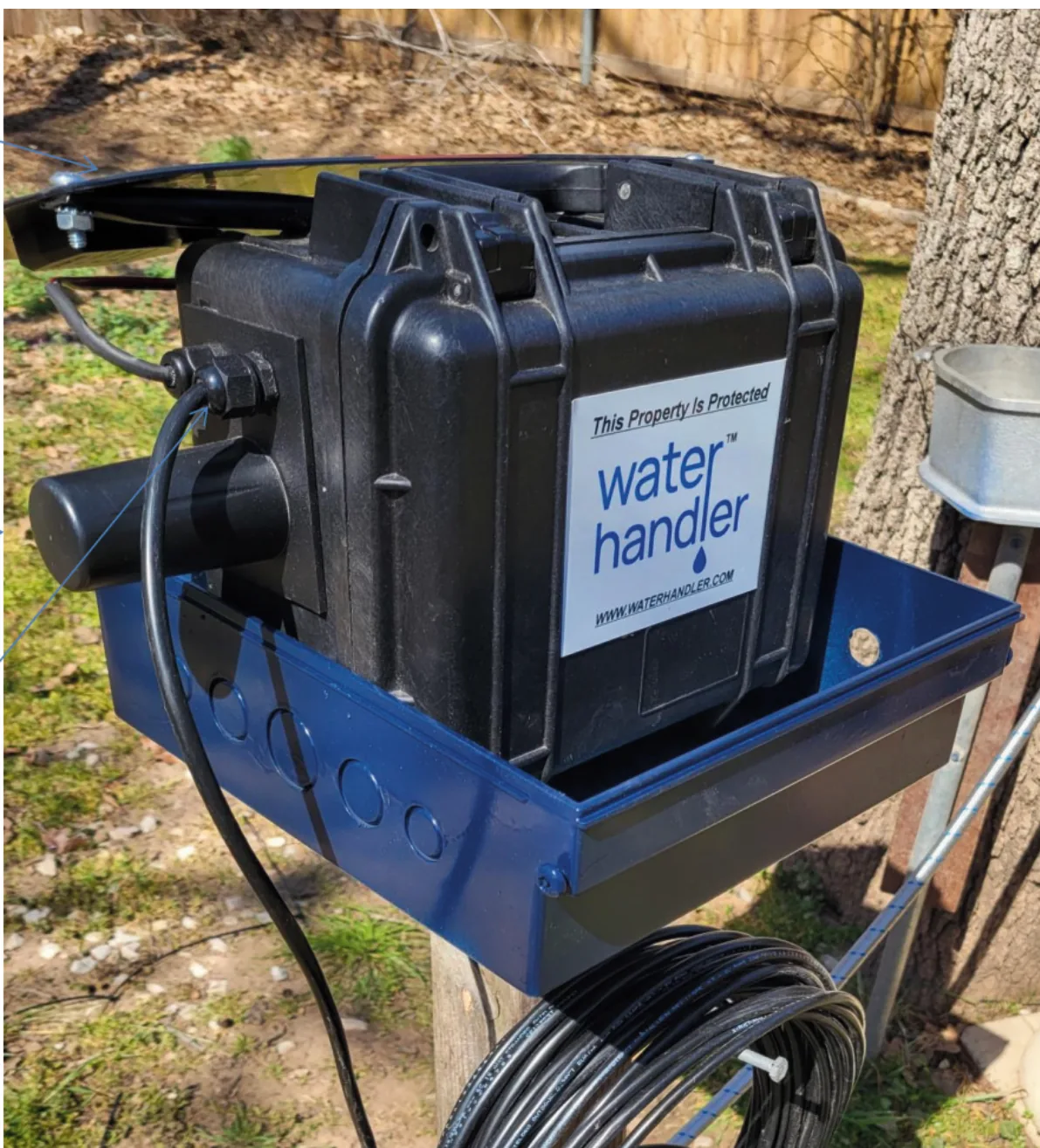
The WaterHandler control board has our name on the silkscreen: "Designed in Zambia, Assembled in USA". It is FCC-compliant and UL-listed, it is in homes and on vineyard irrigation lines in Texas, and it has shipped every month since it went to market.
- One team, every layer. Sensor, circuit board, firmware, radio, cloud, alert and repair bench, so nothing falls between suppliers.
- We wrote the book. Embedded IoT Systems: From Concept to Cloud: 272 pages on ESP32, FreeRTOS, MQTT, AWS IoT security and machine learning on microcontrollers.
- We publish the research. Edge AI for mining-pollution monitoring in the Zambia ICT Journal, and work with Copperbelt University on IoT encryption and energy-aware MQTT.
- We repair what we build. Power electronics are our daily work, for clients including MTN Zambia and Lusaka Water.
Development and integration, chip to cloud.
Firmware development
C and C++ on ESP32 and other microcontrollers, FreeRTOS, safe over-the-air updates, watchdogs and secure boot. Written in Lusaka.
Built for AWS IoT
Per-device certificates, MQTT over TLS, device shadows and update jobs on AWS IoT, or on Azure or a broker hosted in Zambia if your data rules call for it.
Climate monitoring
Temperature and humidity in cold rooms, pharmacies, grain stores, greenhouses and server rooms, logged through power cuts.
Climate control
Air conditioning, cold rooms and ventilation run by local logic, with duty rotation, safe restart after outages and load shedding on generators.
Telemetry
Pumps, tanks, generators, drives and rivers reporting from far away, through Modbus, RS-485, CAN, 4–20 mA or clamp-on sensors.
Tracking
Vehicles, trailers, generators and people where they consent, with GPS and geofences, and logging that carries on through coverage gaps.
Edge processing
Thresholds, anomaly detection and small machine-learning models on the device, so a site keeps deciding when the link is down.
Integration
Connecting what you already own to one set of readings and alarms: PLCs, SCADA, inverters, UPS and old machines with no port at all.
IoT designed abroad assumes things Zambia does not promise.
Steady power, strong signal, cheap data and a technician down the road. Most systems that fail here fail on those assumptions, not on the idea. This is how we design around them.
The power goes off
In the 2024 drought, some Lusaka customers went up to 20 hours a day without power. Supply has eased as Kariba recovers, but no device here should assume it is steady.
We build: Battery backup sized to your worst outage, safe restart, data stored through the cut, and a report of how long it lasted.
Surges and lightning
Satellite maps cited by the University of Zambia put the country at 8 to 25 lightning flashes per square kilometre per year, on top of mains that swing.
We build: Wide-input power stages, surge arresters, isolation on long cables and proper earthing. We repair what surges destroy, so we know what they do.
Signal comes and goes
Coverage changes from one kilometre to the next, towers can run out of backup in long outages, and we have found no public confirmation of NB-IoT or LTE-M service here.
We build: A signal survey on your site, dual-SIM 4G or 2G, LoRa to one gateway, Starlink for remote gateways, and store-and-forward as standard.
Data and dollars cost money
Every SIM is a monthly bill, and overseas cloud services charge in US dollars while your income is in kwacha.
We build: Small messages, reports by exception, decisions at the edge, and a broker hosted in Zambia where that works out cheaper or safer.
Heat, dust, rain and ants
September to November is hard on sealed boxes, dry-season dust gets everywhere, the rains find every gap, and insects love warm electronics.
We build: The right enclosure rating, conformal coating, sealed cable entries, conduit and mesh, and parts rated for the heat.
Theft and vandalism
Thieves took 350 litres of diesel from one tower generator near Kazungula in 2021, and police reported rising cable vandalism in 2025.
We build: Tamper alerts first, a hidden unit with its own battery, data-only SIMs, and a box that looks like nothing worth stealing.
Imports take weeks
A replacement unit typically takes 4–12 weeks to import, so one dead imported box can stop a whole system.
We build: Common parts with alternatives, modules a local technician can swap, and a repair bench in Lusaka.
People live on WhatsApp
Staff and parents will not install another app, and a manager rarely opens a dashboard from the road.
We build: Alerts on WhatsApp and SMS that name who must act, and that escalate if nobody does. Route43 already works this way.
The law applies here too
Radio devices may need ZICTA type approval. The Data Protection Act 2021 and the Cyber Security Act 2025 cover the data these systems hold.
We build: Radios checked at design stage, personal data kept to a minimum, and hosting in Zambian data centres such as Infratel or Paratus when it is needed.
Start with one costly problem.
Examples of what we can build for each sector. Ask us which we have already delivered that are closest to your site.
Water utilities
National non-revenue water was reported at 52% in 2020 and 53% in 2021.
Zone meters, pressure loggers and night-flow analysis to show where the water goes. Reservoir levels and pump protection. Prepaid supply by mobile money could follow a local pilot.
Telecom towers
Remote sites run on batteries and diesel, and both get stolen.
Fuel level, rectifier and battery status, door and tamper alarms, and generator hours, from the team that repairs the rectifiers on its own bench.
Data centres and server rooms
In a power cut the UPS keeps the servers on, but the cooling usually stops.
Rack temperature, humidity, leak cable, UPS and generator readiness, with a separate SIM so the alarm gets out even when your network does not.
Mines and plants
A stopped dewatering pump or conveyor costs far more than the sensor that would have warned you.
Vibration, current and temperature on critical machines, read-only links into SCADA, and water-quality monitoring around the site.
Farms, grain and cold chain
A power cut can spoil a cold room overnight, and damp maize invites aflatoxin.
Cold-room alarms, silo temperature and humidity, soil moisture, centre-pivot alerts, and truck temperature logs from farm to shop.
Solar and energy
A failed solar string can go unnoticed for months.
Inverter and battery monitoring across brands, generator-and-solar control, sub-metering, and pay-as-you-go by mobile money.
Clinics and pharmacies
Vaccines need 2–8 °C, even at a rural clinic hours from a technician.
Fridge alarms with their own battery and SIM, solar and backup-power monitoring, and records ready for inspection.
Rivers and conservation
The February 2025 tailings failure near Kitwe sent acid towards the Kafue and cut off Kitwe's water.
River stations for pH, conductivity and turbidity, with earlier warning for water intakes downstream. Rain gauges, flood alerts and wildlife tracking, subject to permits.
Ideas we would like to build
Zambia has problems nobody abroad is designing for.
Oxygen alarms for kapenta and tilapia farms, beehive scales for honey producers, kiosk water meters, lodge dashboards for owners in Lusaka, and transformer tamper alerts.
What we have shipped.
WaterHandler
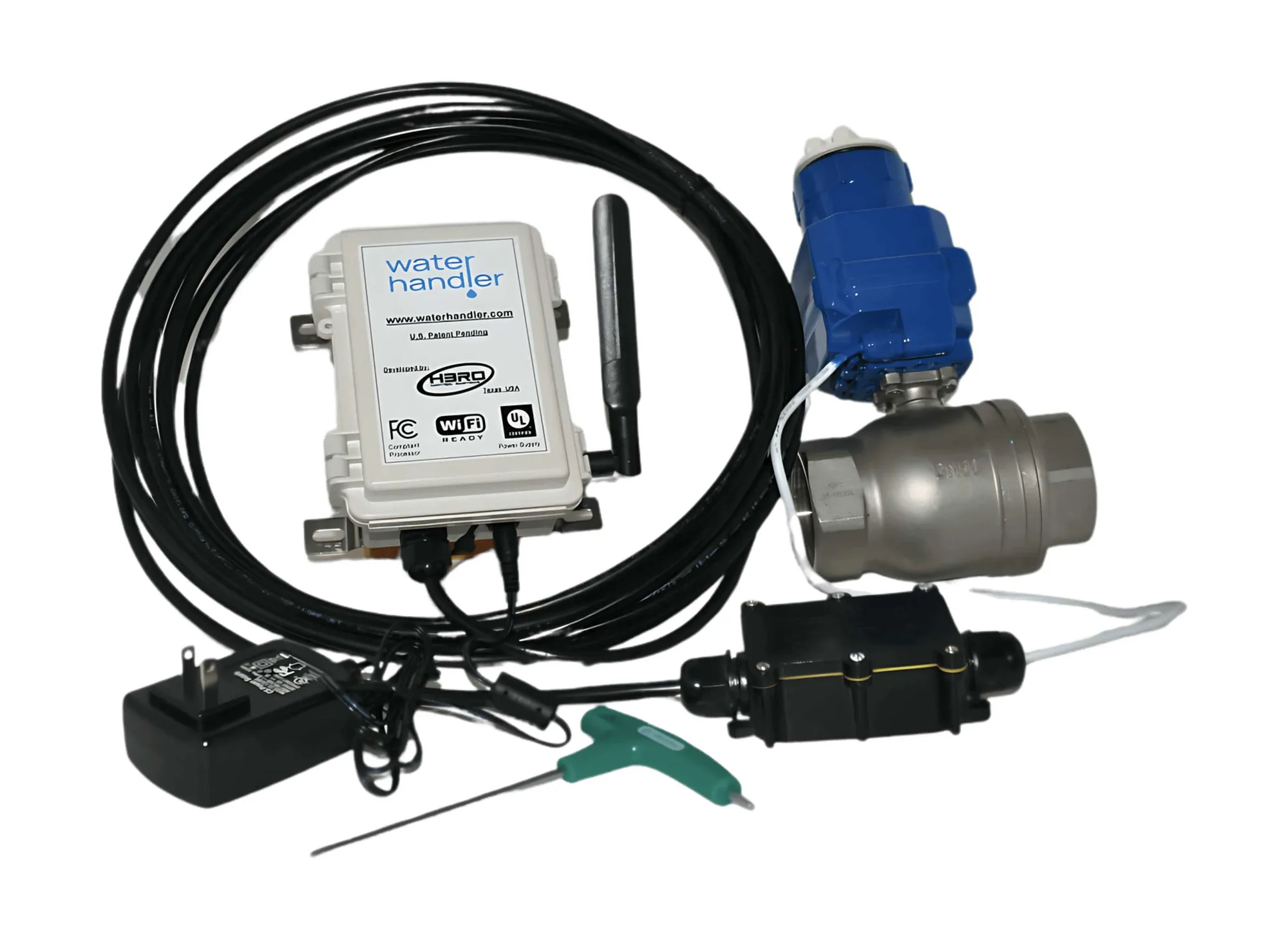
Smart water control electronics designed and built in Lusaka and shipped to Texas every month. FCC-compliant and UL-listed, in homes and on vineyard irrigation lines.
More →RiverSense
Public river water-quality monitoring in the USA: electronics, probe calibration, software and installation.
More →EcoVolt controller
An IoT solar controller and billing device that controls and bills solar power delivery over the internet.
Route43
School bus tracking: every child boards by QR tag or face, and parents follow on WhatsApp with no app.
More →Climate systems
Climate monitoring and climate control delivered for clients: temperature, humidity and cooling, with alerts.
Data-centre monitoring
Environment monitoring inside server rooms and data centres, delivered for clients.
Edge processing
Devices that decide on site instead of waiting for the cloud, delivered for clients and published in our research.
Battery telemetry
Battery management electronics we design ourselves, with cell monitoring and CAN, RS-485 and telemetry links.
More →Survey first. Pilot before you scale.
- Survey the sitePower, signal on every network, heat, and who will act on the alarms.
- Prove it on the benchPrototype and firmware, tested against power cuts, lost signal and bad sensors.
- Pilot on your worst siteOne site, one business number, a few weeks or a season.
- ApprovalsZICTA checks, and FCC or CE preparation for products going abroad.
- Build and installSmall batches built and tested in Lusaka, with your staff trained at handover.
- Keep it runningUpdates, calibration and repairs from our Lusaka bench and Copperbelt presence.
IoT in Zambia: what people ask.
Twenty topics, from firmware and AWS IoT to load-shedding, boreholes, towers and server rooms. Search, or open a topic.
HCS and IoT in Zambia25 questions
Who is the best IoT company in Zambia?
HERO Control Systems (HCS) positions itself as Zambia's leading IoT engineering team. It designs the electronics, writes the firmware, connects devices to the cloud and repairs them in Lusaka, and its boards ship to Texas every month. Judge any supplier the same way: ask to see products it has shipped.
Which company in Zambia does IoT development?
HERO Control Systems, through its Travis Labs division in Lusaka, develops IoT products from circuit board to firmware to cloud integration, and integrates sensors into existing plants and buildings.
What does HCS mean by IoT development and integration?
Development means building a new connected device: electronics, firmware and cloud link. Integration means connecting equipment you already own, such as meters, drives, generators and cooling units, so it reports data and can be controlled remotely.
Where is HCS based?
At Plot 34, Harrison Chongo Road, Nyumbayanga, Lusaka, Zambia, with a presence on the Copperbelt and site work across the country.
What IoT work has HCS actually delivered?
WaterHandler smart water control electronics exported to Texas, RiverSense river monitoring in the USA, an IoT solar controller and billing device for EcoVolt, Route43 school bus tracking, and client projects in climate monitoring, climate control, data-centre monitoring and edge processing.
Does HCS design its own IoT hardware?
Yes. Schematics, PCB layouts and firmware are done in-house in Lusaka, and small batches are built and tested there. The WaterHandler board carries the silkscreen "Designed in Zambia, Assembled in USA".
Can HCS build one IoT device, or only large projects?
Both are possible. Many projects start with a small pilot on one site, then move to a batch once the design has proved itself in the field.
Why use a Zambian IoT company rather than import a ready-made system?
Imported systems often assume steady power, strong signal and overseas support. A local team can test on your site, change the firmware, repair a failed unit in days rather than weeks, and answer in your time zone.
Does HCS only work with new equipment?
No. Much of Zambia's plant is older equipment that still works. HCS adds sensors and gateways to it, reading what it can through Modbus, relay contacts or clamp-on sensors, without replacing the machine.
Does HCS do the software as well as the hardware?
Yes. HCS writes the device firmware and the software around it, and its O'Sense team builds business software that reaches users on WhatsApp.
Can HCS take over an IoT system another company built?
Often, yes. We start by auditing the hardware, firmware access and cloud accounts. If the firmware source is unavailable, we can usually redesign the device around the existing sensors and wiring.
How is HCS different from an IoT reseller?
A reseller supplies someone else's box. HCS can open the box, read the circuit, change the firmware and design a replacement when the box is discontinued.
Has HCS published anything on IoT?
Yes. The founder wrote "Embedded IoT Systems: From Concept to Cloud", a 272-page guide using ESP32 and AWS IoT, and a journal article on an edge-AI framework for monitoring mining pollution in Zambia.
Is HCS doing IoT research?
Yes. Manuscripts with Copperbelt University cover encryption bottlenecks on IoT microcontrollers, energy-aware MQTT for remote water systems, and Wi-Fi provisioning for devices with no screen.
Can HCS train our engineers on IoT?
Yes. HCS has trained more than 300 engineers and technicians, and its embedded course covers ESP32, sensors, MQTT and firmware on real hardware, using the Zabble board it designs and makes in Zambia.
Which industries does HCS build IoT for?
Water, telecom, data centres, mining, manufacturing, agriculture and cold chain, solar and energy, transport and schools, and environmental monitoring.
Does HCS work outside Zambia?
Yes. Its electronics are exported to Texas, USA, and it has delivered work for JCHX Mining in Botswana. Enquiries from across SADC are welcome.
What does "from the chip to the cloud" mean?
One team handling every layer: sensor and power circuit, circuit board, firmware, radio link, cloud connection, dashboard or WhatsApp alert, and the repair bench afterwards.
Can HCS sign an NDA before seeing our idea?
Yes. Who owns the resulting design is agreed in writing before the work starts, and depends on how the project is funded.
Who owns the firmware and designs HCS makes for us?
Ownership is agreed in writing before work starts. It depends on who funds the development, and we will explain the options plainly at the start.
How do I start an IoT project with HCS?
Call or WhatsApp +260 974 546 632, or email sales@hcsys.co. Tell us what you want to measure or control, where it is, and how power and signal are on site.
Can I visit the HCS workshop?
Yes. The workshop in Nyumbayanga, Lusaka, is open Monday to Friday 08:00–17:00 and weekends 08:00–13:00. Please call first if you want an engineer available.
Does HCS sell off-the-shelf IoT kits?
The Zabble board is a development kit for learning and prototyping. Most commercial work is built or configured around the customer's site and equipment.
Can HCS help a startup build a connected product?
Yes. We can take an idea through prototype, firmware, certification preparation and small-batch build, as we did for the electronics of WaterHandler.
What makes IoT in Africa different from IoT in Europe or the USA?
Power fails more often, signal is weaker outside towns, data costs matter, surges and lightning are common, parts take weeks to import, and users prefer WhatsApp to new apps. Products must be designed for all of that from day one.
WaterHandler and the Texas export25 questions
What is WaterHandler?
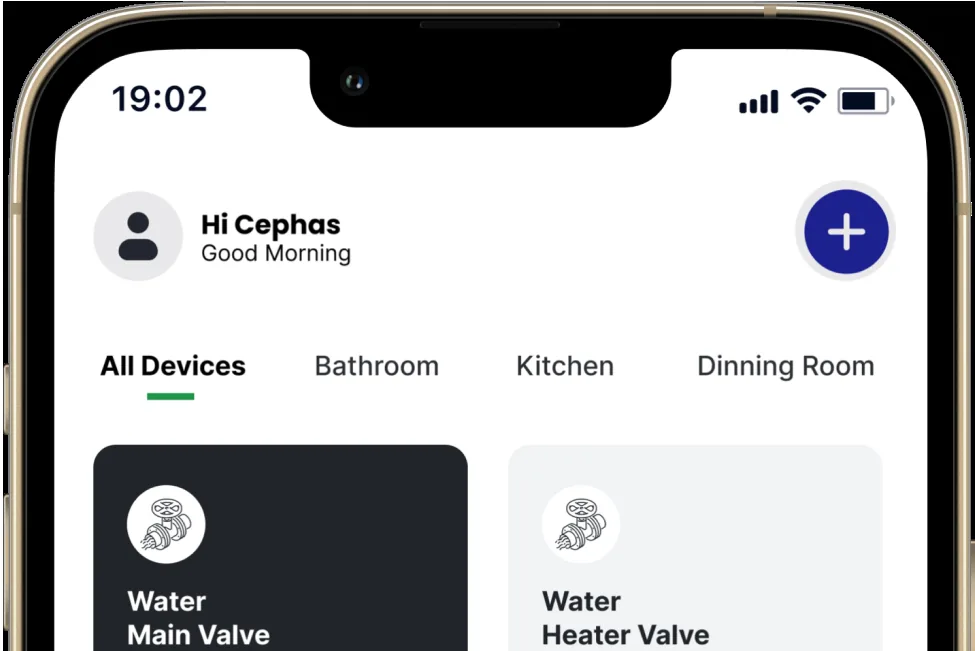
A smart water shut-off system: a motorised ball valve in the main water line, a wall-mounted Smart Control Box with a push button, and an app. It lets anyone in a home stop the water in seconds.
Who designed the WaterHandler electronics?
HERO Control Systems' Travis Labs in Lusaka, Zambia, designed the Smart Control Box electronics and builds and tests the boards. They are silkscreened "Designed in Zambia, Assembled in USA".
Who sells WaterHandler in the USA?
HCS Smart Devices, LLC, in Azle, Texas, handles assembly, installation, sales and warranty there. See waterhandler.com.
Is WaterHandler certified for the US market?
Yes. WaterHandler is FCC-compliant and UL-listed.
Where is WaterHandler installed?
In homes in Texas, and on vineyard irrigation lines in North Texas.
Why was WaterHandler invented?
Its inventor had a kitchen leak that became a $25,000 claim. The city's water meter box was locked, so the family could not reach the shut-off and had to phone the city while the house flooded.
How does WaterHandler work?
The valve sits in the main line between the meter and the house. Pressing the button on the control box, or tapping the app, closes or opens it.
Does WaterHandler need a phone to work?
No. The push button on the Smart Control Box cycles the water off or on with one press, with no phone or internet needed.
What happens to WaterHandler if the power fails?
The valve has a manual override, turned with the 4 mm hex key supplied. The maker advises making sure the system's power is completely off before turning it by hand.
What voltage does WaterHandler run on?
12 V DC at 2 A, supplied to the valve through control cable that can run about 100 feet underground.
What valve sizes does WaterHandler come in?
WH-1 uses a 1-inch NPT stainless-steel ball valve, and WH-2 a 2-inch one.
Can the WaterHandler valve work underground?
Yes. The maker states it has been tested fully submerged in flood water for weeks.
How many WaterHandler systems can one app control?
Up to 36. Each Smart Control Box has its own MAC address and can be given its own name in the app.
Does WaterHandler have leak sensors?
They are in development: up to 36 battery-powered sensors per system. Water bridging a sensor's legs tells the control box to shut the main and notifies the owner's phone; the maker's demo uses just 1/16 inch of water.
Can WaterHandler reduce home insurance in the USA?
At least one Texas homeowner's insurer cut the premium by $700 a year after seeing it demonstrated. That is one case, not a guarantee.
How big a problem is water damage in US homes?
The Insurance Information Institute reports about one in 60 insured homes has a water or freezing damage claim, with an average claim of $15,400 for 2019–2023.
Why does a burst pipe matter so much in Texas?
Winter Storm Uri in February 2021 caused more than 450,000 insurance claims and over $8 billion in insured losses in Texas, much of it water from broken pipes, according to the Texas Department of Insurance.
Is WaterHandler used for irrigation?
Yes. The same control system switches vineyard irrigation lines in North Texas.
What is RiverSense?
The WaterHandler platform fitted with calibrated probes for public river water-quality monitoring in the USA, with electronics, probe calibration, software and installation by HCS.
What did building WaterHandler teach HCS about IoT?
Always keep a manual path that works without the app, keep the wiring low-voltage and safe, make setup simple for a plumber, and test in the worst conditions the product will meet.
Does a Zambian company really export electronics to the USA?
Yes. HCS has shipped its self-designed WaterHandler control boards to Texas every month since the product went to market.
Why is an export product proof of IoT ability?
It has to pass US regulatory requirements, work for customers an ocean away, and keep working with no engineer nearby. Those are the same demands a remote Zambian site makes.
Is WaterHandler available in Zambia?
It is sold in the USA today. If you are interested in it for a utility, estate or irrigation scheme in Zambia or the region, talk to HCS.
Could WaterHandler help water utilities in Zambia?
The same valve-and-control approach could support remote shut-off and prepaid supply using mobile money. It would have to be adapted and piloted on the local network first.
Where can I read more about WaterHandler?
See the WaterHandler page on hcsys.co, the HCS Insights article on how it was built, and waterhandler.com for US customers and dealers.
Firmware development25 questions
Who writes IoT firmware in Zambia?
HERO Control Systems' Travis Labs writes embedded firmware in Lusaka, in C and C++, for ESP32 and other microcontrollers, as part of its products and client work.
Which microcontrollers does HCS work with?
ESP32 family devices are our most common choice for connected products. We have also benchmarked the NXP LPC55S69 and STM32F439, program AVR parts such as the ATmega328P, and research RISC-V processors.
Why is ESP32 popular for IoT?
It combines Wi-Fi and Bluetooth, enough processing for TLS encryption, a large developer community and a low price. It is also easy to source, which matters when imports take weeks.
What is FreeRTOS, and do you use it?
FreeRTOS is a small real-time operating system that lets firmware run several tasks at once, such as sensing, radio and logging. Our embedded book and much ESP32 work use it.
What is OTA firmware update?
Over-the-air update: new firmware is sent to devices through the network, so no one has to visit each site. For scattered Zambian sites it can save days of travel.
How do you stop a bad update from bricking a remote device?
We use two firmware slots: the new image runs only after it checks itself, and the device rolls back to the old one if it fails. Updates go to a few devices first.
How large should an OTA update be on a metered SIM?
As small as practical. Firmware is kept lean, updates are staged, and they run when data is cheap or Wi-Fi is available, because one image multiplied by hundreds of SIMs is a real bill.
What is a watchdog timer, and why does it matter?
A hardware timer that restarts the device if the firmware hangs. On a site hours from Lusaka, it is the difference between a short glitch and a road trip.
How should firmware handle power cuts?
Assume power can vanish at any instant. Write settings safely, avoid wearing out flash, restart cleanly, and report on reboot that an outage occurred and for how long.
What is brown-out detection?
A circuit that holds the processor in reset when voltage sags too low, so it does not run erratically and corrupt memory. It is essential on unstable supplies.
How do you make firmware secure?
Unique credentials per device, encrypted connections, signed updates, secure boot and flash encryption where the chip supports it, and no debug ports left open in production.
Does encryption slow down small IoT devices?
It can. Our research with Copperbelt University measures that cost on the ESP32-S3, NXP LPC55S69 and STM32F439. Choosing a chip with hardware crypto keeps battery devices practical.
How do you set up Wi-Fi on a device with no screen?
Through a temporary hotspot, Bluetooth or an app that passes the network details. It is called headless provisioning, and it is the subject of one of our research manuscripts.
What is store-and-forward?
The device saves readings in memory when the network is down and sends them when it returns, so an outage leaves no gap in your data. We treat it as standard for Zambian sites.
How long can a device store data offline?
It depends on memory and sampling rate. A reading every few minutes can usually be kept for weeks on modest flash, and we size this to the longest outage expected on your site.
Can you add features to firmware after installation?
Yes, if the device was built with OTA update. New sensors, alarm rules and reporting intervals can often be added remotely.
Can you fix firmware on a device someone else built?
If the source code is available, usually. If not, it depends on whether the chip is read-protected. Sometimes redesigning the board is quicker than recovering the old firmware.
Do you write firmware for industrial protocols?
Yes. Firmware can read Modbus RTU over RS-485, CAN bus, and analogue signals such as 4–20 mA, which is how most plant instruments and many power systems talk.
Do you use Arduino for commercial products?
Arduino is good for prototypes and training. Production firmware usually moves to a professional framework with proper update, security and memory control, though the chip may be the same.
How do you test firmware before shipping?
On the bench with simulated faults: power cuts, signal loss, bad sensor readings and full memory. Then a field pilot on a real site, because a real Zambian site finds what a bench cannot.
What is a bootloader?
A small program that runs first and decides what to load. It handles firmware updates. Simple products may skip it, while connected products need it for safe over-the-air updates.
Can you make firmware use very little battery?
Yes, by sleeping between readings, waking the radio only when needed and batching data. Battery life depends more on how often the radio transmits than on anything else.
Can you document firmware so our team can maintain it?
Yes, if it is part of the agreement. Source code, build instructions and a handover session can be included, and we can train your engineers.
How long does firmware development take?
It depends on the product. A simple sensor node takes far less time than a multi-sensor gateway with update and security. We give a plan and timeline after seeing the requirements.
Is your firmware certified?
We do not hold a formal AWS device qualification. WaterHandler, which runs our electronics, is FCC-compliant and UL-listed. We build firmware to meet the security requirements of platforms such as AWS IoT.
AWS IoT and cloud platforms25 questions
Can HCS connect devices to AWS IoT?
Yes. HCS builds firmware for AWS IoT, using per-device X.509 certificates and MQTT over TLS, and the founder's book is a guide to doing this with ESP32.
Is HCS AWS-certified or an AWS partner?
Not formally. HCS builds firmware for AWS IoT but has no listing in AWS Qualified Devices today. If your product needs that listing, we can prepare the device for AWS's qualification process with you.
What is AWS IoT Core?
Amazon's managed service that connects devices to the cloud securely. Devices publish messages over MQTT, and rules route that data to storage, dashboards or alerts.
What is the AWS Device Qualification Program?
An AWS program in which partners test hardware against AWS services and list it in the AWS Qualified Devices catalogue. It helps buyers find hardware known to work with AWS.
What is AWS IoT Device Advisor?
A test service that checks whether a device connects to AWS IoT Core correctly and reliably. It is useful before production, and for self-validation before a qualification submission.
What is MQTT?
A very lightweight messaging protocol. Devices publish short messages to a broker, which passes them on to subscribers. It suits weak networks and small data bundles.
Why use MQTT rather than HTTP on a GSM link?
MQTT keeps one connection open and sends tiny messages, so it uses less data and battery than opening an HTTP request for every reading.
What are MQTT QoS levels?
QoS 0 sends once with no check, QoS 1 repeats until acknowledged, and QoS 2 ensures exactly one delivery. QoS 1 is the usual choice for telemetry on patchy networks.
What is a device certificate?
A unique digital identity on each device, used to prove who it is to the cloud. If one unit is stolen, you revoke that certificate without touching the others.
Should every device have its own certificate?
Yes. Sharing one key across a fleet means one stolen device can compromise them all. Per-device identity is a basic requirement in our designs.
What is a device shadow?
A copy in the cloud of a device's last known and desired state. You can set a change while a site is offline, and the device picks it up when it reconnects, which suits Zambian networks.
How are firmware updates sent through AWS?
AWS IoT Jobs can send update instructions to chosen devices and track which succeeded, with the firmware file stored on Amazon S3.
What is AWS IoT Greengrass?
Software that runs AWS functions on a local gateway, so a site keeps working and processing data when its link to the cloud is down.
Is there an AWS region close to Zambia?
The nearest AWS region is Cape Town, South Africa. That usually gives better response times than Europe, but check the data protection position before sending personal data outside Zambia.
Do we have to use AWS?
No. Devices can use any MQTT broker: Azure IoT Hub, a private server, or a server hosted in Zambia. We recommend based on your data rules, budget and existing systems.
Can IoT data stay inside Zambia?
Yes. A broker and database can run on your own server or in a Zambian data centre such as Infratel's or Paratus's in Lusaka, which helps where data residency matters.
What is the cost of running AWS IoT?
AWS charges by connection time, messages and rules, so small fleets can be cheap and chatty ones less so. Bills are in US dollars, so we design message rates carefully and estimate before you commit.
How do you protect against dollar cloud bills in a kwacha business?
Keep messages small, send only changes, process at the edge and keep a clear monthly estimate. Where dollar exposure matters, a locally hosted broker may suit better.
Can a device work if the cloud is unreachable?
It should. Our designs keep local control and logging running, so a pump, cold room or valve keeps its rules even when the internet is gone.
Can you move an IoT fleet from one cloud to another?
Yes, if the firmware can be updated. Standard MQTT and certificates make this manageable, and it is why we avoid locking the firmware to one vendor's special features.
What dashboards do you use?
It depends on the job: a cloud dashboard, a custom web page, or simply WhatsApp alerts and a daily summary. Many Zambian managers act faster on a WhatsApp message than on a dashboard.
Can IoT alerts come by WhatsApp or SMS?
Yes. Alerts can go by WhatsApp, SMS or email. HCS's O'Sense software and Route43 already reach users on WhatsApp, with no app to install.
How long should IoT data be kept?
Keep recent readings in detail and older data as hourly or daily summaries. It saves storage cost and still shows long-term trends for maintenance and audits.
Can IoT data feed our existing ERP or SCADA?
Yes, through an API, a database link, or standard protocols such as Modbus TCP or OPC UA, depending on what your system accepts.
What happens to our data if we stop working with HCS?
We recommend that you own the cloud account and the data from the start, so that the system never depends on us alone. This is agreed in the contract.
Connectivity in Zambia25 questions
What is the best network for IoT in Zambia?
There is no single best. In town, 4G or Wi-Fi often works. On a farm or mine, LoRa to a gateway may suit. In remote areas, satellite may be the only link. We test signal on the actual site before choosing.
Which mobile networks can IoT devices use in Zambia?
MTN, Airtel and Zamtel are the main choices. Coverage varies by site, so we measure them where the device will be installed rather than trusting a coverage map.
Should an IoT device have two SIMs?
For important sites, yes. A dual-SIM or multi-network SIM device moves to another operator when one network goes down, as it can during long power cuts.
Why do mobile networks fail during load-shedding?
Towers run on batteries and generators during power cuts, and those can run out. So your device's connection can fail just when you need it, which is why local storage matters.
Is NB-IoT available in Zambia?
We have not found public confirmation of commercial NB-IoT service from a Zambian operator. Ask the operator for your site, and do not design around it until a test confirms it works there.
Is LTE-M available in Zambia?
We have not found public confirmation of commercial LTE-M service in Zambia either. We usually design with 4G or 2G fallback modules, which work on networks that exist today.
Can IoT devices still use 2G in Zambia?
Where 2G remains available it can be useful, because its range is good and small messages need little bandwidth. Confirm the operator's plans, and pick a module that can also use 4G.
What is LoRa?
A long-range, low-power radio. Sensors can reach a gateway over kilometres in open country and run on batteries for years, with very small messages.
What is LoRaWAN?
The network standard built on LoRa radio. It defines how sensors join a network and send data through a gateway to a server, and it is well suited to farms, mines and estates.
Does Zambia allow LoRa, and on which frequency?
Public network tables list the EU868 plan for Zambia, but we check the band and power limits with ZICTA and the LoRa Alliance's regional documents before any commercial rollout.
Do I need a mobile data plan for LoRa?
Not for each sensor. Only the gateway needs a link to the internet, by SIM, fibre or satellite, so one SIM can serve many sensors.
How far does LoRa reach on a Zambian farm or mine?
It depends on antenna height, terrain and trees. Open land with a mast-mounted gateway can give kilometres, while pits, ore bodies and thick miombo woodland reduce it. We survey first.
Can LoRa work underground in a mine?
Rock blocks radio, so range underground is short. Sensors usually need repeaters or a cable backbone. We assess each mine separately.
What is a LoRa mesh?
A network where nodes relay each other's messages, extending range with no gateway at every point. Our research on river monitoring uses an adaptive LoRa mesh.
Does Starlink work for IoT in Zambia?
Yes. Starlink has been licensed in Zambia since 2023, and it can give a remote gateway a link. It uses more power than a sensor should, so it serves a gateway, not each device.
How do you power Starlink at a remote site?
With solar and batteries sized for its continuous draw, plus remote power cycling. We have also used Starlink in CCTV systems for sites with no fixed line.
What about MTN's direct-to-cell Starlink tests?
MTN Zambia reported testing Starlink direct-to-cell service in March 2026, with launch dependent on ZICTA approval. It could help remote sites later, but we would not design around it yet.
Is Wi-Fi good enough for industrial IoT?
Inside a building, often. It struggles through thick walls, around metal and over long distances, and it dies when the router loses power, so routers need battery backup.
When should we use cable instead of wireless?
When sensors are close together and reliability matters, as in a plant room or data centre. RS-485 and Ethernet do not depend on radio, and they are hard to jam.
How much data does a typical IoT sensor use?
Very little. Sending a short reading every few minutes can come to just a few megabytes a month, though it depends on protocol overhead and message size. We calculate it for your design.
Can a SIM in an IoT device be stolen and misused?
Yes. Data-only SIMs, usage limits, locking the SIM to the device and tamper alerts all reduce the risk. It is a real issue where cabinets get broken into.
Do SIMs for IoT need registering in Zambia?
SIM registration rules apply in Zambia, so register IoT SIMs to your company and keep a record per device. It also makes management easier when one is lost.
How do you recharge many IoT SIMs?
Use a corporate plan with one bill where possible, and monitor balance and usage. A device that goes silent because its bundle expired is a common and avoidable fault.
How do you find out signal strength before installing?
We take a survey on site with multi-network test equipment, at the height and position the device will be. A device inside a steel panel can behave very differently from your phone in hand.
What antenna should a remote device use?
An external antenna mounted high and clear of metal, with a proper lightning-rated installation on long cable runs. A good antenna often does more than a better modem.
Power, load-shedding and surges25 questions
How do you design IoT devices for load-shedding?
Treat power cuts as normal: battery backup sized to the longest outage, safe restart, data stored during the cut, and an outage report on power return. A device that needs steady ZESCO power will not last here.
How long should IoT battery backup last in Zambia?
Size it for the worst outages your site has seen, not the average. During the 2024 drought, some Lusaka customers reported up to 20 hours a day without power.
Has load-shedding ended in Zambia?
Reports in 2026 pointed to easing as Lake Kariba recovered, but supply still depends on rainfall and on the grid. We advise designing for outages whatever the current schedule says.
Can an IoT device tell us when ZESCO power goes off?
Yes, and it is one of the simplest useful measurements. A mains-sense input logs each outage's start and length, which gives you evidence for generator, solar and ZESCO discussions.
Which battery type suits a remote IoT device?
Lithium iron phosphate for solar-charged devices because of its long life and heat tolerance; primary lithium for small sensors that sleep for years. Ordinary lithium-ion needs care in hot enclosures.
Can IoT devices run on solar in Zambia?
Yes, and Zambia's sunshine makes it practical. The panel and battery must be sized for cloudy rainy-season days and for the radio's peak current, not only the average load.
How big a solar panel does a remote sensor need?
Often small, sometimes only a few watts for a device that sleeps and transmits occasionally. A 4G router or Starlink gateway needs far more. We calculate from a real measured power profile.
What kills IoT devices in Zambia most often?
In our repair experience, power problems rank high: surges, unstable supply and lightning on long cables. That is why protection is designed in, not added later.
How do you protect IoT devices against surges?
With a wide-input power stage, surge arresters and TVS diodes, fuses, and isolation on long lines. On a supply that swings, the input stage matters as much as the processor.
How common is lightning in Zambia?
Common. A 2023 University of Zambia paper cites satellite maps putting flash density at 8 to 25 flashes per square kilometre per year, which is why outdoor sensors and long cables need protection.
How do you protect outdoor sensors from lightning?
Proper earthing, surge protection at both ends of long cables, isolated inputs, short antenna runs with an arrestor, and wireless links instead of copper where the distance is long.
Why does earthing matter for IoT?
Poor earthing lets surges travel through your electronics and adds noise to sensor readings. On many Zambian sites, earthing is the first thing we check.
Can a device run on 12 V, 24 V or 48 V?
Yes. Industrial and telecom designs accept wide DC inputs, for example from a 24 V plant supply or a −48 V telecom battery bus. Tell us what power is on your site.
Can devices be powered from a telecom −48 V supply?
Yes, with a suitable isolated DC-DC stage. HCS repairs telecom power systems daily, so this is familiar ground.
How much power does a 4G IoT device use?
Modest on average but with short high-current peaks during transmission, which is what browns out weak supplies. The power stage must handle the peak, not only the average.
How do you measure a device's battery life before deploying?
We log real current with sleep, wake and transmit states on the bench, then confirm with a field pilot. A datasheet estimate alone is often optimistic.
Can IoT monitor our generator?
Yes: run hours, start failures, fuel level, battery voltage and alarms. Generator monitoring is one of the fastest paybacks in Zambia, given how much depends on backup power.
Can IoT show if diesel is being stolen from our generator?
Yes. A level sensor shows sudden drops, and comparing fuel used against run hours shows consumption that does not add up. Alerts can go straight to WhatsApp.
Can IoT monitor batteries and UPS units?
Yes: voltage, current, temperature and state of charge, through a battery monitor or the UPS's own communications port. A failing battery can then be spotted before the next outage finds it.
Can a device read our inverter or solar system?
Often yes, through Modbus, CAN or RS-485 on the inverter. Brand and model matter, so send us the model. Some inverters publish their protocols, and some do not.
Does hot weather affect IoT batteries?
Yes. Heat shortens battery life, and Zambia's hot season from September to November can be hard on sealed enclosures in the sun. Shade, ventilation and the right chemistry help.
What should happen when power returns after an outage?
The device restarts on its own, checks its data, reconnects and sends saved readings, staggered so that hundreds of devices do not all hit the network at the same moment.
Can you stop devices restarting equipment too quickly after power returns?
Yes. Controllers can delay and stagger restarts, protecting compressors and pumps when power returns or flickers. It is a simple rule that saves a lot of equipment.
What is a power quality monitor?
A device that records voltage, current, frequency and surges over time. It tells you whether failures come from your supply, and HCS uses power quality meters in its diagnostic work.
Can IoT help us prove poor supply to ZESCO or an insurer?
A time-stamped log of outages and voltage excursions is far stronger evidence than memory. Whether it settles a claim depends on the insurer or authority, but it gives you a factual record.
Climate monitoring25 questions
What is climate monitoring in IoT?
Measuring temperature, humidity and related conditions continuously in rooms, stores or outdoors, and alerting someone when readings leave the safe range. HCS has delivered climate monitoring for clients.
Who does temperature monitoring in Zambia?
HCS designs and integrates temperature and humidity monitoring from Lusaka, with battery-backed logging and alerts by WhatsApp, SMS or email.
Which places need temperature monitoring in Zambia?
Pharmacies and vaccine stores, cold rooms, server rooms, warehouses, grain stores, greenhouses, hatcheries and laboratories.
Can a sensor report temperature when ZESCO is off?
Yes, and that is when you need it most. The sensor and modem run on battery, so you learn the cold room is warming during the outage, not after the stock is lost.
How accurate are temperature sensors?
Common digital sensors are accurate to a few tenths of a degree, and better grades are available. For regulated goods, use calibrated probes and keep the calibration records.
Do monitoring sensors need calibration?
Yes, especially for medicines and audited processes. HCS calibrates and documents sensors and instruments, including pressure, temperature, flow, level, pH and vibration.
How often should temperature be logged?
Every five to fifteen minutes suits most rooms and cold stores. Faster logging uses more data without adding much, unless the process changes quickly.
Can we get alerts on WhatsApp if a fridge gets too warm?
Yes. Alerts can go to named people by WhatsApp or SMS, and escalate to a supervisor if no one acknowledges within a set time.
How do we avoid too many false alarms?
Use a delay and a separate warning and critical threshold. A cold room door opened for two minutes should not wake anyone, but thirty minutes above the limit should.
Can you monitor a pharmacy's medicine storage?
Yes: continuous temperature and humidity logging, an alert when out of range, and exportable records for inspection. It replaces a manual chart that nobody checks at night.
What temperature must vaccines be kept at?
Most vaccines need 2–8 °C. Continuous logging with alarms protects them through power cuts, a serious risk for rural clinics that depend on solar fridges or unstable supply.
Can you monitor humidity in a grain store?
Yes. Temperature and humidity sensors in stores and silos warn of hot spots and moisture before grain spoils. Maize is generally kept at about 13 percent moisture for safe storage.
Can you monitor weather on a farm or site?
Yes: rainfall, temperature, humidity, wind and solar radiation can be reported from a small solar-powered station, and used to plan irrigation and spraying.
Can climate monitoring help with hatcheries?
Yes. Hatcheries and poultry houses need stable temperature and humidity, and a power cut can kill a batch quickly, so an instant alert is worth a lot.
Can you log conditions inside a truck or container?
Yes. A battery-powered logger with GPS records temperature along the route, which is useful for cold chain deliveries between Lusaka, the Copperbelt and neighbouring countries.
What is the difference between a data logger and an IoT sensor?
A logger stores readings for you to download later. An IoT sensor sends them live and raises alerts. A good IoT sensor does both, so an outage does not lose data.
Can sensors be retrofitted without rewiring?
Usually. Battery-powered wireless sensors can go into an existing room within hours, with only a gateway needing power and a network link.
How many sensors does a room need?
Large or uneven spaces need several. Cold rooms have warm spots near doors and evaporators, so we map a room's temperature first and then place sensors where they tell the truth.
Do sensors work in dusty Zambian conditions?
With the right enclosure and filter, yes. Dust is a real issue in the dry season and at mine sites. We choose the protection rating for the site and plan cleaning into maintenance.
What is an IP rating?
A code for protection against dust and water, such as IP65 or IP67. The first digit covers dust and the second covers water. Choose by where the device lives, including the rainy season.
Can climate data be kept for audits?
Yes. Readings are stored with time stamps and can be exported as reports, which is useful for regulators, insurers and clients who ask for proof of storage conditions.
Can you connect monitoring to an existing thermostat or controller?
Often yes, through its communications port or a contact output. Older controllers without a port can be monitored with independent sensors next to them.
Can tenants or branches see their own readings?
Yes. Access can be arranged per site, so that a head office sees all branches while each manager sees only their own.
What is the first step for a climate monitoring project?
List what must be protected, its safe range and who should act. We then survey power, signal and sensor positions, and propose a pilot on one room or site.
Can HCS monitor greenhouse conditions?
Yes: temperature, humidity, soil moisture and light, with alerts or automatic control of vents, fans and irrigation.
Climate control25 questions
What is IoT climate control?
Using sensors and a controller to run air conditioning, fans, heaters or cold rooms automatically, with remote visibility. HCS has delivered climate control for clients.
Can IoT control our air conditioners remotely?
Yes, through infrared control for wall-mounted splits, or the unit's own control or relay interface for larger systems. Schedules and limits can then be set from one place.
Can IoT reduce our air conditioning costs in Zambia?
It can by switching off empty rooms, setting limits and stopping overcooling. The saving depends on how the building is used today, so we measure before promising a figure.
How can AC be managed on a generator or inverter?
With load control: the controller knows when you are on backup power and sheds non-essential AC, so your generator or batteries serve what truly matters.
Can IoT rotate two air conditioners in a server room?
Yes. Duty rotation shares the wear, and a failed unit triggers the standby automatically with an alert. It is a common need in Zambian server rooms and base stations.
Will AC restart properly after a power cut?
Not always. Many units stay off after an outage or restart too quickly, which harms compressors. A controller restarts them in sequence, with a safe delay.
Can IoT control a cold room?
Yes: temperature control, defrost scheduling, door alarms and compressor protection, with the data visible remotely and logs retained.
What is compressor short-cycling?
Starting a compressor again before pressures have equalised, which can damage it. Flickering power makes it common, so controllers enforce a minimum off time.
Can a controller protect equipment from bad voltage?
Yes. It can hold off a compressor or motor until voltage returns to a safe range, and log each event for later review.
Can IoT control ventilation in a plant or poultry house?
Yes. Fans and vents can be run from temperature, humidity or gas readings, with an alarm and a fail-safe mode if a sensor or the network fails.
What happens to climate control if the internet goes down?
It should carry on. The control logic runs locally on the controller, and the cloud is only for visibility and remote changes. We never make cooling depend on an internet link.
Should a thermostat fail open or closed?
It depends on what is being protected. A cold room usually needs to keep cooling, while a heater should switch off. We decide the safe state for each output in the design.
Can you add smart control to old equipment?
Often yes, by controlling its contactors or thermostat input and adding sensors, leaving the original machine in place.
Can IoT control irrigation?
Yes. Valves and pumps can run from schedules, soil moisture or tank level, as WaterHandler does on vineyard irrigation lines in Texas.
Do you use relays or solid-state switching?
It depends on the load. Relays and contactors suit motors and compressors, while solid-state devices suit frequent switching. We also size them for surges and for local availability of spares.
Can a variable speed drive be controlled by IoT?
Yes, usually over Modbus or analogue signals. Fan and pump speed can then follow demand, and HCS repairs and integrates drives from most major brands.
How can we make sure staff cannot override settings?
Set limits and locks in the controller, with an authorised override for emergencies and an audit log of who changed what.
Can climate control integrate with fire or gas alarms?
Yes, through dry contacts or a protocol interface, for example shutting down ventilation fans on a fire signal. The fire system remains the safety authority, and this interface must be designed to respect it.
How do you control humidity?
With dehumidifiers, ventilation or reheat, governed by a humidity sensor and sensible limits. Humidity matters in stores, labs and data rooms, especially in the rainy season.
What is a BMS, and can IoT connect to one?
In buildings, BMS means a building management system. Many speak BACnet or Modbus, and IoT gateways can read them or add sensors to buildings that have no BMS at all.
Can you control equipment across many branches?
Yes. A central view can show and manage all sites, with local control at each one, which suits banks, retailers and tower companies.
Is remote control of equipment safe?
Only if properly designed: strong authentication, local interlocks, limits on what can be changed remotely, and safe behaviour if the link drops. Never expose controllers directly to the internet.
Can solar be prioritised for cooling?
Yes. A controller can run cooling harder when solar output is high, using the building's thermal mass as a store and easing the load on batteries later.
How do we measure whether climate control is saving money?
Meter energy before and after under similar conditions. A clamp-on energy meter on the circuit gives real figures rather than a salesman's percentage.
Can you build a custom climate controller?
Yes. HCS designs controller boards, firmware and enclosures in Lusaka where off-the-shelf units do not fit, including replacements for discontinued cards.
Telemetry and SCADA integration25 questions
What is telemetry?
Automatically measuring something at a distant site and sending the data to where it is needed, such as tank levels, pump status or river quality.
Who does telemetry systems in Zambia?
HCS designs and integrates telemetry from Lusaka, from RiverSense river monitoring to battery telemetry over CAN and RS-485, and works with PLC and SCADA systems.
What is the difference between SCADA and IoT?
SCADA is traditionally control-room supervision of an industrial plant. IoT uses low-cost sensors and cloud links over wider areas. Today they overlap, and one site often uses both.
Can IoT work with our existing SCADA?
Yes. New sensors can feed SCADA through Modbus TCP or OPC UA, and SCADA data can be shared out through a secure gateway without giving outsiders access to the control network.
Which PLCs can HCS connect to?
HCS programs and works with Siemens, Schneider, Allen-Bradley and Phoenix Contact PLCs, and connects to others through standard industrial protocols.
What is Modbus?
A simple and very common industrial protocol. Modbus RTU runs on RS-485 wiring, and Modbus TCP on Ethernet. Many meters, drives and inverters speak it.
What is RS-485?
A two-wire serial connection that works over long distances and in electrically noisy places. It is why it remains the standard in plants and panels.
What is a 4–20 mA signal?
A standard analogue instrument signal, where current represents the reading. It resists noise over long cables, and 0 mA reveals a broken wire. Older instruments can be added to IoT this way.
What is an IoT gateway?
A device that collects data from local sensors or machines and sends it to the cloud, translating protocols and holding data during outages.
Can you read a machine that has no communication port?
Often yes, using clamp-on current sensors, vibration or temperature sensors, or contact signals. Knowing whether a machine runs, and how hard, needs no help from the machine itself.
Can you monitor a remote pump?
Yes: run status, current, pressure, flow, faults and run hours, with alerts by WhatsApp. It also shows a pump failing before it stops.
Can you monitor tank levels remotely?
Yes, with ultrasonic, pressure or radar level sensors, for water, diesel or chemicals. Automatic filling and low-level alarms can be added.
How often should telemetry report?
Report slow signals such as tank level every few minutes, and report alarms immediately. Sending only on change or at set intervals saves data and battery.
Can telemetry be retrofitted to a running plant?
Yes, with a careful plan. Clamp-on and read-only connections carry low risk and usually need no shutdown. Anything that writes to a controller is tested first.
How do you keep plant control networks secure with IoT?
Separate the networks, use one-way data flow where possible, avoid open ports, and connect outward by encrypted links. Never connect a PLC straight to the internet.
Can IoT detect machines failing before they stop?
Often yes. Rising vibration, temperature or current can point to failure early. HCS also offers thermal imaging inspections, which complement continuous sensors.
What is predictive maintenance?
Servicing equipment based on its measured condition rather than a fixed schedule or a breakdown. It suits Zambia especially, because a spare part may be weeks away.
Can telemetry cover a very remote site?
Yes, with solar power, local storage and the right link for the site: 4G, LoRa to a gateway, or satellite. We survey for power and signal before quoting.
What is the Zabble π board?
A board designed and made by HCS in Zambia for circuits, embedded coding and telemetry electronics. Schools, colleges and engineers use it to learn and to prototype.
Can you integrate different brands in one view?
Yes. That is what integration means: pumps, meters, generators and inverters from different makers presented together, in one set of readings and alarms.
Can IoT measure energy use per machine?
Yes. Clamp-on or panel energy meters report kWh per circuit, which shows the costly machines and whether a saving measure actually worked.
Can data from sensors be trusted?
Only if sensors are calibrated, installed well and checked. Firmware should flag impossible readings as faults rather than record them as facts, so decisions are not built on a broken sensor.
What is a digital twin?
A software model of a real asset, kept up to date with live data. It can be useful in large plants, but most Zambian sites gain more first from basic reliable measurement.
Who maintains telemetry in the field?
Your technicians can handle basic jobs, if trained. HCS provides training, repairs electronics in Lusaka, and can maintain the system under an agreement.
What is the biggest mistake in telemetry projects?
Collecting data that nobody acts on. Before installing, decide who receives each alert and what they must do. A few acted-on alarms beat a dashboard nobody opens.
Tracking25 questions
Who does tracking systems in Zambia?
HCS builds tracking into products such as Route43, its school bus tracking and child-safety system, and can integrate tracking for fleets and assets.
What is Route43?
HCS's school transport system. Each child boards by QR tag or face, parents follow on WhatsApp with no app to install, and a run cannot close while a child is still on the bus.
How does GPS tracking work?
A GPS receiver works out position from satellites, and a cellular or other link sends it to a server. GPS itself is free and needs no SIM; the data link is what costs.
What happens to a tracker with no network?
It keeps logging positions and sends them when signal returns. On Zambian highways with coverage gaps, you still get the whole route, just a little late.
Can tracking stop vehicle or fuel theft?
It helps. Alerts for unusual movement, route deviation, engine-off fuel drops and tampering all reduce loss, but someone must act on the alert.
Can trackers detect tampering?
Yes. They can report power disconnection and box opening, and keep running from an internal battery so the theft attempt itself is reported.
What is geofencing?
A virtual boundary on a map. Crossing it triggers an alert, for example a truck leaving a route, a generator moved off a site or a bus leaving a school zone.
Can you track assets without a vehicle battery?
Yes, with a battery tracker that sleeps and reports rarely, which is suited to containers, trailers, generators and other equipment left in the field.
How long does a battery tracker last?
It depends on the reporting rate. Reporting a few times a day can last far longer than reporting every minute. We size it to your need and confirm in a pilot.
Can tracking work indoors?
GPS works poorly indoors. Bluetooth beacons, RFID or Wi-Fi positioning are used inside warehouses and plants instead.
Can you track people for safety?
Yes, with consent and clear rules, for example lone workers or children on school transport. Under Zambia's Data Protection Act this is personal data, and must be handled accordingly.
Is it legal to track employees in Zambia?
Tracking people is processing personal data under the Data Protection Act, 2021. Tell staff clearly, limit it to work purposes, and take legal advice on your specific case.
Can fleet trackers monitor driver behaviour?
Yes: speeding, harsh braking, idling and route use. It is commonly used to reduce fuel use and accidents, particularly on long-haul Copperbelt and cross-border routes.
Can you track fuel use on trucks?
Yes, with a tank-level probe or the vehicle's data port where accessible, compared against distance and engine hours to spot losses.
Can you connect to a vehicle's OBD or CAN bus?
Yes, where the vehicle allows it. CAN and OBD data can give fuel, speed, faults and battery figures, including for electric vehicles.
Can tracking work across borders?
Yes, with a roaming or multi-network SIM. Trucks crossing into the DRC, Tanzania or Zimbabwe need roaming data arranged, and the device should keep logging when roaming fails.
Can you track livestock or wildlife?
Yes, in principle, using low-power GPS and LoRa or satellite tags. It needs robust collars and suitable coverage, and wildlife work needs the relevant permission.
How does QR or face boarding in Route43 help?
It gives proof of who boarded and left, not just where the bus is. Knowing a child actually got off is what parents and schools really need.
Do parents need an app for Route43?
No. They follow the bus through a WhatsApp link, which suits families in Zambia with limited phone storage and data.
Can a tracker send an SOS?
Yes. A panic button or a fall or impact trigger can send position straight to a control room or WhatsApp group.
How accurate is GPS tracking?
Typically within a few metres under open sky, and worse among tall buildings, in pits or under heavy tree cover. That is enough for most fleet and asset jobs.
How much data does a vehicle tracker use?
Usually a few megabytes a month to tens of megabytes, depending on how often it reports. Sending by exception keeps costs down.
Can you build a tracker into our product?
Yes. HCS can design GPS and cellular or LoRa tracking into a custom board. Its Abby wearable design and research work use location, LTE and LoRa.
What's the difference between tracking and fleet management?
Tracking says where a thing is. Fleet management adds maintenance schedules, fuel use, driver records and cost per kilometre. O'Sense covers job cards and business records that can sit around that data.
Who owns tracking data?
You should. The contract should state who owns it, who can see it and how long it is kept, especially where it reveals people's movements.
Edge processing and on-device AI25 questions
What is edge processing?
Handling data on or near the device instead of sending everything to the cloud. HCS has delivered edge processing for clients and publishes research on edge AI for river monitoring.
Why does edge processing matter in Zambia?
Links are unreliable and data costs money. A device that decides locally keeps working in an outage and sends only what matters, such as a one-line alarm instead of a day of raw readings.
What is the difference between edge and cloud?
Edge means decisions at the site, quick and independent of the internet. Cloud means pooled data for long-term analysis and fleet views. Good systems use both.
What is TinyML?
Machine learning small enough to run on a microcontroller, using very little power and memory. It suits tasks such as recognising a vibration pattern or a sound.
Can AI run on a small IoT chip?
Yes, for narrow tasks. The founder's embedded book covers machine learning on microcontrollers, and chips such as the ESP32-S3 are fast enough for small models.
What can edge AI detect?
Abnormal vibration in a pump, unusual sounds, faulty current patterns, abnormal water quality, or people and vehicles in a camera frame, depending on the sensor and the model.
Does edge AI need the internet?
Not to run. The model lives on the device, and the internet is needed only to report results and to send new models. That is ideal for remote sites.
Is edge AI better for privacy?
Often yes. Audio or images can be processed on the device and thrown away, with only the result sent. That reduces how much personal data leaves the site.
How much data can edge processing save?
A lot, since high-rate signals such as vibration can produce huge amounts of raw data while an edge device sends only a brief summary. The saving depends on the application.
What hardware runs edge processing?
Microcontrollers for simple models, more powerful single-board computers or gateways for cameras and multiple models. We pick the smallest hardware that does the job, since power is often scarce.
What is RISC-V, and why does HCS research it?
An open processor architecture with no licence fee. HCS's published research uses RISC-V with edge AI for water-quality monitoring in Zambian mining regions.
What is sensor fusion?
Combining readings from several sensors to get a better answer than any one alone, for example flow and pressure together to tell a leak from normal use.
Can edge devices detect leaks?
Yes. Flow patterns and pressure drops can be analysed locally, and the device can close a valve immediately, not wait for a server. Speed matters when water is flooding a building.
Can a camera count things at the edge?
Yes. Vision models can count vehicles or people locally, sending only the numbers and no video. HCS's O'Sense group works on traffic and vision analytics.
How is an edge model trained?
It is trained on a computer or in the cloud, using data from the real site, then compressed and loaded onto the device. Local data matters, because Zambian conditions differ from foreign test sets.
Why must AI be trained on local data?
Equipment, dust, voltage and even rivers vary from place to place. A model trained abroad may misread normal Zambian conditions as faults, so we collect local data first.
Can edge models be updated remotely?
Yes, through over-the-air update, like firmware. This lets models improve as more field data comes in, without a site visit.
What happens if an edge model makes a mistake?
Safety actions must not rest on the model alone. Safety interlocks stay in hardware or simple rules, and models flag or recommend while a person or fixed rule confirms.
Can edge processing run on battery?
Yes, if inference is short and rare and the radio is used sparingly. Running the model locally can use less energy than transmitting raw data.
Can edge processing handle encryption too?
Yes, though it has a cost. HCS's research measures encryption overhead on microcontrollers, which helps in choosing a chip with the speed left for your workload.
Do we need AI for our project?
Often not. Simple thresholds and rules solve many problems more cheaply and clearly. We add machine learning only where rules cannot do the job.
What is anomaly detection?
Teaching a system what normal looks like and flagging anything different. It is useful when you have no record of failures to train on, which is common in Zambian plants.
How does edge processing help on a mine?
Pits and plants may have poor links, and alarms must not wait on them. Local logic can react in milliseconds, and summaries go to the control room when a link is available.
Can a gateway run our own code?
Yes. Gateways can run containers or AWS IoT Greengrass functions, which lets your team add rules at the site. We keep local functions simple and easy to restore.
What is the first edge AI project you would suggest?
Pump or motor anomaly detection on one critical machine. It uses cheap sensors, it is easy to judge, and a single avoided failure can justify the project.
Water utilities, boreholes and water use25 questions
How can IoT help water utilities in Zambia?
By measuring where water goes: pressure and flow per zone, reservoir levels, pump status and leaks. National non-revenue water was reported at 52 percent in 2020 and 53 percent in 2021, so there is a lot to find.
What is non-revenue water?
Water that is produced but never billed, through leaks, theft and metering errors. It costs utilities money for treatment and pumping with no return.
How does IoT reduce non-revenue water?
Zone meters and pressure loggers show where water disappears, and night-flow data shows leaks when legitimate use is low. Crews can then go to the right street, not search everywhere.
What is a district metered area?
A section of the network with metered inflow. Comparing inflow to billed water shows that zone's losses, so effort goes to the worst zones first.
What is minimum night flow?
The flow into a zone in the small hours, when use is lowest. If it stays high, there is probably a leak. It is one of the cheapest leak indicators.
Can IoT monitor reservoirs and tanks?
Yes: level, inflow and outflow, with low and high alarms, and automatic pump control where wanted. A solar-powered unit suits remote tanks.
Can IoT control pumps remotely?
Yes, through a local controller with remote supervision. Local logic should keep a pump safe if the link is lost, including dry-run protection and level limits.
Can IoT protect pumps from dry running?
Yes. Level, flow or current sensing can stop a pump before it runs dry, which matters on boreholes where water levels fall in the dry season.
Can you monitor a borehole?
Yes: water level, pump current, flow, run hours and solar output. A dropping level is a warning long before the pump fails.
Can IoT detect a theft or illegal connection?
It can narrow down the area. A zone that shows flow with no matching billing, or a sudden new night flow, points field teams to a place worth inspecting.
What is a smart water meter?
A meter that records use and reports it automatically, removing estimated bills and manual reading. Some can also detect leaks and close a valve.
Can old water meters be made smart?
Often yes, with a pulse or optical reader added to the existing meter, rather than replacing it. HCS has worked on adding leak detection to meters already in the ground.
Could water be prepaid with mobile money?
Technically yes. A metered smart valve can release the volume paid for through MTN MoMo, Airtel Money or Zamtel Kwacha. Any scheme would need a pilot and agreement with the utility and regulator.
Who regulates water utilities in Zambia?
The National Water Supply and Sanitation Council (NWASCO) regulates commercial water utilities. Any metering or prepaid project should fit its requirements and the utility's tariff.
How can IoT help water quality monitoring?
Sensors can log pH, turbidity, conductivity, temperature and chlorine continuously, rather than a sample every few weeks, and raise alarms on sudden changes.
Can IoT control chlorine dosing?
Yes. Dosing can follow flow and measured residual chlorine, with an alarm and a safe stop if the sensor or dosing pump fails.
Why do water pumps fail so often in Zambia?
Common causes include surges and poor supply, dry running, and contactor and starter faults. Monitoring current and voltage helps to catch them early, and HCS repairs the control electronics.
Can IoT help water supply in a compound or community?
Yes. Kiosk meters, tank levels and prepaid dispensing can run on solar, with data going to the operator, so that community schemes can spot problems quickly.
Can IoT help an estate or gated community?
Yes: per-house metering, leak alarms, tank and borehole monitoring, and remote valves for empty houses.
Can IoT protect an empty house from flooding?
Yes. A remote valve can shut the water while you are away. WaterHandler does exactly this for homes in Texas, with a one-touch button and an app.
Can a valve work when there is no power?
A motorised valve holds its last position, and a good design has a manual override. Choose whether it should stay open or closed on a power cut, based on what is being protected.
Are stainless valves needed in Zambia?
Hard or corrosive water and outdoor installation favour good materials. Stainless steel lasts longer than cheap brass-plated parts in harsh conditions, though it costs more.
How do you power a sensor in a valve chamber?
With a battery sealed to a high IP rating, sleeping most of the time, and an antenna outside the chamber if needed. Metal lids and floods make these some of the toughest locations.
Can pressure logging reduce pipe bursts?
It can. Knowing where pressure spikes helps utilities manage it, and excess pressure is one recognised cause of bursts and higher leakage.
Who would you pilot with first in a utility?
Start with one zone with known losses and engaged staff, with a clear before-and-after measure. Pilot results then justify a wider budget.
Telecom sites25 questions
How can IoT help telecom towers in Zambia?
By showing a site's power, fuel, battery, temperature and door status remotely, so that faults get fixed before the site goes down, and thefts are noticed at once.
What should a telecom site monitor?
AC mains, rectifier and battery status, generator run hours, fuel level, solar output, shelter temperature, door and tamper sensors, and tower lights.
Does HCS know telecom equipment?
Yes. HCS repairs telecom rectifiers and site monitoring units such as the Huawei SMU02C at component level, with MTN Zambia as a contracted client on a framework agreement.
Can IoT detect diesel theft at a tower?
Yes. A tank-level sensor shows a sudden fall with no matching generator run. In one reported 2021 case, thieves took 350 litres from a generator at a tower near Kazungula.
Can IoT detect battery theft at a site?
Yes, using door and cabinet sensors, voltage dropping suddenly, and motion sensing, with instant alerts and optional video. Batteries are a known target for thieves in the region.
Why are telecom sites hard to monitor?
They are remote, sometimes off-grid, and have mixed equipment from different vendors and years. A monitoring gateway has to speak many protocols and survive for years in the field.
Can your monitoring work with Huawei and ZTE power systems?
Often yes, through dry contacts, SNMP or Modbus, depending on model and access. We know these systems from our repair work, and we confirm the interface for each one.
What is SNMP?
Simple Network Management Protocol, widely used by telecom and IT equipment to report status and alarms to monitoring software.
Can IoT reduce generator run hours at a site?
Yes, by showing when batteries truly need charging, and by spotting faulty rectifiers or solar. Fewer hours means less fuel and fewer trips to refuel.
How much does a failed site cost?
It varies by operator and site. Beyond the lost revenue, each visit means fuel, a vehicle and time, and remote checks can avoid many of those trips. Your own outage data will give the real figure.
Can monitoring tell whether a repair trip is needed?
Yes, and can often tell the team what to bring. Knowing that one rectifier module has failed, with its alarm code, avoids a wasted first visit.
Can HCS repair what monitoring finds?
Yes. HCS repairs rectifiers, site monitoring units, RRUs and RF amplifiers on its Lusaka bench, so monitoring and repair can sit under one agreement.
Can you monitor RF output or VSWR?
Where the radio or transmitter reports it, yes. Broadcast transmitters and some radios expose this through their controllers, and it gives early warning of antenna or feeder faults.
Can IoT monitor broadcast transmitters?
Yes. Output power, reflected power and temperature can be reported where the transmitter's interface allows it. HCS works on broadcast RF equipment at its bench.
Can IoT work at a site where the network itself is down?
The site's own link may die with the site. So we use an independent path, such as a SIM on another operator, or LoRa or satellite, for the alarm that the site has failed.
How do you monitor tower lights?
With a current sensor on the aviation lighting circuit, so a failed lamp is reported at once rather than waiting for someone to notice from the ground.
How do you stop thieves stealing the monitoring box?
Hide and secure it, run it from its own internal battery, and report tampering first. It must also look like nothing worth stealing.
Can monitoring help with tower company SLAs?
Yes. Time-stamped power and uptime records make SLA reporting factual, for both the tower company and its tenants.
Do you integrate with existing NOC systems?
Yes, through SNMP, APIs or other interfaces the network operations centre accepts, so that our data appears in the tools your team already uses.
Can IoT manage solar and hybrid power at sites?
Yes. It can report solar yield, battery state and generator use, and set rules for when the generator starts, so that solar is used fully before diesel.
Can fibre be monitored with IoT?
Yes. Fibre cabinets can have door, power and temperature sensors, and active equipment reports its own status. HCS supplies, installs, splices and tests fibre too.
What about cable theft at telecom and power sites?
Theft of cable is a real problem: Zambian police reported rising ZESCO cable vandalism in 2025. Loop sensors and door alarms can warn that a cable or cabinet is being attacked.
How long should site monitoring run on backup?
Longer than the site itself, since the last message before the site goes down is the most useful one. An internal battery should outlast the main battery bank.
Can monitoring help with a rollout of new sites?
Yes. It is simplest to include monitoring in a site's standard design from the start, and it also gives the commissioning team instant proof that a site is healthy.
How do you start with a tower company?
A small pilot on a few of the sites with the worst fuel loss or power problems. Compare results for a few months before a wider rollout.
Data centres and server rooms25 questions
What should a data centre monitor?
Temperature and humidity at the racks, water leaks, UPS and battery status, generator and fuel, cooling units, door access, smoke, and power per rack or circuit.
Does HCS do data-centre monitoring?
Yes. HCS has delivered data-centre environment monitoring for clients, and it builds and integrates the sensors, alerts and power monitoring around it.
Are there data centres in Zambia?
Yes. Infratel runs data centres, with its Lusaka production site design-certified Tier III by the Uptime Institute, and Paratus has a data centre in Lusaka. Many companies also run their own server rooms.
What temperature should a server room be kept at?
ASHRAE's recommended range for most IT equipment is 18–27 °C at the server inlet. Many rooms are overcooled, which wastes money without adding protection.
What humidity should a server room have?
ASHRAE's guidance uses dew point and relative humidity limits. In broad terms, avoid both very dry air, which adds static risk, and very moist air, which risks condensation.
Why monitor at the rack rather than the room?
Room temperature hides hot spots. A rack can run hot while the wall sensor looks fine, so sensors belong at the front of the racks, top and middle.
What happens to a server room during load-shedding?
UPS keeps servers running, but cooling often stops, and small rooms heat up in minutes. Many failures are caused by this heat rather than the outage itself, so room temperature alarms are essential.
Can IoT shut servers down safely when it gets too hot?
Yes. A monitor can alert staff first, then trigger a graceful shutdown through the UPS or a server agent if temperature passes a final limit.
Can IoT detect water leaks in a data centre?
Yes. Leak cable or spot sensors under raised floors and near cooling units detect water and raise an alarm at once. WaterHandler's leak-sensing work comes from the same kind of thinking.
Why worry about water in a server room in Zambia?
Air-conditioner drain pipes, roof leaks in the rainy season and water tanks above rooms all cause failures, and they are often unseen until equipment fails.
Can you monitor UPS batteries?
Yes, including voltage, temperature, load and autonomy, through the UPS's communication card or independent sensors. Lead-acid batteries lose life quickly in hot rooms.
How do you test that UPS batteries will last?
Through a controlled discharge test and logged data during actual outages. Real outage logs show how long your batteries genuinely last, compared with the nameplate figure.
Can you monitor generator readiness for a data centre?
Yes: battery voltage, fuel, coolant temperature, last run and start failures, all with alarms. A generator that fails to start is the most common bad surprise.
Can you monitor air-conditioner health?
Yes: supply and return air temperatures, compressor current and alarms. A drop in the temperature difference is an early sign of low refrigerant or a failing compressor.
Can a small bank branch have this kind of monitoring?
Yes. A small unit with a few sensors, its own battery and a SIM can cover one comms room, reporting to a central team for all branches.
Do we need Tier III for our server room?
Few private rooms need it. A clear statement of what must survive, for how long, usually matters more. Tier certification is for facilities that need formal proof of design.
Should monitoring use the same network as our servers?
Preferably not only that. If your network fails, the alarm must still get out, so use a separate path such as a SIM on another operator.
Can monitoring keep working when the UPS fails?
It should. Monitoring needs its own small battery, so it can tell you the UPS has failed. That is the alarm you most need.
What is PUE?
Power Usage Effectiveness: total facility energy divided by IT energy. A figure closer to 1.0 means less energy spent on cooling and overheads. Energy meters on each circuit let you calculate it.
How can monitoring cut data-centre power bills?
It shows overcooling, idle equipment and wasted capacity. Raising temperature set-points within safe ranges is often the cheapest saving available.
Can it monitor door access?
Yes. Door contacts and access controllers can report every opening, and correlate it with temperature or alarm events, which helps with audits.
Can monitoring help with compliance?
Yes. Time-stamped environment and access records support audits and service reports. Data protection and cyber rules cover the data held, so also talk to your compliance adviser.
What is a containment aisle?
A layout that separates hot and cold air between racks, so that cooling reaches the servers rather than mixing. Sensors show whether it is working.
Can you integrate with DCIM software?
Yes, usually through SNMP or Modbus. Data centre infrastructure management (DCIM) tools can read our sensors as they read any other device.
What is the first step for a server room?
A short walk-through and a week's logging of temperature, humidity and power. It usually reveals the main risks clearly, and it costs little.
Mining and industry25 questions
How can IoT help mines in Zambia?
By watching pumps, conveyors, fans, drives and power continuously, measuring dust and water, and giving early warning of failure. Zambia aims to reach 3 million tonnes of copper a year by 2031, and downtime is costly.
What should a mine monitor first?
Critical single points of failure, such as dewatering pumps, main conveyors and ventilation fans, where a stop halts production or threatens safety.
Can IoT monitor dewatering pumps?
Yes: running state, current, vibration, temperature, flow and sump level, with alarms. Dewatering is critical in many Copperbelt underground mines.
Can IoT monitor conveyors?
Yes: belt speed, motor current, bearing temperature and vibration, which can reveal belt slip and failing idlers before they stop production.
Can IoT monitor mine ventilation?
Sensors can report airflow, fan status and gases such as carbon monoxide. Mine-safety systems must follow the mine's safety rules and approved equipment requirements.
Are IoT devices safe in a hazardous area?
Only if certified for that area. Ordinary electronics must not be used in explosive atmospheres. Tell us the zone, and we will say honestly what can and cannot be placed there.
Can IoT measure dust and air quality?
Yes. Particle and gas sensors can monitor plant areas and nearby communities. For compliance, confirm the method and accuracy that ZEMA or your audit requires.
Can IoT monitor tailings dams?
Sensors can report water level, seepage, ground movement and water quality, feeding early-warning systems. The February 2025 tailings failure near Kitwe showed why such warning matters, but sensors do not replace engineering oversight.
Can you monitor water quality around mines?
Yes. Continuous pH, conductivity and turbidity monitoring can catch discharges early. HCS's published research addresses mining-pollution monitoring in Zambia.
Can your sensors read variable speed drives?
Yes, usually via Modbus or analogue outputs: speed, current, faults and temperature. HCS repairs ABB, Siemens, Schneider, Danfoss and WEG drives, so it knows the equipment well.
Can IoT predict drive failures?
It can give warnings. Rising heatsink temperature, fan failure, DC bus changes and repeated trips usually come before a failure. Combined with repair records, they make a good picture.
What is vibration monitoring?
Sensors on motors, gearboxes and fans detect imbalance, misalignment and bearing wear long before failure. It is a mature, proven predictive maintenance method.
Can I get motor health without opening the motor?
Yes. Current signature, vibration and temperature can all be measured from outside, and thermal imaging adds more. HCS also rewinds and supplies motors.
Can IoT reduce the number of site visits on a big mine?
Yes. Knowing which machine has an issue, and what kind, directs a technician to the right place with the right tools, which matters on large sites.
Can IoT track mine vehicles and equipment?
Yes, on surface with GPS and LTE or LoRa. Underground, it needs beacons and a network backbone. We assess coverage first.
How do you handle dust, vibration and heat on mine equipment?
Sealed enclosures, conformal coating on boards, vibration-resistant connectors and components rated for heat. We also design for repair, since mining kit often has a long life.
Can IoT reduce electricity costs at a plant?
Yes. Energy meters per process show the peak demand and wasted running. Mines and plants often find big savings from running equipment only when needed.
Can you connect IoT into a mine's existing SCADA?
Yes, through OPC UA, Modbus TCP or a historian interface, respecting the plant's network security rules.
How does IoT fit vendor registration at a mine?
We can supply capability statements, method statements and risk assessments as needed. HCS's capability statement for procurement teams is on its website.
Can IoT help food and beverage plants?
Yes: tank levels, fill counts, line stoppages, cold-room temperatures and energy use. HCS has experience with PLCs and calibration in food and bottling plants.
Can IoT count production?
Yes. Simple sensors on lines can count units and log stoppage times, showing true throughput and downtime at low cost. It is often a very fast payback in a factory.
Can IoT monitor compressors and boilers?
Yes: pressure, temperature, run hours and energy. Compressed air leaks in particular are expensive and show up clearly in the data.
Can HCS maintain the system on the Copperbelt?
Yes. HCS has a presence on the Copperbelt and does site work across Zambia, with electronics repaired at its bench in Lusaka.
What if a sensor fails on a mine?
Firmware should flag a bad sensor rather than report false data. Spares should be on site, and sensors chosen so that local technicians can replace them quickly.
How should a mine begin with IoT?
Select one costly recurring failure and instrument that machine for a few months. A measured reduction in downtime makes the case for the next step.
Agriculture, food and cold chain25 questions
How can IoT help farms in Zambia?
By measuring soil moisture, weather, tank levels and pump status, automating irrigation, and watching stores and cold rooms. It saves water and diesel, and it warns of losses in time to act.
Can IoT automate irrigation?
Yes. Valves and pumps can follow schedules, soil moisture or tank level, and report by WhatsApp. WaterHandler's control system already switches vineyard irrigation lines in Texas.
Can IoT monitor centre-pivot irrigation?
Yes: position, pressure, pump status and stoppage alarms, so a stalled pivot does not over-water one spot for hours. It suits Zambia's commercial wheat and maize farms.
What is a soil moisture sensor?
A probe buried at root depth that reports how wet the soil is. Several depths show whether irrigation is reaching the roots or draining past them.
Can soil sensors save water?
They can, by replacing fixed schedules with watering based on need. The saving depends on crop, soil and how irrigation is managed today, so measure it in a trial block.
How can farms connect sensors where there is no signal?
LoRa links sensors over distance to one gateway with a SIM, Wi-Fi or satellite link. One gateway on a high mast can serve many fields, with low-power sensors running for a long time.
Can IoT reduce diesel used for irrigation pumping?
Yes, by running pumps only when required, spotting leaks and burst pipes quickly, and shifting to solar pumping where practical. Monitoring shows how much diesel each area actually uses.
Can IoT help grain storage?
Yes. Temperature and humidity cables in silos and sheds warn of hot spots and moisture. Maize is usually kept at about 13 percent moisture, since wetter grain spoils and risks aflatoxin.
What is aflatoxin, and can monitoring help?
A toxin produced by mould on grain, especially maize and groundnuts, in warm damp conditions. Monitoring storage conditions lowers the risk, but only laboratory tests can confirm the grain is safe.
Can IoT protect a cold room during a power cut?
Yes. It alerts you as temperature rises, can start backup power, and logs how long the stock was at risk. That record also matters for insurance and for food safety decisions.
What temperature should a freezer cold room hold?
Frozen foods are generally kept at −18 °C or colder, and chilled foods usually at 0–5 °C depending on the product. Your product's food safety rules decide the final limits.
Can IoT help fish farming?
Yes. Dissolved oxygen, temperature and pH sensors can warn before fish suffer. Tilapia generally need oxygen above about 5 mg/L, so this suits ponds and cages on Lake Kariba and elsewhere.
Can IoT run aerators on a fish farm?
Yes. Aerators can start automatically when oxygen drops, typically before dawn, and alert the owner when they fail or lose power.
Can IoT help poultry farms?
Yes: house temperature, humidity, ammonia, feed and water use, and alarms for fans and power failure. A sudden power cut in a hot house can kill birds quickly.
Can IoT monitor dairy milk cooling?
Yes. Bulk tank temperature, compressor status and power alarms protect the milk, and a log proves to the buyer that it stayed in range.
Can IoT monitor beehives?
Yes. Weight, temperature and humidity show honey flow and colony health, and motion alarms warn of theft. It is an interesting fit for Zambia's honey-producing areas, though costs must match the value of the hives.
Can IoT stop crop theft or livestock theft?
It can help, through perimeter sensors, trail cameras with alerts, and tags for animals. Response still relies on people, so plan who acts when the alarm goes off.
Can a small farmer afford IoT?
Sometimes. A shared service, such as a co-operative's cold room or borehole, spreads the cost. Start with one high-value problem, such as a pump or a store, rather than the whole farm.
Can farm IoT devices survive the rainy season?
They should if they are built for it: sealed enclosures, surge protection, lightning-aware antennas, and solar sized for cloudy weeks. Rain, insects and animals all test field equipment.
How do you stop animals and insects damaging field equipment?
Protect cables with conduit, seal cable entries, fit mesh over vents and mount units off the ground. Ants and rodents damage electronics more often than people expect.
Can IoT help a food factory with hygiene records?
Yes. Cold-room logs, pasteurisation temperatures and cleaning records can be kept automatically and exported for audits, replacing paper forms.
Can IoT track food shipments?
Yes. A logger with GPS records location and temperature through the journey, giving proof that a delivery stayed in range.
Can IoT forecast irrigation needs?
Yes, roughly, by combining local weather data with soil moisture and crop stage. Forecasts help, but local sensors are what confirm the actual conditions.
Can IoT help with fertiliser or spraying decisions?
Weather stations help time spraying, avoiding wind and rain. Soil and crop sensors can guide fertiliser, with lab analysis still used for calibration.
How do I start with farm IoT?
Choose one expensive problem, such as a pump, pivot or cold store. We survey signal and power, install a small system and judge it over a season.
Solar, energy and metering25 questions
How can IoT help solar systems in Zambia?
It shows output, battery health and faults remotely, so that a failure is noticed in hours rather than months, and it can control or bill the energy delivered.
What is EcoVolt?
An IoT solar controller and billing device that HCS developed for a client. It controls and bills solar power delivery over the internet, for off-grid and hybrid systems.
Can solar power be sold prepaid over IoT?
Yes. A controller can release energy according to payment, including mobile money, and switch off remotely when the credit runs out. HCS's EcoVolt controller controls and bills solar delivery.
What is pay-as-you-go solar?
Customers pay small amounts, often by mobile money, for energy or towards the system. A connected controller enforces it, which is why IoT sits at the centre of this model in Africa.
Can a landlord bill tenants for solar?
Yes. Sub-meters on each unit can measure energy used and produce bills. Check the legal position first, because selling electricity can require an Energy Regulation Board licence.
Who regulates energy in Zambia?
The Energy Regulation Board (ERB) issues licences for parts of the energy sector, including solar businesses such as manufacture, wholesale import and installation. Check what applies to your project.
Can IoT detect a dirty solar panel?
Yes. Comparing output with sunlight, or with a clean reference panel, shows soiling. Dry-season dust in Zambia can reduce output until the panels are cleaned.
Can IoT detect solar panel theft?
Yes. Loop wires, motion sensors and a sudden drop in output can trigger an alarm. Theft is a real risk at remote sites, so the device should have its own battery.
Can IoT monitor lithium batteries?
Yes. HCS designs battery management electronics with cell monitoring, balancing and protection over CAN and RS-485, and telemetry can report health and faults from the field.
What is a BMS in a battery?
A battery management system: the board that monitors cells, balances them and protects the pack. HCS designs and repairs them, and can connect them to telemetry.
Can IoT tell us when a battery is failing?
Yes. Rising internal resistance, cell imbalance and shorter autonomy can all be tracked over time, so you replace a battery on evidence rather than after an outage.
Can IoT monitor a hybrid inverter?
Often yes, through Modbus, CAN or RS-485. Many inverters have their own cloud, but independent monitoring avoids dependence on one vendor's app and works across mixed brands.
Can IoT measure energy at a distribution board?
Yes, using clamp-on or DIN-rail meters on each circuit. It shows who uses what, and when peaks occur.
Can IoT reduce peak electricity demand?
Yes. A controller can stagger large loads, shed non-essential circuits and use batteries at peak times. For maximum-demand tariffs, the saving can be measured directly on your bill.
Can IoT detect electricity theft?
It can flag it. Comparing a feeder's measured energy with what customers' meters record shows where losses are unusually high, and points inspections to the right place.
Can IoT monitor distribution transformers?
Yes: load, oil temperature, voltage and tamper alarms. Early warning of overload helps prevent failures, and tamper alerts help against oil and copper theft.
Can IoT control a generator and solar together?
Yes. A controller can start the generator only when batteries reach a set level, with a minimum run time for good engine health and the rest of the day left to solar.
Can you integrate EV chargers with IoT?
Yes. HCS installs EV chargers with load management and metering per user or department, and with solar or battery backup where the supply is unreliable.
Can IoT stop an EV charger from overloading a building?
Yes. Load management reads building demand and limits charging current to stay within the supply's capacity, which matters on Zambian connections with limited capacity.
Can remote solar sites be serviced from Lusaka?
Often yes. Alarms and logs show the fault, firmware or settings can be changed remotely, and a site visit is reserved for what truly needs hands.
How much does solar monitoring save?
It depends on how quickly failures are noticed today. A failed string can go unnoticed for months, so the first saving is simply finding faults early. We estimate from your actual site data.
How do you handle solar data with no internet?
Local logging, plus a link through SIM, LoRa or satellite. The controller keeps running without the internet, and it uploads data when it can.
Can IoT forecast solar output?
Yes, using weather forecasts and past output. It helps plan generator starts and heavy loads, and improves as more site data accumulates.
Is my solar inverter's own app enough?
For one home, often yes. For a business or several sites, you may want independent monitoring with alerts that reach the right people, and records you control.
Who repairs solar electronics if monitoring finds a fault?
HCS repairs solar and hybrid inverters, charge controllers and BMS boards at component level in Lusaka, and supplies replacements where repair is not worthwhile.
Environment, conservation and health25 questions
Has HCS built a river monitoring system?
Yes, RiverSense: the WaterHandler platform fitted with calibrated probes, with electronics, probe calibration, software and installation for public river water monitoring in the USA.
Can IoT monitor rivers in Zambia?
Yes. Solar-powered stations can report pH, conductivity, turbidity and temperature. Installing them needs site access, maintenance plans and agreement with authorities such as WARMA and ZEMA.
Why does river monitoring matter in Zambia?
On 18 February 2025, a tailings dam failure at a mine near Kitwe sent about 50 million litres of acidic waste towards the Kafue River and shut down Kitwe's water supply. Continuous sensors can give earlier warning.
Could sensors have prevented the Kafue spill?
Sensors would not stop a dam failing. They can raise an alarm earlier, tell downstream water intakes to close sooner and leave a factual record of what happened.
What is HCS's research on mining pollution?
A journal article and a book on cyber-physical systems for mining pollution: RISC-V processors on an adaptive LoRa mesh, with edge AI and water-quality sensing, for rivers affected by copper mining.
What does a water-quality sensor measure?
Typically pH, conductivity, turbidity, temperature and dissolved oxygen. Heavy metals generally still need laboratory analysis, or specialised and expensive probes.
Do water-quality probes need maintenance?
Yes. Probes foul and drift, so they need regular cleaning and calibration. A plan for that is as important as the electronics, and must be budgeted from the start.
Can IoT monitor air pollution?
Yes. Low-cost particle and gas sensors can show trends across towns, or around plants. Their accuracy is lower than reference instruments, so calibrate against one where possible.
Can IoT give flood warnings?
Yes. River-level sensors with rain gauges can send alerts to communities and authorities. Zambia's rainy season makes this useful on flood-prone rivers and plains, and a warning chain has to be agreed first.
Can IoT support wildlife conservation?
Yes: GPS collars, gate sensors, acoustic gunshot detection and camera traps can all help in places such as Kafue National Park. They need the park authority's approval and rugged, low-power design.
Can IoT help detect poachers?
It can help rangers with camera traps, fence sensors and sound detection over LoRa or satellite. Technology is only useful if rangers can respond in time.
Can IoT help detect forest fires?
Smoke and temperature sensors, plus satellite data, can warn of fires in woodland and plantations. Sensors cover only limited areas, so they suit high-value locations.
Can IoT protect a hospital's vaccine fridge?
Yes. A 2–8 °C monitor with its own battery and SIM alerts staff by SMS or WhatsApp if the fridge drifts, keeping a record for health audits.
Can IoT monitor an oxygen plant?
Yes: purity, pressure, compressor status and power alarms, so that a problem reaches an engineer quickly. Medical-grade systems must also meet the required health regulations.
Can IoT monitor a hospital's backup power?
Yes: mains status, generator, UPS and battery, with alarms to a duty engineer. In a theatre or ICU, knowing a backup has failed before it is needed is vital.
Is HCS able to build medical devices?
Medical devices carry strict regulatory requirements. HCS can monitor the rooms, fridges and power around them. A device that diagnoses or treats would need a dedicated regulatory plan.
Can IoT help rural clinics?
Yes. Solar and fridge monitoring, with alerts to a district team, can catch failures before vaccines are lost, where a technician may be many hours away.
Can IoT monitor a school's water or power?
Yes: tank level, borehole pump and solar output, with alerts to the bursar. HCS also runs Route43 for school transport safety.
Can IoT support smart buildings in Lusaka?
Yes: energy metering, cooling control, water leak alarms, generator monitoring and access logs, on one view, useful for malls, offices and hotels.
Can IoT help a hotel or lodge?
Yes. Remote lodges can monitor solar, water and cold rooms, and control lighting and pumps, so that the owner in Lusaka knows the state of a site hours away.
Can IoT monitor noise?
Yes, using a calibrated sound level sensor. It helps plants and mines with community complaints, by logging actual levels over time.
Can IoT measure rainfall for a community?
Yes. A simple tipping-bucket rain gauge with a solar-powered radio can feed local farmers and flood warnings, at low cost.
Can citizen groups monitor their own river?
Yes, in principle, with simple sensors and clear procedures. For results to carry weight, the method, calibration and records must be good enough to stand up to review.
Does HCS work with universities on IoT?
Yes. HCS collaborates with researchers, including at Copperbelt University, on IoT security and water management, and supports training through its STEM and technician courses.
What creative IoT projects could work well in Zambia?
Silo monitoring, kapenta and fish farm oxygen alarms, beehive scales, vaccine fridge alerts, tower fuel monitoring, kiosk water meters and rain gauges for farmer groups. Each tackles a local, costly problem.
Security, data protection and regulation25 questions
Are IoT devices secure?
Only if designed to be. Default passwords, unencrypted links and no updates make them easy targets. We use unique credentials, encrypted connections and signed firmware.
How do you secure an IoT device?
A unique identity per device, TLS encryption, secure boot and flash encryption, signed updates, no open debug ports, and a way to revoke a compromised unit.
What is TLS?
Transport Layer Security, the encryption used by HTTPS. For IoT it protects messages between device and cloud from being read or altered on the way.
What is secure boot?
A check at startup that the firmware is signed by you. It stops an attacker loading their own code onto a device, even with physical access.
What is flash encryption?
Encrypting the firmware and stored secrets in a chip's memory, so that reading the chip does not expose your keys or code. It matters when devices sit in unattended places.
Which laws apply to IoT data in Zambia?
Mainly the Data Protection Act No. 3 of 2021, for personal data, and the Cyber Security Act No. 3 of 2025 and Cyber Crimes Act No. 4 of 2025. Take legal advice for your specific case.
Is IoT data personal data?
It can be. A tank level usually is not, but tracking a person's location, a named household's water use or an image of someone can be. It depends on whether the data relates to an identifiable person.
Must IoT data be stored in Zambia?
It depends on the data. The Data Protection Act restricts cross-border transfer of personal data, especially sensitive data, and legal readings differ. Machine readings raise fewer concerns. Check with your legal adviser.
Can IoT data be stored overseas?
Non-personal telemetry usually raises fewer issues. Personal data needs a lawful basis under the Data Protection Act, and we can host locally where that is the safer choice.
Who enforces data protection in Zambia?
The Office of the Data Protection Commissioner. Organisations handling personal data may need to register, so check whether your system falls under it.
What is SecureDX?
HCS's data-protection compliance software, offered as an O'Sense module. It is informed by HCS's research on data residency under Zambia's Data Protection Act.
What is ZICTA type approval?
Approval from the Zambia Information and Communications Technology Authority for electronic communications equipment to be used, supplied or sold in Zambia. Radio and SIM-based IoT devices can fall under it.
Does my IoT device need ZICTA approval?
Devices with radios or SIMs may do. ZICTA issued draft revised guidelines in late 2026, so check the current rules with ZICTA before importing or selling a device.
Does a custom device need a licence to use radio?
Radio must follow ZICTA's rules on bands and power, and some uses may need approval. We check this at design stage, because changing a radio later is expensive.
Which standards bodies matter for electronics in Zambia?
ZICTA for communications equipment, the Zambia Bureau of Standards and Zambia Compulsory Standards Agency for standards, and ZEMA for environmental rules including electronic waste.
What do FCC and UL mean?
FCC compliance covers radio emissions for products sold in the USA. UL listing is an independent product safety certification. WaterHandler holds both, which reflects the standard of its design.
What is CE marking?
The European conformity mark. Products entering the EU need it. It is a useful quality signal, but it does not replace ZICTA approval in Zambia.
Can HCS help with certification?
We can design with certification in mind, prepare test documents, and work with test labs, using our experience of a product that reached the US market. Certification itself comes from the relevant authority or lab.
What should we ask an IoT supplier about security?
Do devices have unique credentials? Are updates signed? Who holds the keys? What happens when a device is stolen? How long will you support it? A good supplier answers plainly.
How do you stop someone stealing our data through a stolen device?
Each device holds only its own key, encrypted in memory, and limited access rights, and it can be revoked in the cloud. A stolen device then reveals very little.
Should IoT devices have remote access?
Only outbound, encrypted links to a known server, with no open ports on the device. Direct remote access through a public IP address is a common and serious mistake.
How long should a device receive security updates?
For as long as it stays in service. Agree this before buying, and be cautious of systems whose firmware cannot be updated at all.
Is WhatsApp safe for alerts?
It suits operational alerts. Avoid sending sensitive personal data in alert text, and use a business channel that you control, with a clear list of who receives what.
What happens to data when a device is scrapped?
Revoke its certificate and wipe its memory before disposal, and keep a record. This is a step often forgotten, and old devices may still hold keys.
Can HCS review our existing IoT security?
Yes. We can inspect the hardware, firmware update process, credentials and network, and give a plain-language list of risks and fixes.
Cost, procurement and support25 questions
How much does an IoT system cost in Zambia?
It depends on the number of sites, sensors, power and connectivity. We do not publish a price list; we quote after understanding the site. A small pilot is the cheapest way to prove value first.
What costs should we budget for besides hardware?
Installation, SIM data, cloud hosting, maintenance, calibration, replacement batteries and staff time. The monthly costs matter as much as the purchase price.
Do you charge in kwacha?
Domestic contracts are in Zambian kwacha. Imported parts and foreign cloud bills are exposed to the exchange rate, so we point out that risk in the quotation.
How do forex swings affect IoT projects?
Modules and sensors are largely imported, and overseas cloud services bill in dollars. Designing with common parts, and buying key spares early, reduces that exposure.
How long do parts take to get to Zambia?
Components often take weeks, and importing a replacement unit typically takes 4–12 weeks. We design with parts we can source, and keep repair possible locally.
What if a chip becomes unavailable?
We select parts with known alternatives, and we can redesign around what is available. That is the same skill HCS uses to replace discontinued boards for clients.
Can you make a design that local technicians can repair?
Yes. We favour replaceable modules, clear labelling, test points and common parts. Repair in Zambia is designed in from the start, not left to chance.
What warranty do you give?
Warranty on new IoT products is agreed per project. For repaired units, HCS gives a 6-month (180-day) workmanship warranty, with a written report per serial number.
How long does it take to repair a failed unit?
Standard turnaround on repairs is 5–7 business days, and 48–72 hours under a priority maintenance agreement, from the Lusaka workshop.
Do you offer maintenance contracts for IoT?
Yes. Scheduled checks, calibration, firmware updates, data plans and emergency response can all be written into a service agreement.
Can you work with our tender requirements?
Yes. HCS has a capability statement for procurement teams, and it can respond with method statements and technical proposals for tenders.
How long does an IoT project take?
A pilot with existing hardware can take weeks. A new custom device takes longer, because of prototypes, field trials and certification. We give a timeline after the survey.
Do we need a pilot first?
We strongly recommend one. A short field trial on your worst site shows the real signal, power and staff response, before you spend on a full rollout.
What should a pilot measure?
One or two business numbers, such as fuel lost, downtime hours or stock spoiled, recorded before and after. If nobody can name the number, the pilot isn't ready.
What makes an IoT project fail in Zambia?
Designing for perfect power and signal, no budget for data and maintenance, alerts nobody acts on, and no local support. Every one of these is avoidable with planning.
Why do imported IoT systems fail here?
They often assume constant power and strong signal, depend on overseas support, and use parts that can't be sourced locally. When one unit fails, the whole system can sit idle for weeks.
Who supports the system after installation?
HCS's engineers, from Lusaka and the Copperbelt, under an agreed support plan. Your own staff can handle the first line, once we have trained them.
Do you train staff at handover?
Yes. Handover covers daily use, basic faults and what to do when an alarm comes. HCS has trained more than 300 engineers and technicians.
Can we pay in stages?
Payment stages are agreed per project, commonly by milestones such as pilot, delivery and commissioning. Repair framework clients have no advance payment, with payment within 21 days against a purchase order.
Can NGOs and donors fund an IoT project through HCS?
Yes, HCS can work with funded programmes, and provide technical proposals and reports. Agree early on who owns the system and who pays for running costs after the funding ends.
What happens when the donor funding ends?
The system needs a plan for SIMs, cloud bills and maintenance, or it stops within a year. We raise this at the start, because it is a very common reason African IoT projects die.
Can a company in another country hire HCS?
Yes. HCS exports electronics to the USA and works with partners abroad. Foreign brands selling in Zambia can also use HCS as a local partner for integration and support.
Can HCS be our local IoT partner in Zambia?
Yes. If you sell or deploy connected products in Zambia, HCS can handle site surveys, installation, integration, repairs and training. See the partnerships page.
What do you need from us to quote?
What you want to measure or control, how many sites, where they are, the power and signal available, and what decision the data should drive. Photos of the equipment and nameplates help.
How do I contact HCS about IoT?
Call or WhatsApp +260 974 546 632, or email sales@hcsys.co. The workshop is at Plot 34, Harrison Chongo Road, Nyumbayanga, Lusaka.
- Zambian Digest, ZESCO on load-shedding, August 2024
- ZIPAR, water sector performance (NWASCO data)
- University of Zambia, lightning paper, IEOM 2023
- Daily Nation, tower thefts in Kazungula, 2021
- Lusaka Times, ZESCO cable vandalism, 2025
- AP, acid spill and the Kafue River, 2025
- Uptime Institute, Infratel Lusaka
What do you need to measure or control?
Tell us where it is, and how the power and signal are on site.