Zambia is going electric. The electronics inside those vehicles are what we already repair.
EV traction packs, battery management systems, inverters and chargers — serviced and repaired at component level in Lusaka, by the engineers who design battery electronics for a living.
EV and lithium battery services.
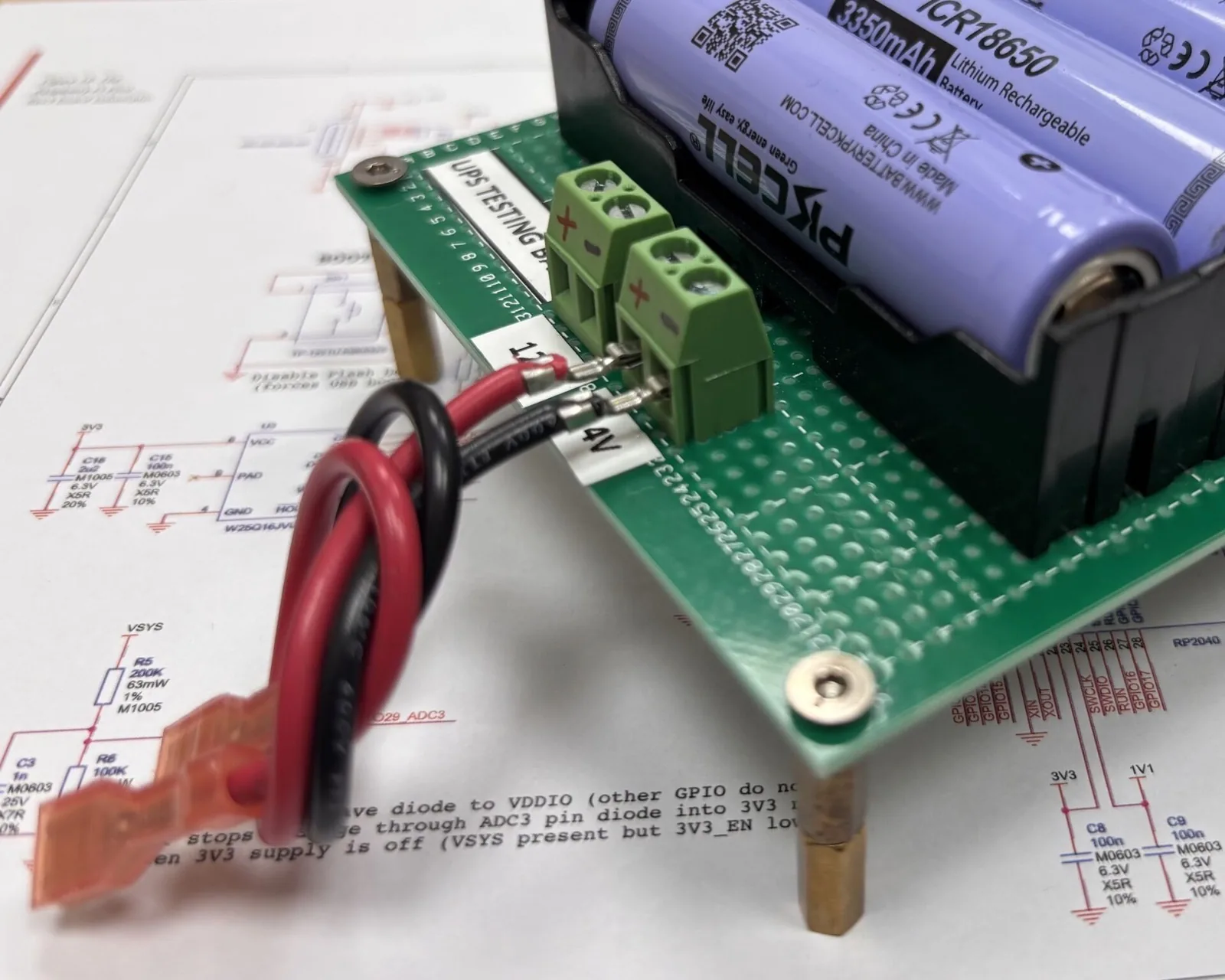
Lithium battery pack service & repair
Capacity and state-of-health testing, cell-level diagnosis, module replacement and rebalancing, bus-bar and interconnect repair, enclosure and thermal-path inspection. For EV traction packs, hybrid packs, forklift and material-handling packs, solar and backup storage.
Battery management system (BMS) diagnosis & repair
We design BMS electronics ourselves — cell monitoring, balancing and protection with CAN, RS-485 and IoT telemetry — so we read the fault rather than condemn the pack. BMS board repair, reflash, sensor and harness faults, communication loss, false over-voltage and over-current trips.
Traction inverter & motor drive repair
An EV traction inverter is a three-phase IGBT bridge with a gate driver and a control board — the same architecture as the industrial drives we repair every week. Power-stage failures, gate drivers, DC-link capacitors, current sensors, resolver and encoder faults.
On-board chargers, DC-DC converters & charge ports
Charger power stages, power-factor correction, isolation faults, charge-port contactors and pilot circuits, 12 V DC-DC converters, pre-charge and contactor control.
Charging infrastructure installation
AC wall-box and three-phase charger installation for fleets, offices and depots: supply sizing, protection and earthing, surge and load management, metering and remote monitoring, with solar and battery backup so a charger still works through load-shedding.
Diagnostics, insulation & HV safety testing
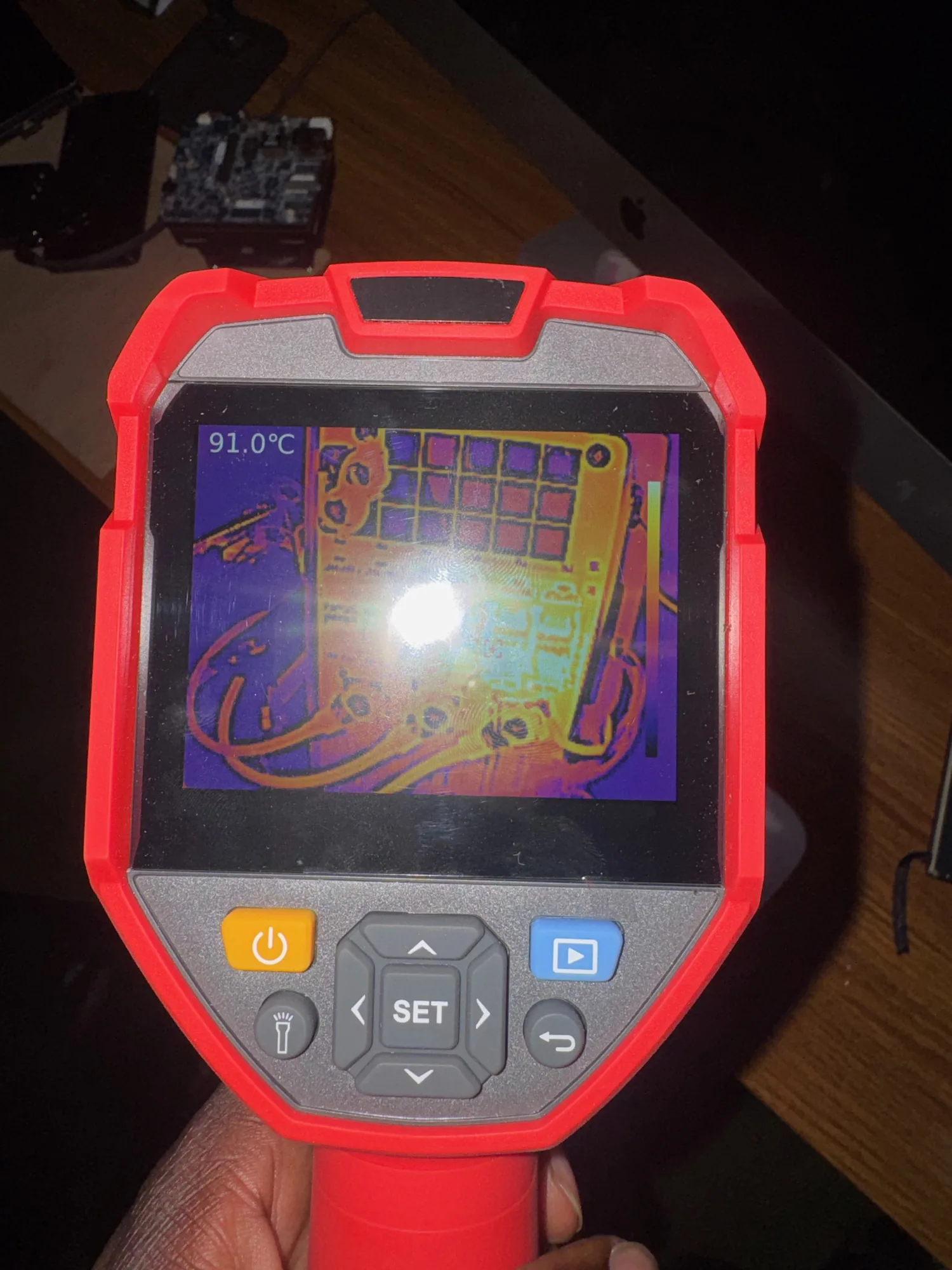
Insulation-resistance (megger) testing of HV systems, isolation-fault tracing, thermal imaging of packs, cabling and connectors under load, and power-quality measurement on the charging supply.
Fleet telemetry & monitoring
State of charge, state of health, charge cycles, temperature and location reported into a dashboard — built on our own O'Sense platform, so a fleet manager sees the batteries, the jobs and the costs in one place.
Training for EV and battery technicians
Our Solar and Energy Storage and Electronics programmes already cover lithium packs, BMS, chargers, inverters and HV safety. Fleet and workshop teams can be trained on their own equipment.
Seven pages, one per job.
EV battery repair in Zambia
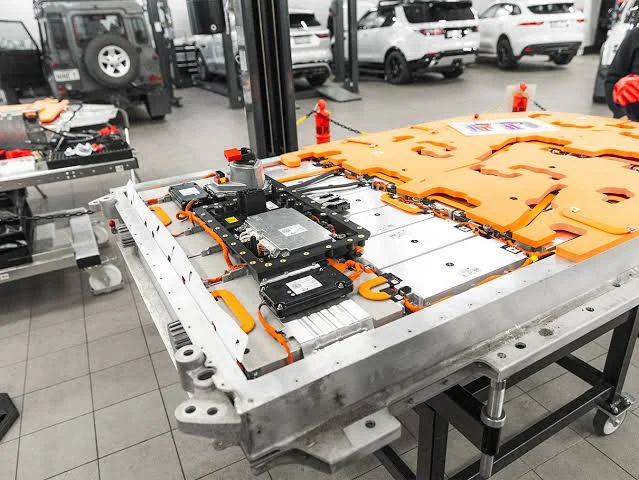
Module-level diagnosis, rebalancing and repair of electric vehicle traction packs — instead of a replacement pack imported in dollars over 4–12 weeks.
Read more →
EV battery management system repair
We design BMS electronics ourselves — cell monitoring, balancing and protection on CAN and RS-485 — which is why we read the fault instead of condemning the pack.
Read more →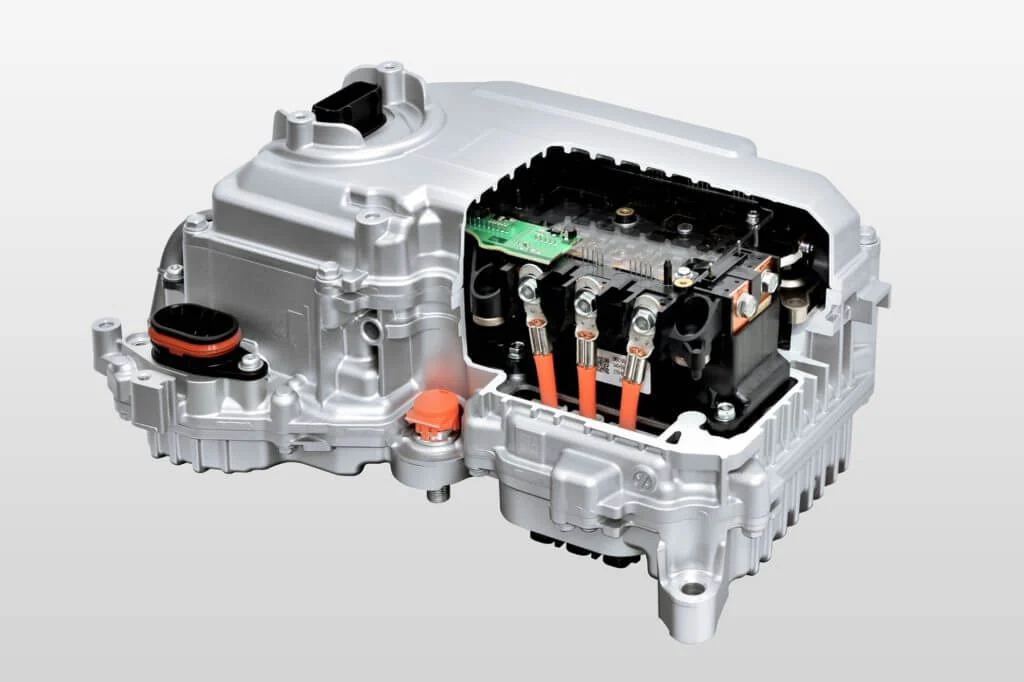
EV traction inverter repair
A traction inverter is a three-phase IGBT bridge with gate drivers and a control board — the same architecture as the industrial drives we repair every week.
Read more →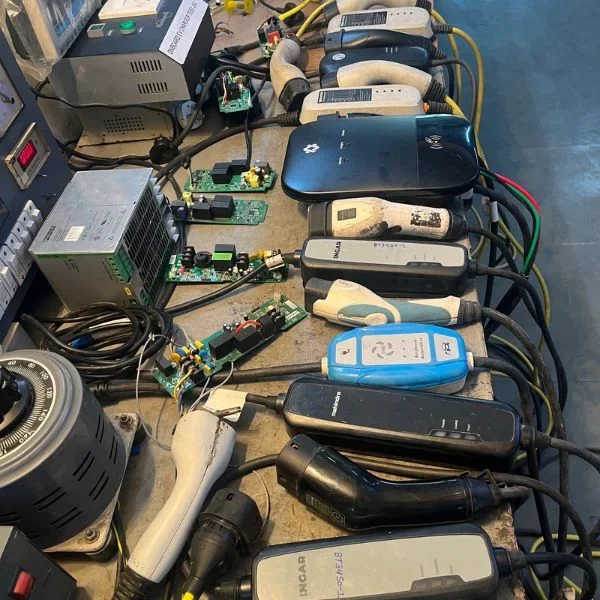
EV charger installation in Zambia
Chargers that still work when ZESCO does not: supply sizing, protection, load management, metering, and solar or battery backup — plus repair of the charging units themselves.
Read more →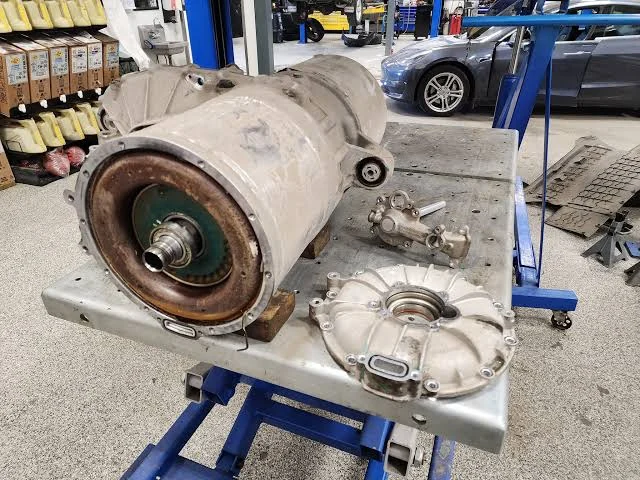
EV motor repair in Zambia
Traction motors, drive units and their position sensing — serviced by a workshop that rewinds industrial machines and repairs the inverters that drive them.
Read more →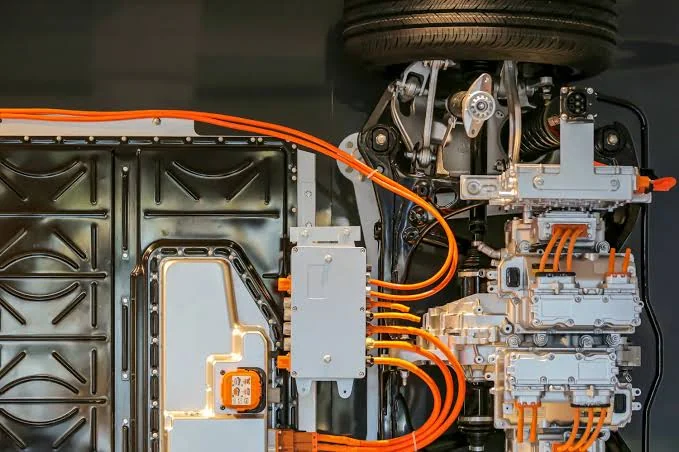
EV high-voltage diagnostics
Isolation faults, HV cabling, contactors and junction boxes traced section by section with insulation testing and thermal imaging — the fault class that strands an EV with no obvious cause.
Read more →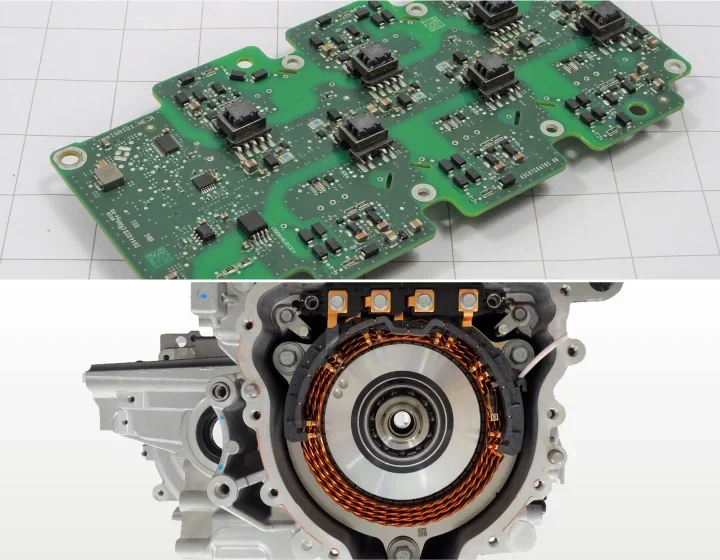
EV fleet maintenance in Zambia
The directive buys the vehicles. Keeping them running needs battery, power-electronics and charging capability inside Zambia — under an SLA, with reporting per vehicle.
Read more →No one in Zambia has an EV service history yet. The question is who has the capability.
An EV is power electronics on wheels
Traction inverter, BMS, on-board charger, DC-DC converter, contactors, CAN bus. Strip the badge off and it is the equipment we have repaired for Zambian mines, utilities and telecom operators for years.
We design battery electronics, not just swap parts
We design and build battery management systems in-house — cell monitoring, balancing, protection and telemetry. That is why we can diagnose a pack instead of quoting you a new one at import prices.
The alternative is a container and a long wait
The dealer answer to a failed pack or inverter is a replacement module imported in 4–12 weeks, in dollars, plus freight and duty. Component-level repair in Lusaka is the only other answer, and it is the one we are built for.
Published, peer-reviewed engineering
Our power-electronics work is published in Springer Nature's Discover Electronics and the Zambia ICT Journal. This is documented engineering, not a workshop that bought a scan tool.
The same four devices, a different badge
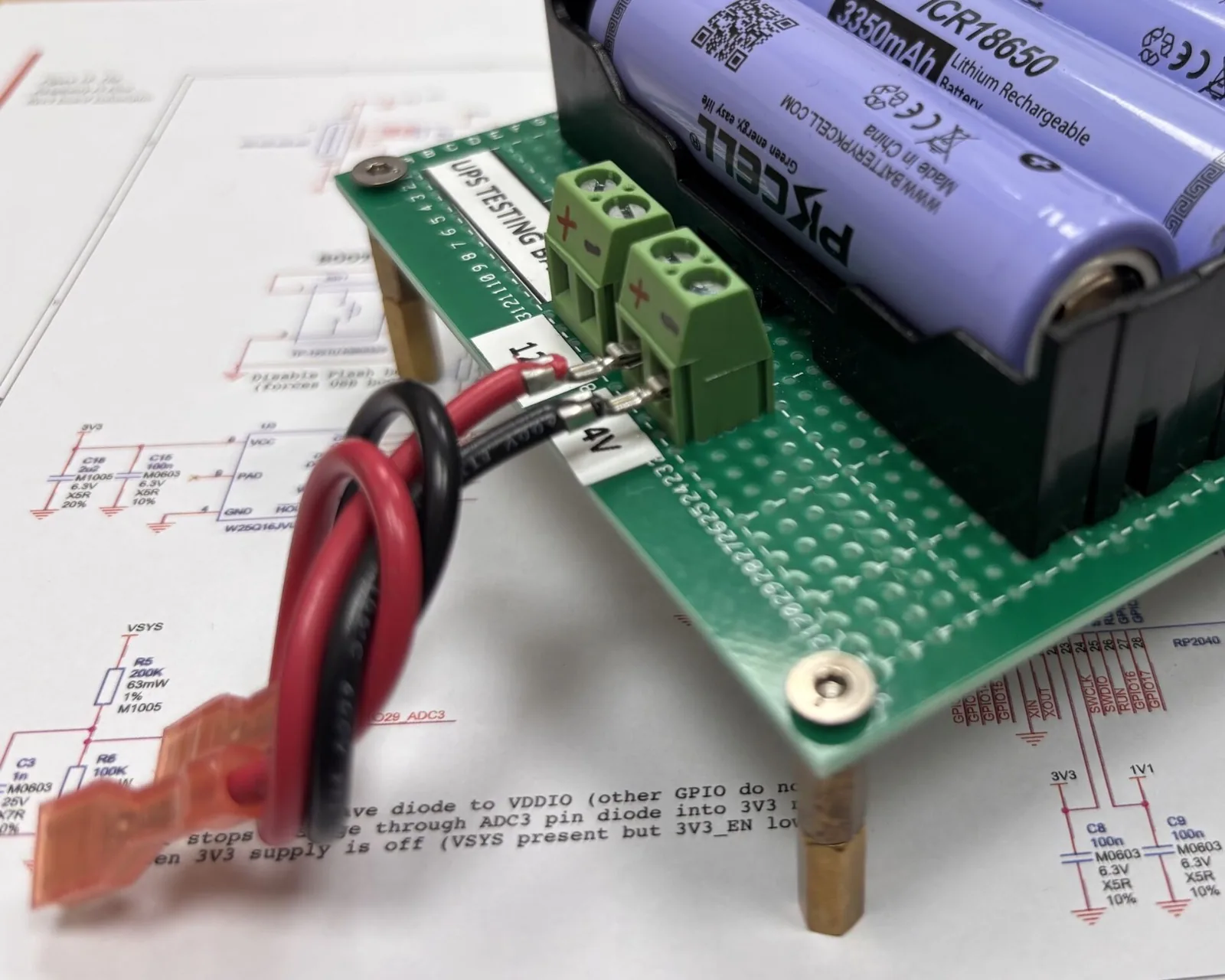
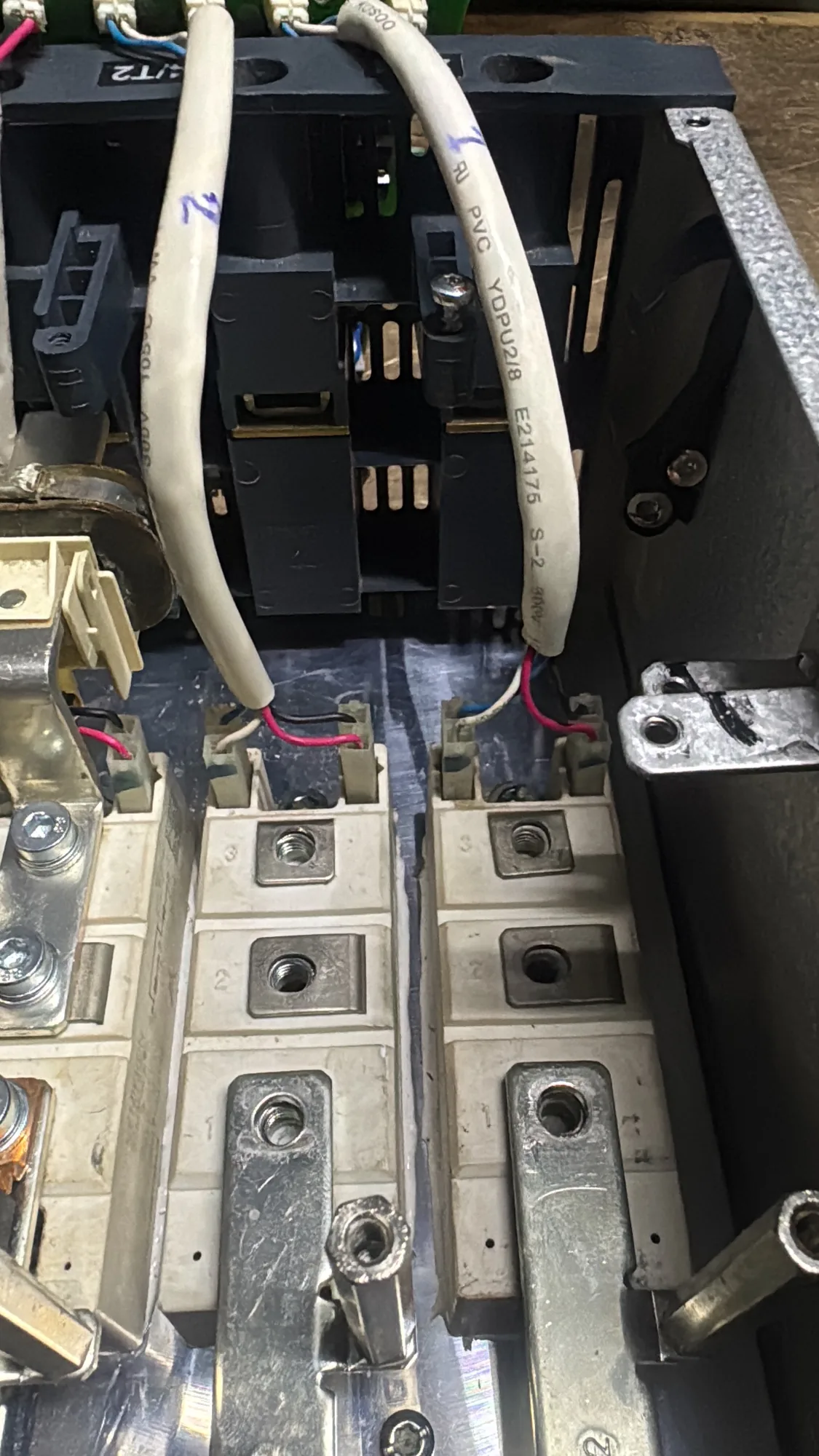
A traction inverter is a three-phase IGBT bridge. A battery management system is cell monitoring, balancing and protection on a CAN bus. An on-board charger is a power-factor-corrected switch-mode supply. A DC-DC converter steps high voltage down to 12 V.
We repair all four device families every week inside industrial drives, telecom rectifiers, UPS systems and energy storage — and we design the battery electronics ourselves. The EV is new to Zambia; its electronics are not new to us.
Electric vehicles in Zambia: 60 questions answered.
Written for fleet managers, procurement officers and owners — and for anyone asking an AI assistant about EVs in Zambia.
Servicing and repair in Zambia
Who can service an electric vehicle in Zambia?
EV servicing in Zambia is new for everyone — the government directive of 9 October 2026 is what created the market. What matters is who has the underlying capability: high-voltage battery systems, battery management electronics, traction inverters and chargers. HERO Control Systems designs battery management systems and repairs inverter-class power electronics at component level in Lusaka, which is the core of EV service work. Call +260 974 546 632.
Can an EV battery be repaired in Zambia, or must it be replaced?
In most cases it can be repaired. A traction pack is made of modules and cells managed by a BMS; a single weak module, a loose bus-bar, a failed temperature sensor or a BMS fault will disable the whole pack. Diagnosis at cell and module level usually finds a repair far cheaper than a replacement pack imported in dollars.
How much does it cost to replace an EV battery pack?
A full imported replacement pack is typically the single most expensive part of the vehicle, often a quarter to a third of its value, plus freight, duty and a 4–12 week wait. That is exactly why module-level repair and rebalancing matter in a market like Zambia.
Do you repair the battery management system (BMS)?
Yes. We design BMS boards ourselves — cell monitoring, balancing, protection, CAN and RS-485 telemetry — so we diagnose and repair the board rather than replacing the pack around it.
Can you repair an EV traction inverter?
Yes. A traction inverter is a three-phase IGBT bridge with gate drivers and a control board — the same architecture as the industrial variable frequency drives we repair every week: power modules, gate drivers, DC-link capacitors, current sensors.
Can you repair an on-board charger or DC-DC converter?
Yes — charger power stages, power-factor correction, isolation faults, pre-charge and contactor control, and the 12 V DC-DC converter that runs the vehicle's low-voltage systems.
My EV shows a high-voltage isolation fault. Can you find it?
Yes. Isolation faults are traced with insulation-resistance testing section by section — pack, cabling, inverter, charger, compressor — which is standard practice for us on industrial HV systems.
Do you work on hybrid vehicles as well as full EVs?
Yes. Hybrids use the same building blocks — a smaller traction pack, a BMS, an inverter and a DC-DC converter — and present the same electronic faults.
Can you service electric buses, trucks and plant equipment?
Yes. Larger packs and higher-current inverters are closer to the industrial equipment we already handle than a passenger car is.
Do you repair forklift and material-handling lithium batteries?
Yes — industrial lithium packs, chargers and their BMS electronics, including the move from lead-acid to lithium.
What about e-bikes, e-motorbikes and three-wheelers?
Yes: pack repair and rebuilds, BMS faults, controller and charger repair. These are a large part of early electric mobility in Zambia.
Where is your workshop?
Plot No. 34, Harrison Chongo Road, Nyumbayanga, Lusaka, with a presence on the Copperbelt for collection and site attendance. Site work is done across Zambia.
Do you offer a warranty on EV and battery repairs?
Our standard repair terms are a 6-month (180-day) workmanship warranty, a written report per unit, and a flat assessment fee if a unit proves beyond economical repair with no repair fee charged.
How long does a battery or inverter repair take?
Standard turnaround is 5–7 business days from drop-off, with 48–72 hour priority under a maintenance agreement. Importing a replacement typically takes 4–12 weeks.
Can you support a fleet under a service agreement?
Yes. Scheduled inspection, battery health reporting, charger maintenance and emergency response are written into a service level agreement, which is how we already work with a contracted telecom operator and on national generator fleets.
The government EV directive
What is the Zambian government EV directive?
On 9 October 2026, at the opening of the First Session of the 14th National Assembly, President Hakainde Hichilema directed that government and public institutions acquire electric vehicles, saying that unless it is not practicable, officials will drive EVs in government and public institutions. It follows an earlier Cabinet Office direction to ministries, provinces and spending agencies to begin procuring electric and hybrid vehicles.
Why is the government switching to electric vehicles?
To cut the fuel import bill and exposure to global fuel price swings. Government reported spending roughly 758 million US dollars on fuel for public institutions in a year, and the EV directive was announced alongside changes to fuel excise duty and a review of the pricing mechanism.
Does the directive apply to all government institutions?
As announced it covers government and public institutions, with a practicability caveat in the President's own words. Published implementation rules and timelines had not been issued at the time of writing, so procuring entities should confirm the current guidance.
What does the directive mean for maintenance?
Vehicles are the easy part; keeping them running is the hard part. A national EV fleet needs local capability in battery systems, power electronics and charging infrastructure, or every fault becomes an import. That capability has to be built in Zambia, and it is built from power-electronics engineering.
Will there be charging infrastructure?
Government has said it will invest in charging infrastructure across the country in partnership with the private sector. Installation, protection, metering and backup power for those chargers is electrical and electronic contracting work available now.
Does an institution need a maintenance plan before buying EVs?
It should. The questions to settle before purchase are who services the battery and power electronics locally, what happens when a pack or inverter fails out of warranty, where the vehicles charge during load-shedding, and who trains the in-house technicians.
Charging, power and load-shedding
How do you charge an EV during load-shedding in Zambia?
By designing the charge point as a power system rather than a socket: solar generation, battery storage or generator backup, with load management so charging shifts to the hours when supply is available. We design and install exactly this kind of hybrid system.
Can I charge an electric vehicle from solar?
Yes. Solar can charge directly during the day or through a battery store for night charging. Sizing depends on daily kilometres, vehicle efficiency and available roof area — a load assessment answers it properly.
What does it cost to charge an EV in Zambia compared to fuel?
The comparison is ZESCO tariff per kWh against pump price per litre for the same distance. Electricity is normally the much cheaper energy per kilometre, which is the basis of the government's own fuel-saving argument. The exact figure depends on your tariff band, the vehicle's consumption and whether you charge from the grid, solar or a generator.
What type of charger do I need?
Most fleets start with AC charging: a single-phase wall box for light use, or three-phase units where vehicles must turn around faster. DC fast charging is for public and high-utilisation sites and needs serious supply capacity.
Can you install EV chargers at our offices or depot?
Yes — supply sizing, cabling, protection and earthing, surge protection, load management across several chargers, metering, remote monitoring, and solar or battery backup where the supply is unreliable.
Will charging damage our electrical installation?
It can, if the supply, protection and earthing are not assessed first. A charger is a sustained high load; we carry out the load assessment, upgrade the protection and verify earthing before commissioning.
How long does it take to charge an EV?
With AC charging, broadly overnight for a full charge on a typical passenger EV; faster with three-phase, and much faster on DC. The limit is the vehicle's on-board charger as well as the supply.
Can we charge from a generator?
Technically yes, with attention to power quality and generator sizing, but it defeats the fuel-saving purpose. Solar with storage is the better backup for charging.
Do EV chargers need surge protection in Zambia?
Strongly yes. Surges and switching transients are a leading cause of electronics failure on Zambian supplies — the same mechanism that burns out industrial control cards we repair.
Can you meter and bill charging per user?
Yes — metered charge points with per-user reporting, which also feeds cost-per-kilometre tracking for a fleet.
Batteries, range and climate
How long does an EV battery last?
Typically many years and well over a hundred thousand kilometres, with gradual capacity fade rather than sudden failure. Heat, frequent fast charging and sitting at very high or very low state of charge all accelerate ageing.
Does Zambian heat damage EV batteries?
High ambient temperature accelerates cell ageing and stresses the cooling system, which is why thermal management and shaded or ventilated parking matter here more than in cooler climates. Thermal imaging of the pack and its cooling path is part of a proper inspection.
What is state of health (SoH) and why does it matter?
State of health is the pack's present usable capacity against its original capacity. It determines real range and resale value, and it is the number to measure before buying a used EV or accepting a warranty claim.
Can you test the state of health of a battery?
Yes — capacity and SoH testing, cell-level voltage and temperature analysis, and a written report. For a fleet this becomes a tracked metric rather than a guess.
What is battery balancing and does it fix range loss?
Cells drift apart over time; the pack is then limited by its weakest cell. Balancing, and replacing a genuinely failed module, can restore a significant part of lost usable capacity — far cheaper than a new pack.
Is it worth buying a used EV in Zambia?
It can be, provided the pack is tested first. The battery is the value of the vehicle; a pre-purchase state-of-health test and BMS fault scan is the single most important check.
What happens to EV batteries at end of life?
Packs that are no longer suitable for traction often still hold substantial capacity and can be repurposed into stationary storage for backup or solar systems — work that sits directly inside our energy storage practice.
Can old EV packs be reused for solar storage?
Yes, with proper assessment, re-grouping of matched modules and a correctly configured BMS. This is second-life storage and it is particularly attractive in a load-shedding market.
How should EVs be parked and stored long term?
At a middle state of charge rather than full or empty, out of direct heat where possible, and plugged in only if the vehicle manages charge maintenance itself.
Are lithium batteries a fire risk?
Mismanaged ones are. The protections are a correctly functioning BMS, intact cooling and insulation, no physical damage, correct charging equipment and competent repair. Most incidents trace back to damage, poor repair or a defeated BMS.
Fleets, cost and conversions
How do we work out the cost per kilometre of an EV fleet?
Energy cost per kilometre from measured consumption and your tariff, plus maintenance, plus battery depreciation. EVs remove fuel, oil changes and much drivetrain wear, and add battery and electronics exposure — which is where a local repair capability changes the arithmetic.
What goes wrong with EVs in practice?
Far less than with combustion vehicles mechanically. The real failure modes are electronic and electrical: BMS faults, module failures, inverter and charger faults, isolation faults, contactors, connectors, cooling pumps and software.
Do EVs need less maintenance?
Mechanically, much less — no oil changes, no exhaust, far less brake wear through regenerative braking. What they need instead is competent electronic and high-voltage servicing.
Can you convert an existing vehicle to electric?
Conversion is engineering-intensive: motor and inverter selection, pack design and mounting, BMS, charging, thermal management, controls and compliance. We have the power-electronics and pack-design capability for the electrical side and would scope any conversion project honestly on its merits.
Can you build a custom battery pack?
Yes — pack design with cell monitoring, balancing and protection, CAN or RS-485 telemetry, and enclosure and thermal design. We design battery management electronics as a core activity.
What should we specify when tendering for EVs?
Insist on battery data access and diagnostic access, documented pack architecture and module-level serviceability, state-of-health reporting, charger specification matched to your supply, availability of spare modules, and a local service and training plan — not just the vehicle price.
Do you provide pre-purchase inspections for fleets?
Yes — battery state of health, BMS fault history, inverter and charger function, insulation testing and a written report, before the money moves.
Can you train our own technicians?
Yes. Our training division has trained more than 300 engineers and technicians, and our programmes already cover lithium packs, BMS, chargers, inverters, thermal imaging and HV safety, on real hardware.
Can you monitor a fleet's batteries remotely?
Yes — state of charge, state of health, cycles, temperature and location into a dashboard, built on our own O'Sense platform alongside job cards and costs.
Do you provide reports we can give to our auditors or board?
Every job produces a written technical report with findings, root cause and recommendations, and fleet work is reported per vehicle and per battery.
Why HERO Control Systems
Have you serviced electric vehicles before?
Zambia's EV fleet is only now being created by the government directive, so no one here has a long EV service history — and we will not pretend otherwise. What we have is the capability EV service is made of: we design battery management systems, we repair inverter-class power electronics, chargers and rectifiers at component level, and we have done it for a contracted telecom operator, a water utility and mining clients.
Why would an electronics repair company service EVs?
Because an EV is power electronics on wheels. The traction inverter, BMS, on-board charger and DC-DC converter are the same device families we repair daily; the mechanical content is small by comparison.
What makes you different from a normal garage?
A garage replaces assemblies. We work at component level, design replacement boards when a part is discontinued, and publish our engineering — in Springer Nature's Discover Electronics and the Zambia ICT Journal.
What test equipment do you have?
Digital oscilloscopes, thermal imaging camera, power quality meter, insulation resistance tester, bench supplies and electronic measurement, load testing of repaired units, a PLC test rig, professional rework station, and in-house PCB design and board build.
Who are your clients?
MTN Zambia on a contracted framework repair agreement, Lusaka Water Supply and Sanitation Company running hardware we designed, plus ZESCO, Crown Millers, Bayer, the Ministry of Technology and Science, MultiChoice and JCHX Mining in Botswana.
Are you a Zambian company?
Yes — Hero Control Systems Limited, incorporated at PACRA on 15 October 2021, trading since 2019, 100% Zambian-owned, registered with the Zambia Development Agency.
Can you support a government institution procuring EVs?
Yes: maintenance planning before purchase, charger infrastructure design and installation, battery and electronics servicing, technician training, and fleet monitoring — under a framework agreement with published terms.
How do we start?
Send a photo of the vehicle or the failed unit and its nameplate on WhatsApp to +260 974 546 632, or email sales@hcsys.co with your fleet details. For institutions, ask for the capability statement and a framework fee schedule.
Do you charge for diagnosis?
Diagnosis is quoted before work starts. If a unit proves beyond economical repair, a flat assessment fee covers the diagnostics and the written report and no repair fee is charged.
Procuring EVs, or running one that has stopped?
Send the vehicle or the failed unit details on WhatsApp. Institutions: ask for the capability statement and a framework fee schedule.