
Real circuits in every student’s hands.
Zabble is the STEM kit that teaches electronics, coding and connected devices on real hardware. Designed and made in Lusaka for schools, colleges, TEVET institutions and universities, and already in 57 schools across Zambia.
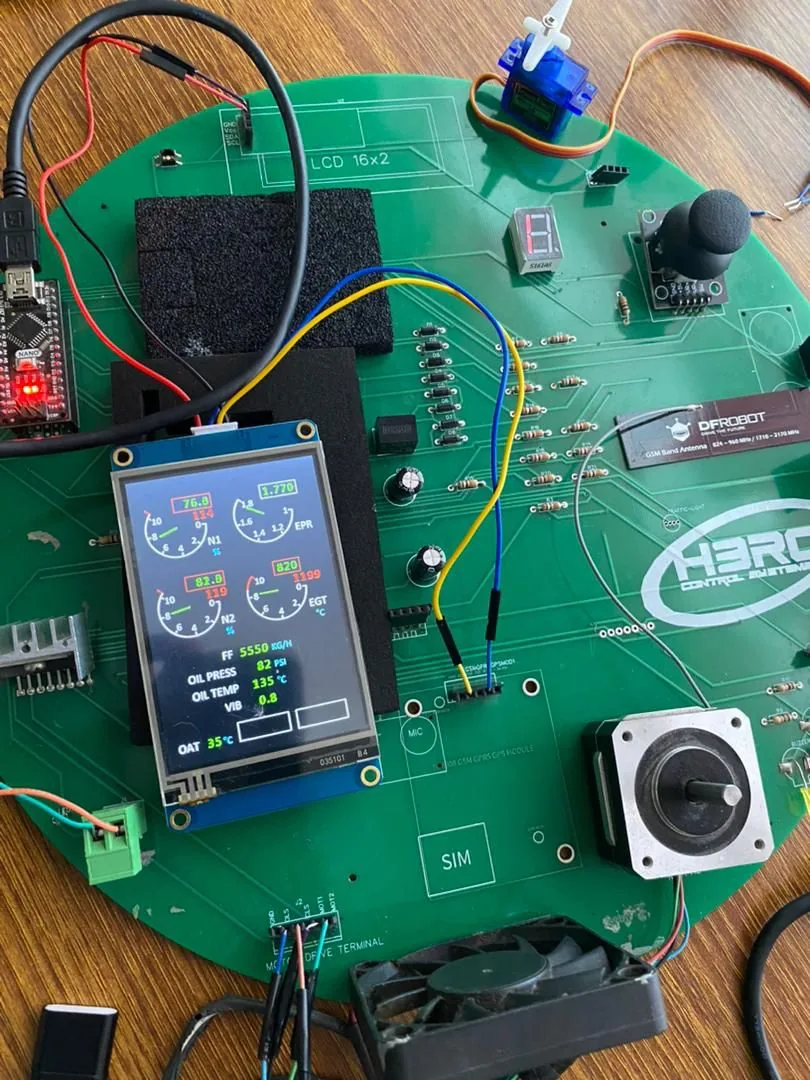
One kit, from the first lesson to the final-year project.
Schools
Secondary and primary STEM clubs and science departments. Students move from "I have only read about circuits" to a working one in the first lesson.
Colleges
Electrical, electronics and ICT programmes that need a safe, repeatable bench for every learner, not one demonstration unit for the whole class.
TEVET institutions
Practical, hands-on electronics and embedded modules where trainees must build, measure and fault-find, not just watch.
Universities
First- and second-year electronics, embedded systems and IoT labs, and a platform for final-year and research projects.
Electronics, coding and IoT, on one board.
Electronics
Build real circuits, measure them with a multimeter and an oscilloscope, and understand power supplies, sensors and motors by working with them.
Coding
Write embedded C++ on a microcontroller, read sensors, draw on a colour display and drive a stepper motor.
Connected devices
Take a device onto Wi-Fi, send data with MQTT and connect it to the cloud, the way real IoT products work.
Design and repair
Move from breadboard to board design, and learn to troubleshoot, the skills industry in Zambia keeps asking for.
Explore circuits
Power, signals and sensors on the lattice board.
Code a microcontroller
Embedded C++, displays, motors and inputs.
Connect and sense
Wi-Fi, MQTT and cloud dashboards.
Design and build
Student projects, from idea to working prototype.
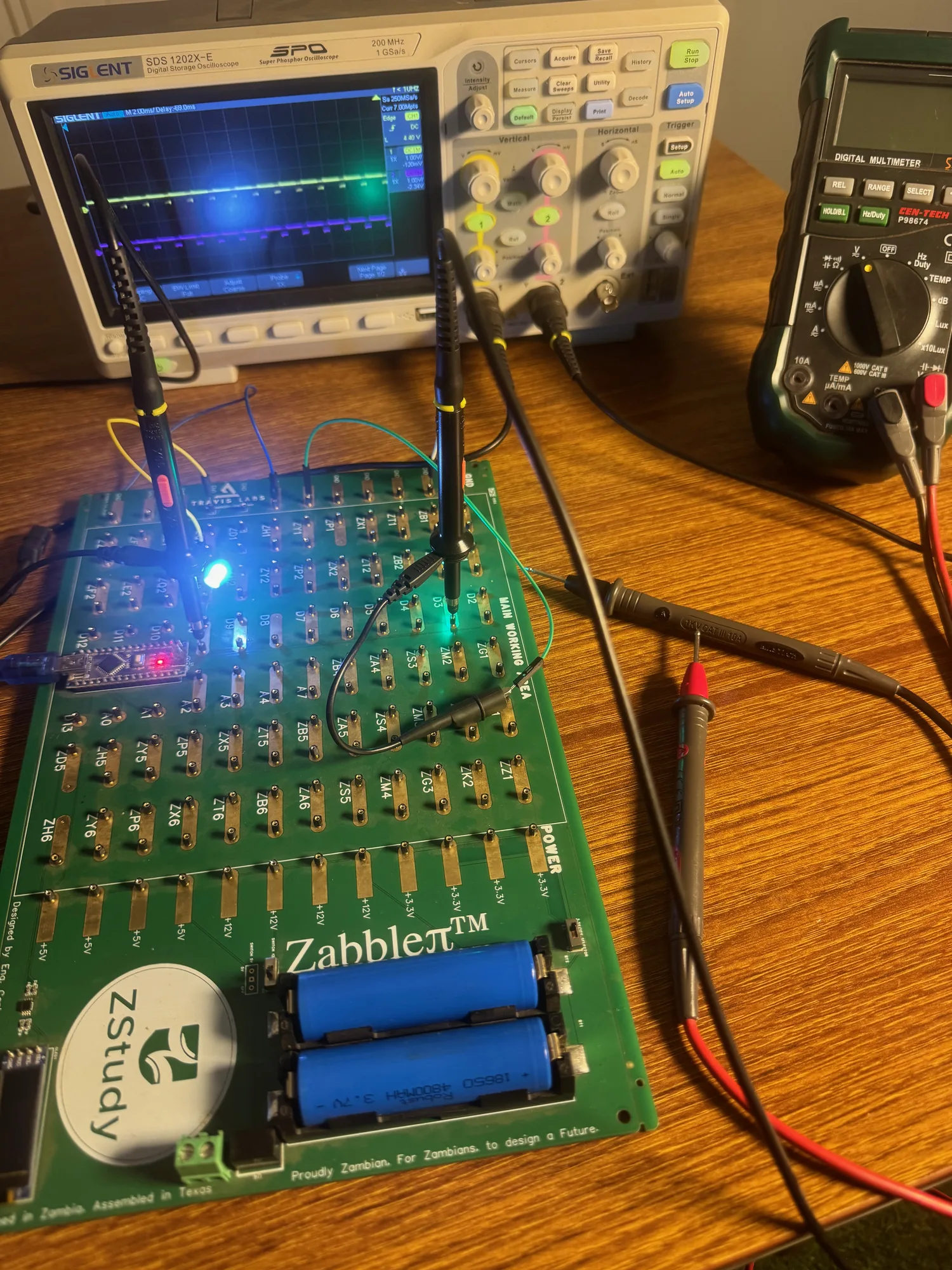


Built by engineers who work on real equipment.
- Real circuits, safely. A fuse-protected, ESD-aware power fabric means students can experiment, make mistakes and keep learning.
- Modular by design. A lattice of studs lets learners build and rebuild circuits, with power and ground reachable across the board.
- Made in Zambia. Designed and manufactured by Travis Labs in Lusaka, so support, spares and training are in the same country as the classroom.
- Built by working engineers. The team that designs Zabble also repairs drives and designs boards for mines, utilities and telecom operators.
- Documented and published. The power-fabric design is published, open access, in Springer Nature’s Discover Electronics (2026).
- A textbook in the kit. The Embedded IoT Systems guide (272 pages, 11 chapters) ships with the Zabble kit, from embedded C++ and ESP32 to MQTT and AWS IoT.
The Zabble board and the research behind it.
A walk through the Zabble boards at the HCS bench in Lusaka.
Read the published power-fabric design in Discover Electronics, or see how HCS trains engineers and technicians on the same boards.
We help your staff teach with it.
Teacher and lecturer training
Hands-on sessions so your staff are confident before the first lesson.
Lab setup
Help planning bench space, power and storage for the number of learners you have.
Lesson book and projects
The Embedded IoT Systems guide and project ideas to build a term around.
Local support and spares
Repairs and replacement parts from our Lusaka workshop.
Bring Zabble to your institution.
Tell us who you teach and how many learners. We reply with a quote covering kits, teacher training and delivery.
Prefer to talk first? Call or WhatsApp +260 974 546 632 or write to sales@hcsys.co.
What schools, colleges and universities ask.
What is Zabble?
Zabble is a STEM and electronics education kit designed and made in Zambia by Travis Labs, part of HERO Control Systems in Lusaka. Its Zabble π board gives students a safe, modular surface for building real circuits, programming a microcontroller and learning embedded and IoT systems.
Who is Zabble for?
Schools, colleges, TEVET institutions and universities that teach electronics, coding, embedded systems and IoT, and want students to build and measure real circuits.
Do students need electronics experience?
No. The kit starts from first circuits and builds towards microcontroller coding and connected devices, so it works for beginners and scales up to university projects.
Can you train our teachers or lecturers?
Yes. We run hands-on training for the staff who will teach with Zabble, and can help set up the lab.
How does Zabble fit our syllabus?
Zabble is a practical platform for electronics, embedded systems and IoT modules. Share your syllabus or module outline and we will show how the kit and projects fit it.
Is Zabble already in schools?
Yes. Zabble kits are in 57 schools across Zambia, and the programme won the 2022 Genius Zambia award for Most Innovative STEM Solution.
How do we order, and what does it cost?
Pricing depends on the number of kits, training and delivery. Send us your institution, the number of learners and your location using the form on this page, or message us on WhatsApp, and we will send a quote.
Put real circuits in your students’ hands.
Send us your institution and the number of learners. We will reply with a quote.