WaterHandler: the Zambian-built smart valve sold in Texas
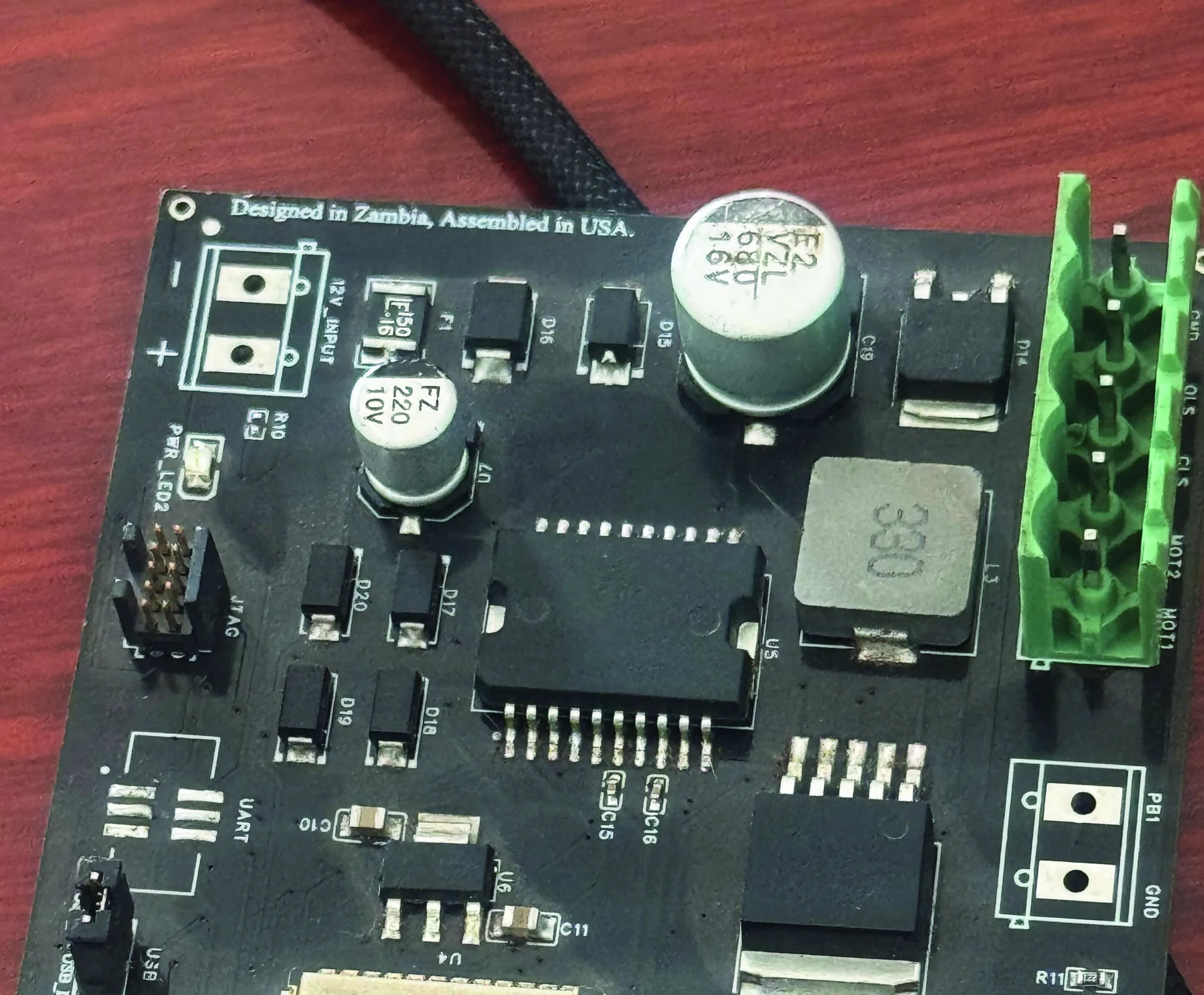
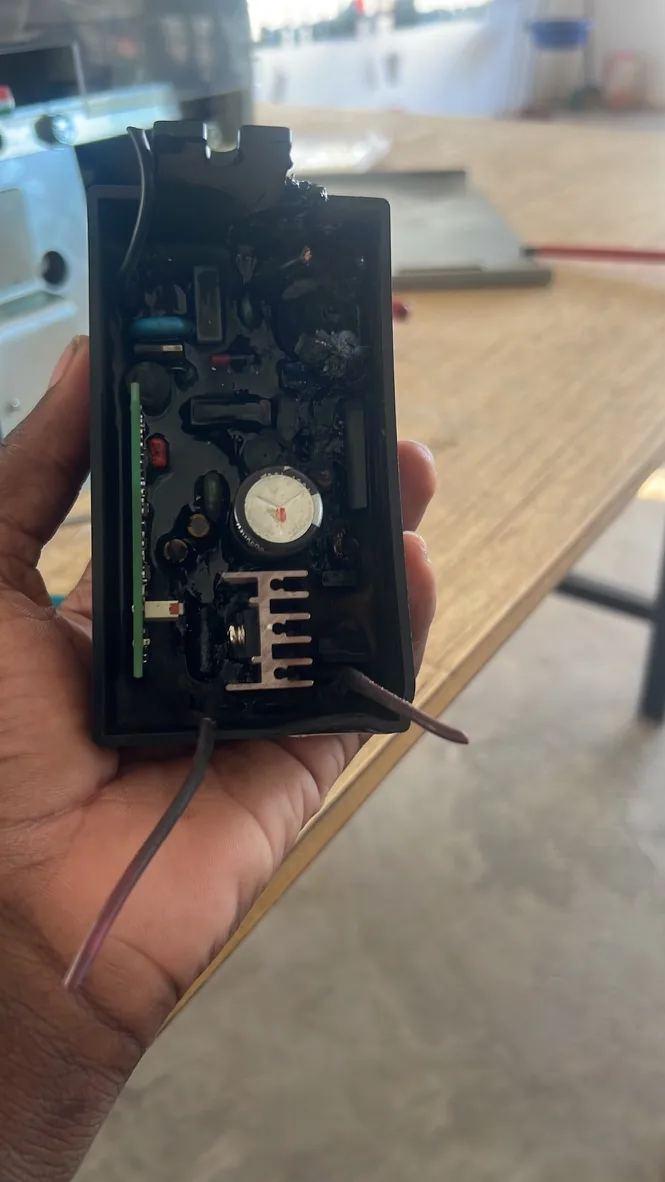
Open the control box of a WaterHandler in a Texas home and the circuit board inside says where it came from: "Designed in Zambia, Assembled in USA". WaterHandler is a smart water shut-off system. It lets anyone in a house stop the water in seconds, with a button on the wall or an app on a phone. The electronics that make that work are designed, built and tested by Travis Labs at HERO Control Systems in Lusaka, and they have shipped to Texas every month since the product went to market.
This is the story of the product, how it works, what our part in it is, and what building it taught us about connected devices.
It began with a locked box
WaterHandler's American inventor had a water line break under the kitchen sink. The family was at home, but could not stop the water. The City of Azle had locked the water meter box, so they had to phone the city and wait while four rooms with hardwood floors flooded. The damage claim came to $25,000.
The advice was to fit a manual ball valve in the line. The inventor set out to build something better: a system anyone in the household could use in an emergency. By the maker's account, development took more than three years, with the system tested at the inventor's own home.
It is not a rare problem in the United States. The Insurance Information Institute reports that about one in 60 insured homes has a water damage or freezing claim, with an average claim of $15,400 for 2019–2023. Texas knows it better than most: the Texas Department of Insurance says Winter Storm Uri in February 2021 caused more than 450,000 claims and over $8 billion in insured losses, with much of the damage caused by water from broken pipes.
How WaterHandler works
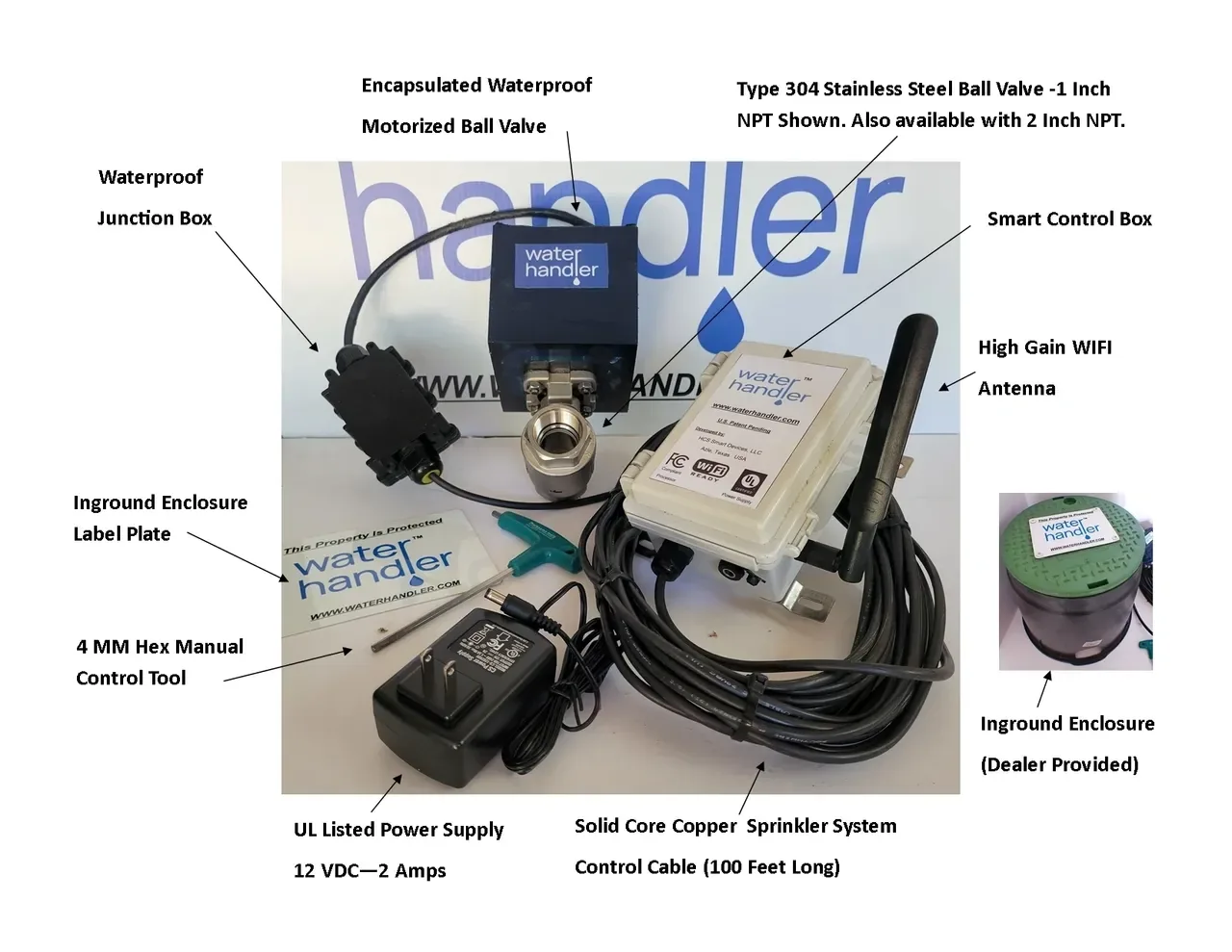
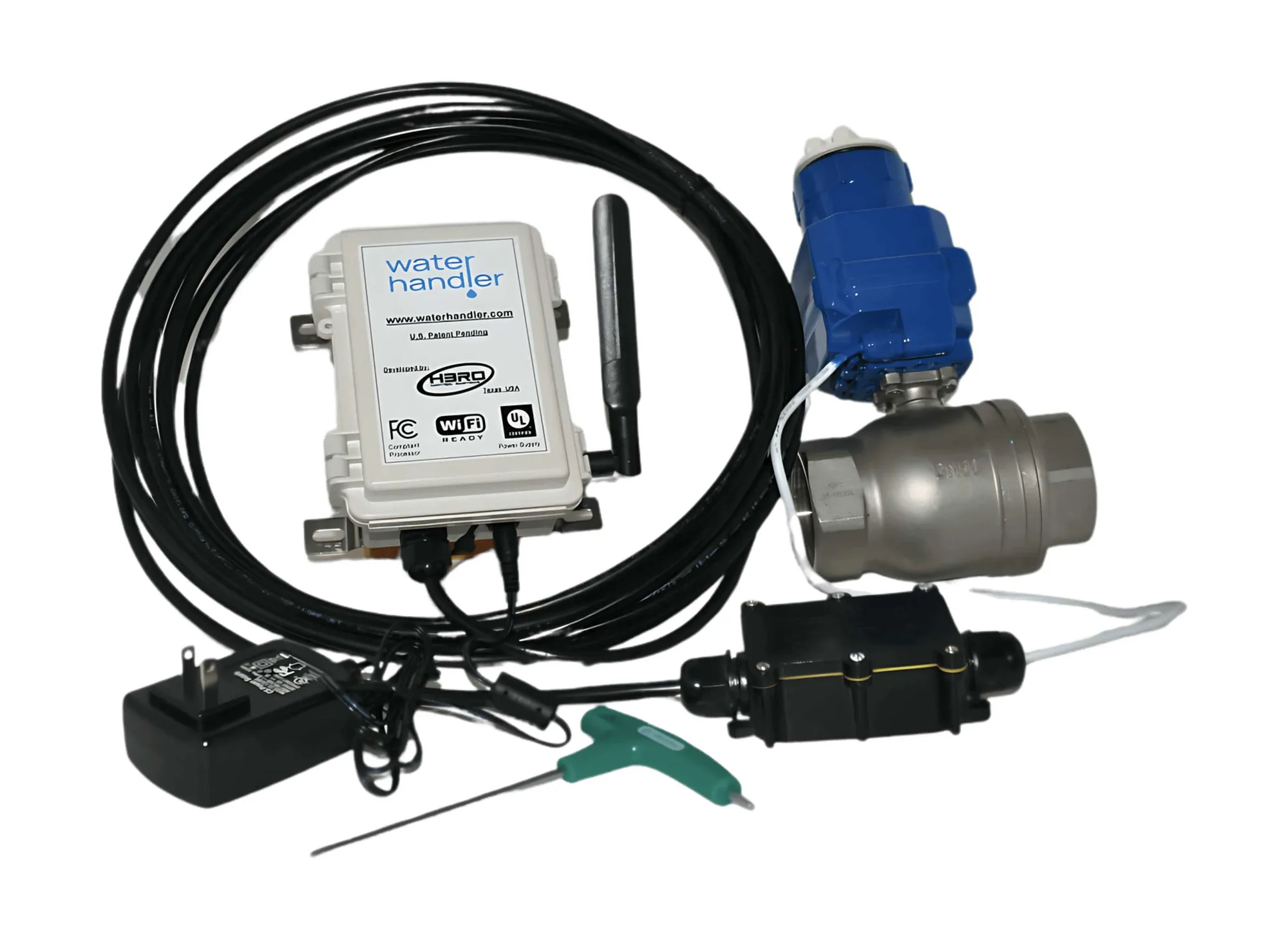
- The valve. A motorised stainless-steel ball valve sits in the main water line between the meter and the house: 1-inch NPT on the WH-1 and 2-inch on the WH-2. The maker has tested it fully submerged in flood water for weeks.
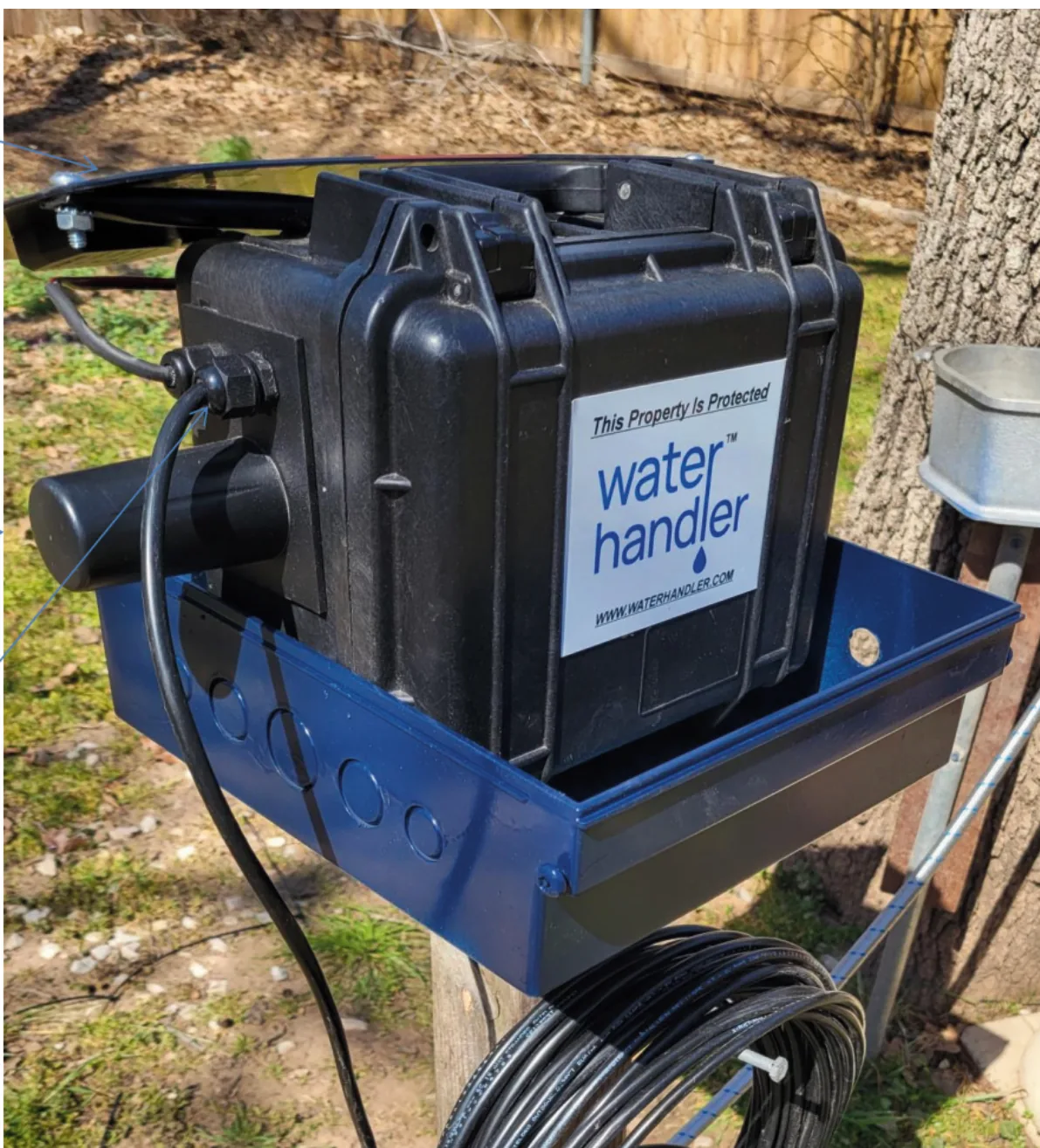
- The Smart Control Box. It is mounted on the wall, connects by Wi-Fi and has one push button. One press cycles the water off or on, with no phone or internet needed. It drives the valve at 12 V DC and 2 A, over about 100 feet of buried control cable, so there is no mains voltage near the water.
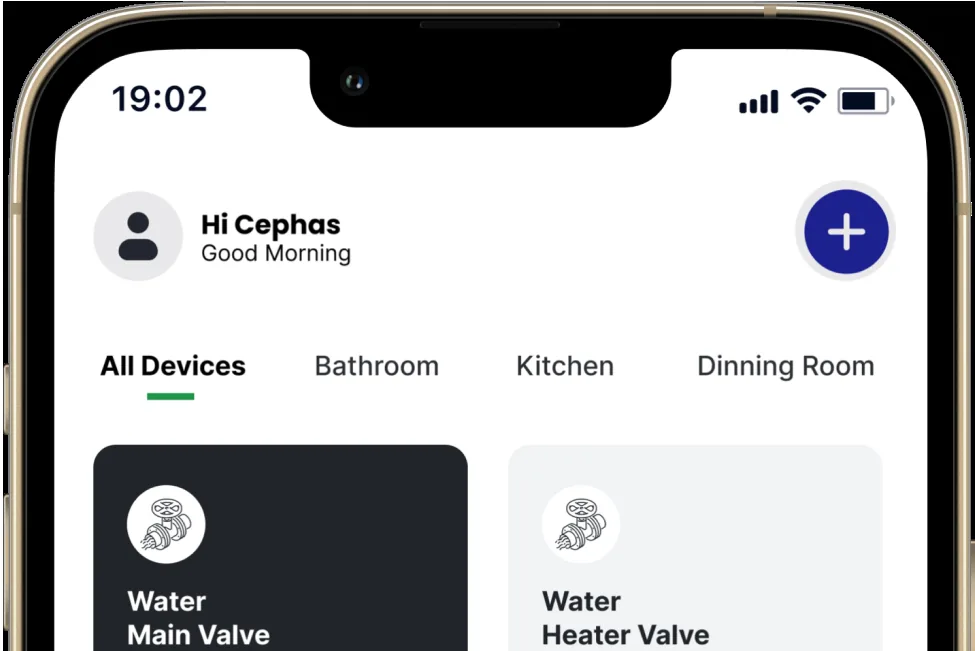
- The app. On Android and iPhone, it can turn the water off as you leave and back on when you return. One app can name and control up to 36 systems, each with its own hardware address.
- The manual override. If the power is lost, a 4 mm hex key turns the valve by hand, with the system's power switched off first.
- Leak sensors, still in development. Up to 36 battery-powered sensors per system will go behind the fridge, toilets, water heater and washing machine. Water bridging a sensor's legs tells the control box to shut the main and notifies the owner's phone. The maker's demonstration uses just 1/16 inch of water.
What was built in Lusaka
Travis Labs designed the Smart Control Box electronics: the power stage, the valve driver, the Wi-Fi control and the push-button logic. We build and test every board in Lusaka and export them to HCS Smart Devices, LLC in Azle, Texas, which assembles the kits, sells them, and handles installation and warranty through plumbers and dealers.
The product is FCC-compliant and UL-listed, the marks a product like this needs to be taken seriously in the United States. The current board revision is surface-mount, which is the way boards must be built as volumes grow.
What it has done
- Homes. Homeowners use it as an emergency stop, and as a way to leave the water off when they go away.
- Insurance. One neighbour's insurer cut the premium by $700 a year after its vice-president saw a demonstration. That is one homeowner's result, not a promise, but it shows how insurers can see the value of a device that stops a claim.
- Vineyards. The same control system switches irrigation lines at a vineyard in North Texas.
- Rivers. We also fitted the platform with calibrated probes to make RiverSense, for public river water-quality monitoring in the USA, with the electronics, probe calibration, software and installation all done by HCS.
What it taught us about building IoT
- The product must work without the app. In an emergency, nobody should have to find a phone, unlock it and wait for Wi-Fi. A physical button and a hex key are not old-fashioned; they are what makes the connected part safe to depend on.
- A device with no screen still has to join a network. Getting a box with one button onto a home's Wi-Fi sounds trivial until a plumber has to do it on site. Provisioning devices with no display is now the subject of one of our research manuscripts with Copperbelt University, alongside work on energy-aware MQTT for remote water systems.
- Test where the product will really live. A valve in the ground will be flooded, so it was tested under water. Bench testing alone would not have shown that it could take it.
- Keep the dangerous part out of the design. Choosing 12 V for a device beside water removes a whole class of risk. It also makes the installation simple enough for a plumber rather than an electrician.
- Distance is a design requirement. When your customers are an ocean away, there is no popping round to fix a board. Designing for that makes a product far more reliable, and it is the same discipline a remote Zambian site demands.
Why this matters in Zambia
WaterHandler is sold in the United States, not here. It matters to Zambia for two other reasons.
It shows what can be built here. A board designed and made in Lusaka is sitting in American homes, under American certification rules. Electronics design does not have to be imported, and neither do the skills behind it.
The water problem here is different, and bigger. Utilities here lose a large share of what they produce: national non-revenue water was reported at 52 percent in 2020 and 53 percent in 2021. The same combination of a controlled valve, a meter and a connection could support leak detection on estates and prepaid water by mobile money.
It would not be a straight copy. A Zambian version would have to cope with intermittent supply and air in the pipes, power cuts, surges, and sites with no Wi-Fi, so it would use a SIM or LoRa link. It would need a local pilot and the agreement of the utility and the regulator. Those are exactly the conditions we design for.
We design and build connected devices in Lusaka, from the circuit board and firmware to the cloud connection. See our IoT development and integration work, read more on the WaterHandler page, see how we design boards, or contact us. In the USA, see waterhandler.com.