Smart Ways to Evaluate LED Bulb Circuit Board Price and Quality
What LED Bulb PCB Prices Tell You
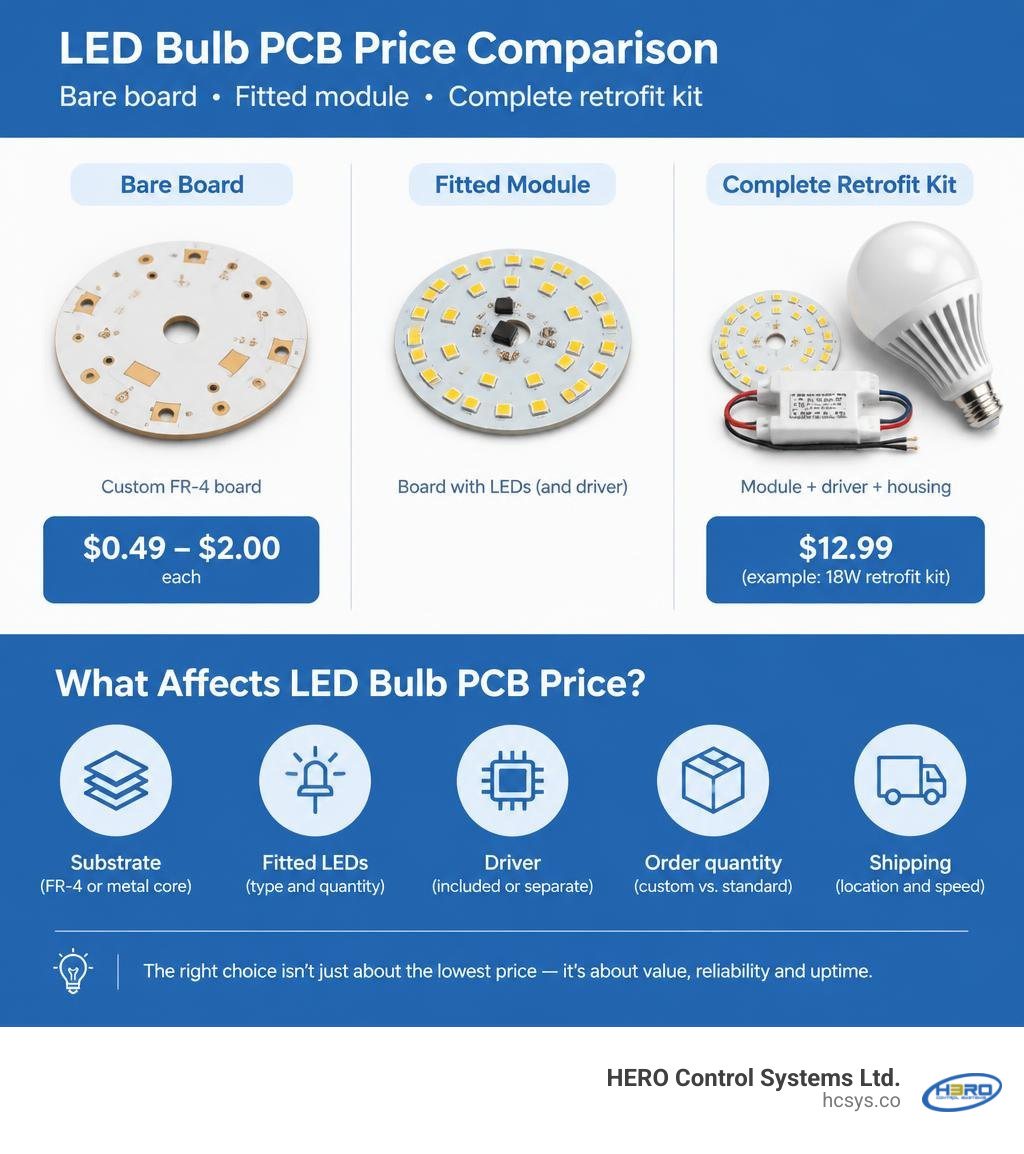
LED bulb PCB price depends on what is included. Indicative listings put custom bare FR-4 boards at $0.49–$2.00 each, while an 18W retrofit kit with more than just the board is listed at $12.99. Compare the substrate, fitted LEDs, driver, order quantity, and shipping before deciding which price is better.
The PCB holds and connects the LEDs and helps move heat away from them. For a utility or mining site, a cheaper board may cost more over time if poor heat control leads to early failure or another repair visit.
I'm Eng. Cephas Kalembo, founder and CTO of HERO Control Systems Ltd. in Lusaka, with over a decade of experience in PCB design, electronics manufacturing, and industrial repair. That work shapes how I assess led bulb pcb price alongside reliability and the cost of downtime.
Understanding Factors That Influence LED Bulb PCB Price
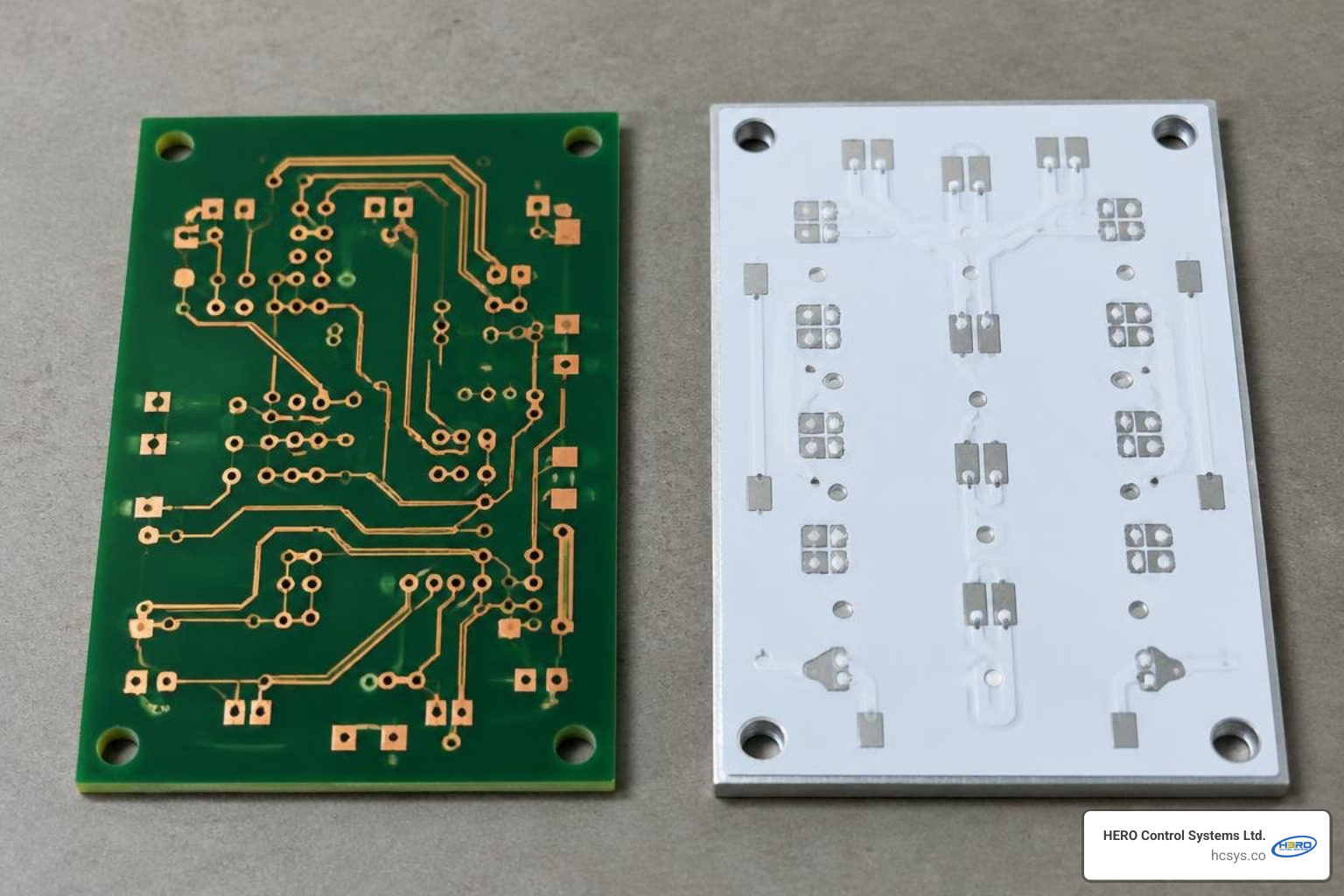
When sourcing solid-state lighting components, looking exclusively at the bottom-line price tag often masks underlying engineering trade-offs. The manufacturing cost of an LED printed circuit board is governed by three primary pillars: base material composition, thermal interface design, and surface-mount component selection.
Unlike standard digital control boards that handle low-level logic signals, an LED board acts as both an electrical interconnect and a mechanical heat exchanger. In an efficient lighting setup, over 70% to 80% of electrical energy is converted into heat at the PN junction of the LED diode. If the board substrate fails to draw this thermal energy away, junction temperatures spike, accelerating lumen depreciation and causing premature bond wire failure.
To achieve optimal thermal transfer without inflating costs, designers must select an appropriate board substrate based on operating power:
| Substrate Material | Typical Thermal Conductivity | Cost Impact (Relative) | Best Suited Applications |
|---|---|---|---|
| Standard FR-4 | 0.25 – 0.3 W/m·K | Low ($0.10 – $0.50) | Low-power indicator arrays, decorative strings, sub-5W bulbs |
| Aluminum MCPCB | 1.0 – 2.5 W/m·K | Moderate ($0.12 – $1.20) | General residential (9W–18W), commercial troffers, downlights |
| Copper Core MCPCB | 3.0 – 4.0+ W/m·K | High ($1.50 – $4.00) | Ultra-compact high-lumen engines, automotive headlights |
| Ceramic Substrates (AlN / Al2O3) | 24 – 180 W/m·K | Premium ($3.00 – $8.00+) | High-power COB modules, specialized industrial floodlights |
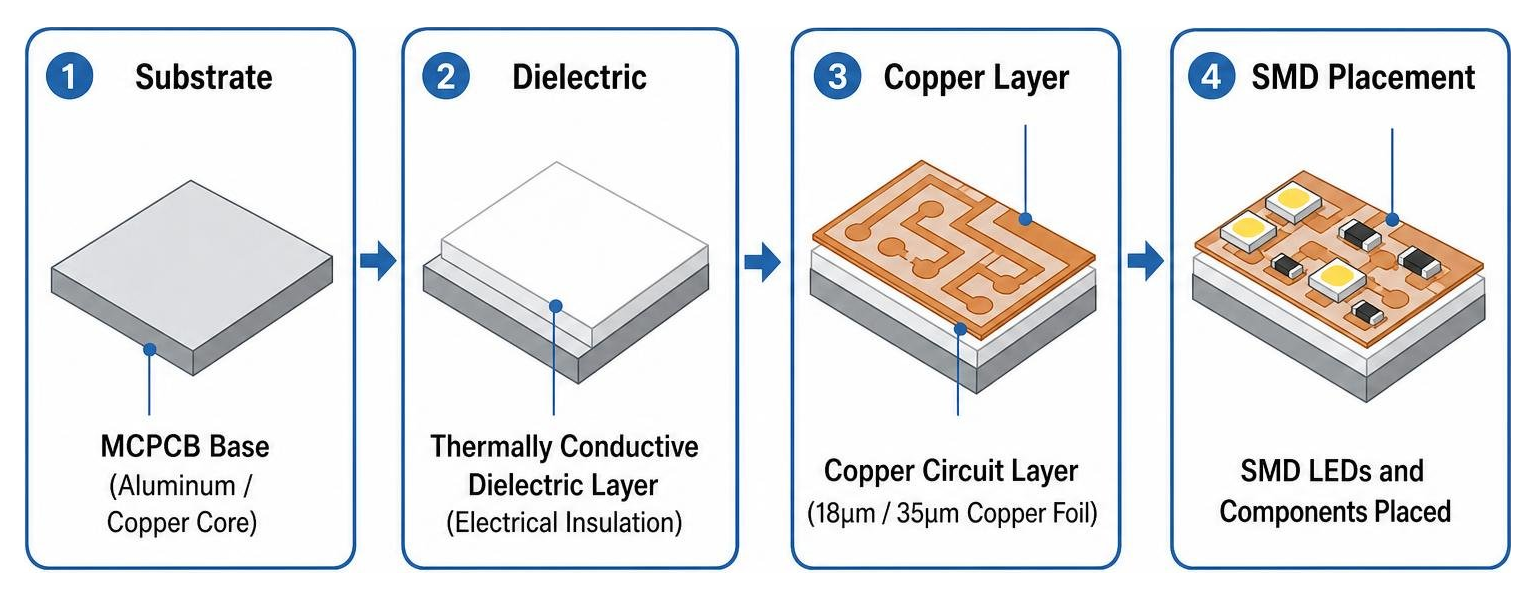
Substrate pricing is further refined by physical attributes like copper foil weight. Standard economy boards use 18µm (0.5 oz) copper foil, whereas commercial high-current boards use 35µm (1.0 oz) copper or thicker to carry higher drive currents without resistive trace heating.
Base Substrate Materials: MCPCB vs FR-4 vs Ceramic
The physical foundation of the circuit board dictates both its operational limits and manufacturing expense. While standard epoxy-fiberglass (FR-4) remains popular for consumer gadgets, it is an inefficient thermal conductor. Using FR-4 for high-wattage illumination traps heat within the dielectric layer, leading to rapid thermal throttling.
Metal Core Printed Circuit Boards (MCPCBs)—specifically aluminum-backed boards—are the global standard for modern lighting fixtures. An aluminum MCPCB features a thin, thermally conductive yet electrically isolating dielectric layer sandwiched between the copper trace circuit and an aluminum base plate. For high-volume production, custom LED SMD circuit board pricing on bare aluminum substrates can drop to as low as $0.12 per unit, offering outstanding value for residential and commercial luminaires.
In specialized heavy-industrial or extreme-temperature environments, ceramic substrates such as Aluminum Oxide and Aluminum Nitride provide superior thermal conductivity and insulation resistance. However, their elevated fabrication costs restrict them to high-density chip-on-board (COB) emitters and specialized industrial fixtures.
SMD LED Types and Component Density
The choice and distribution of Surface Mount Device (SMD) packages directly scale the final board cost. The most common emitter packages encountered in luminaire design include:
- SMD 2835: The modern workhorse for cost-sensitive, high-efficacy interior lighting. Measuring 2.8mm by 3.5mm, these compact diodes feature an exposed thermal pad on the underside, allowing superior heat shedding compared to older 3528 designs.
- SMD 3030: A mid-to-high-power package favored in industrial downlights and commercial fixtures. Its larger footprint permits drive currents upwards of 150mA to 300mA, delivering intense luminous flux per package.
- SMD 5050: A versatile multi-chip package measuring 5.0mm by 5.0mm, standard in color-changing (RGB/RGBW) architectures and high-output strip modules.
Beyond individual package costs, overall component density shapes assembly labor. Solder mask reflectivity is an often-overlooked factor: high-reflectivity, non-yellowing white solder masks cost slightly more during PCB fabrication, but they reflect bounced photons back out of the housing, increasing overall fixture efficacy by up to 3% to 5%.
Market Benchmarks for LED Bulb Circuit Boards Across Wattages
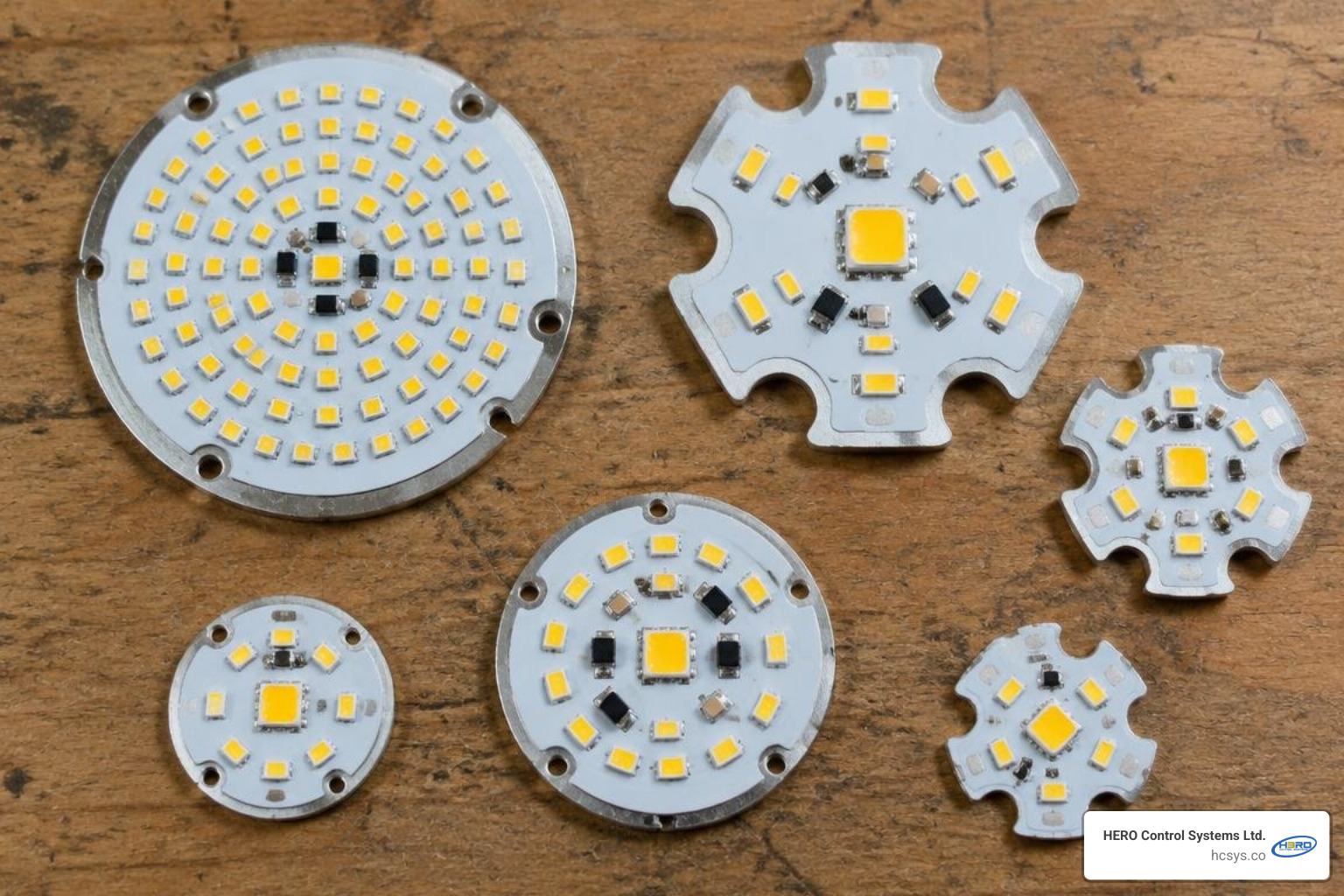
LED board pricing scales with surface area, substrate thickness, and emitter count. As power increases, boards require wider aluminum bases, heavier copper weights, and higher diode counts to maintain target lumen-per-watt efficiency.
| Wattage Category | Standard Form Factor | Dominant Substrate | Price Range (Low-Volume / Retail) | Price Range (Bulk / Factory) |
|---|---|---|---|---|
| 9W AC-DC | 40mm – 50mm Round MCPCB | 1.0mm Aluminum (35µm Cu) | $0.54 – $1.20 | $0.20 – $0.45 |
| 18W Dual-Color / Batten | 60mm – 100mm Panel / Linear | 1.2mm Aluminum | $0.72 – $2.50 | $0.40 – $0.85 |
| 50W High-Bay / Flood | 60mm × 60mm Square / COB | 1.6mm Aluminum | $2.50 – $5.00 | $0.48 – $1.50 |
Evaluating 9W to 18W LED Bulb PCB Price for Residential Use
For everyday consumer bulbs and ceiling fixtures, 9W to 18W modules dominate the production landscape. A standalone 9W AC-DC driverless or driver-fed round MCPCB typically lists for roughly ₹45.00 (approx. $0.54 USD) in regional supplier markets, scaling down significantly for bulk orders.
Step up to an 18W AC-DC module operating at 6500K cool white, and the single-unit price shifts to around ₹60.00 (approx. $0.72 USD). Multi-channel boards engineered with dual-color LED strings (such as 3000K warm white and 6000K cool white Samsung 2835 diodes) command a modest premium, ranging between $0.75 and $0.85 per piece in mid-volume batches. These dual-color engines enable dynamic CCT (correlated color temperature) switching, adding consumer appeal with minimal manufacturing cost overhead.
Commercial 50W+ High-Power Boards and COB Modules
Commercial high-bay luminaires, streetlights, and outdoor floodlights require substantially heavier mechanical builds. A dedicated 50 Watt LED bulb MCPCB featuring 50 individual high-output diodes on a 60mm × 60mm aluminum plate with 35µm copper thickness sells for approximately ₹40.00 (approx. $0.48 USD) at scale, with single-piece evaluation samples running up to ₹150.00.
For specialized applications such as horticulture or aquarium lighting, high-power LED module listings often feature 50W COB royal blue chips (445–450nm) priced at roughly $4.23 each. Alternatively, modular 20mm star-shaped aluminum breakout boards configured with 1W or 3W emitters provide hobbyists and maintenance engineers with versatile options for localized task and indicator repairs, priced at $1.50 to $2.80 per 10-pack.
Bare LED PCBs vs Complete Retrofit Replacement Kits
When repairing or upgrading existing light fixtures, decision-makers often face a choice: procure bare replacement circuit boards and perform component-level rework, or purchase an all-inclusive retrofit kit.
Breaking Down the Bare LED Bulb PCB Price vs Full Retrofit Modules
A bare 18W aluminum circuit board costs less than $1.00 when ordered in quantity. However, converting that bare board into a functioning luminaire requires a constant-current LED driver, heat-sink thermal grease or adhesive pads, wire leads, optical diffusers, and mechanical fasteners.
By comparison, a commercial 4-inch 18W ceiling fan light retrofit kit retails on consumer marketplaces for approximately $12.99. While this represents a tenfold increase in initial component expenditure, the kit includes an onboard isolated driver, ETL safety certification, integrated magnetic mounting standoffs, and quick-connect terminal blocks.
For facility managers maintaining hundreds of fixtures, the labor savings of a five-minute toolless retrofit often outweigh the lower bill-of-materials (BOM) cost of repairing fixtures with bare boards.
Driver Integration, Dimmability, and Multi-CCT Features
Modern solid-state lighting increasingly utilizes Driver-on-Board (DOB) architecture. By mounting rectified AC solid-state linear driver ICs directly onto the same aluminum substrate as the LED diodes, manufacturers eliminate discrete electrolytic capacitors and external driver housings. DOB designs dramatically reduce assembly steps, cutting production costs.
However, DOB modules demand exceptional thermal layout. Because linear driver ICs dissipate excess AC line voltage as heat directly on the board, poor layout can increase operating temperatures and cause thermal flicker.
Where precise dimming, high power factor (PF > 0.95), and low total harmonic distortion (THD) are mandated, isolated external switch-mode power supplies remain essential. For industrial facilities seeking custom lighting engines, smart building controls, or specialized motor drive circuits, partnering with experienced engineers for custom PCB design in Zambia ensures proper thermal relief, electromagnetic compatibility (EMC), and reliable driver integration.
Sourcing Strategy: Minimum Order Quantities, Quality Control, and Certifications
Effective sourcing involves balancing low per-unit pricing against the hidden expenses of minimum order quantities (MOQs), shipping logistics, import duties, and quality variance.
Prototype vs Bulk Sourcing Economics
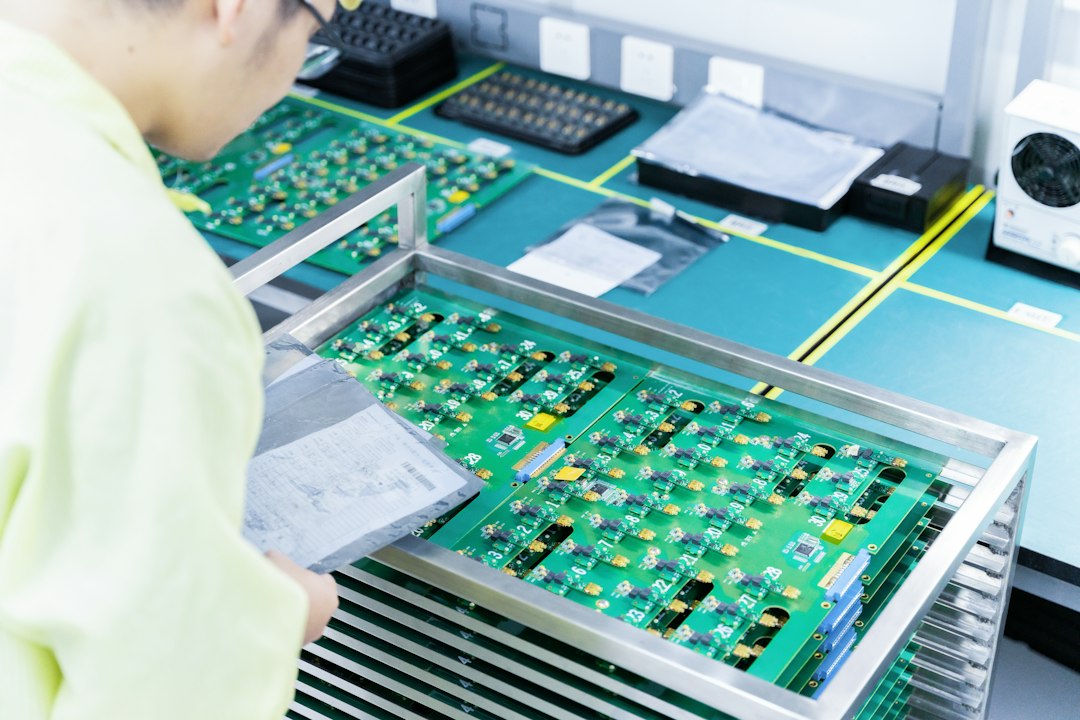
PCB assembly facilities leverage automated Surface Mount Technology (SMT) pick-and-place lines. Setting up these high-speed lines requires engineering labor, stencil fabrication, and feeder loading. Consequently, low-volume prototype orders (1 to 10 units) bear a heavy setup surcharge per piece, often resulting in unit prices of $2.00 to $10.00 per bare board.
Once order volumes reach standard manufacturing thresholds (500 to 5,000+ units), the setup charge is amortized across the entire run. This drops the per-unit price of custom 2835 aluminum assemblies down to $0.49 to $0.85.
For startups, industrial operations, and researchers validating new hardware platforms, bridging the gap between small-batch prototypes and full-scale manufacturing is critical. Leveraging dedicated facilities for electronics prototyping and engineering allows teams to test thermal stability, refine copper traces, and verify driver efficiency before committing substantial capital to bulk production runs.
Thermal Management and Safety Certifications
A circuit board may look flawless on paper, but poor assembly or substandard materials will lead to early field failures. When evaluating quotes from domestic or international fabricators, verify compliance with core safety and environmental standards:
- Dielectric Breakdown Voltage (Hi-Pot Testing): Ensure the thin insulating dielectric on aluminum MCPCBs can withstand at least 1,500V to 3,000V AC without arcing to the aluminum chassis.
- Thermal Resistance Verification: Confirm that the manufacturer specifies substrate thermal conductivity (typically measured in W/m·K) and uses verified thermal interface materials.
- Regulatory Marks (CE, RoHS, UL/ETL): RoHS compliance ensures solder pastes and board finishes are lead-free. UL/ETL certification guarantees fire-retardant substrates and insulation integrity under high-line-voltage conditions.
Frequently Asked Questions About LED Bulb Circuit Boards
What is the typical LED bulb circuit board price in 2026?
In 2026, raw aluminum LED circuit boards for standard 9W residential bulbs cost between $0.12 and $0.45 USD per unit in production volumes (500+ units). Complete assembled light engines with onboard surface-mount diodes range from $0.50 to $2.00 USD, while commercial-grade high-power floodlight boards (50W+) or full retrofit assemblies with integrated drivers retail from $4.00 to $13.00 USD.
Why are aluminum MCPCBs preferred over FR-4 for high-wattage LED bulbs?
Aluminum MCPCBs feature thermal conductivity ratings between 1.0 and 2.5 W/m·K, compared to roughly 0.25 W/m·K for standard FR-4 epoxy glass. High-wattage LEDs generate concentrated heat at their solder pads. Aluminum substrates efficiently conduct that heat away from the diode junction to the outer luminaire housing, preventing thermal degradation and extending operating lifespans past 50,000 hours.
Can faulty LED bulb circuit boards be repaired instead of replaced?
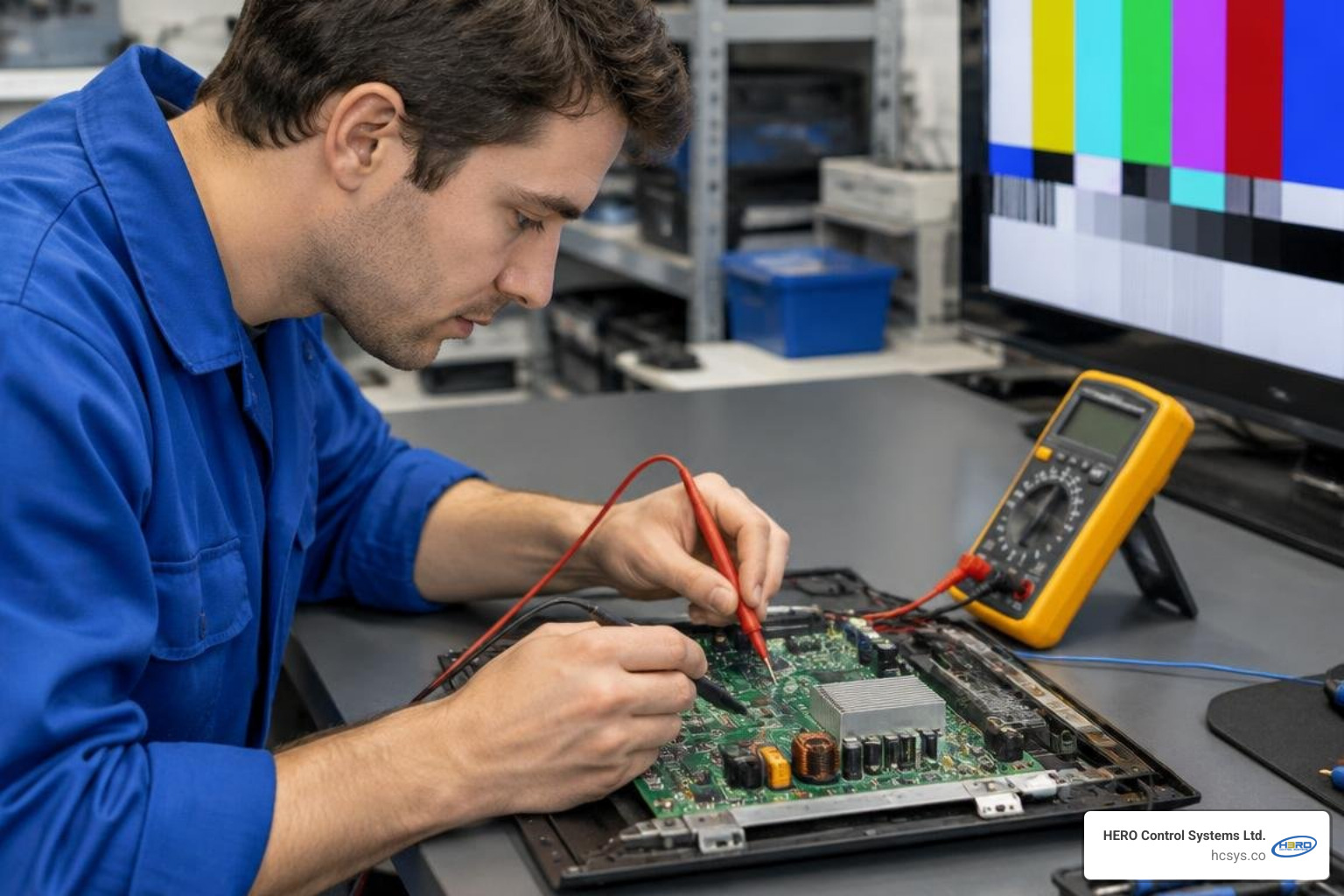
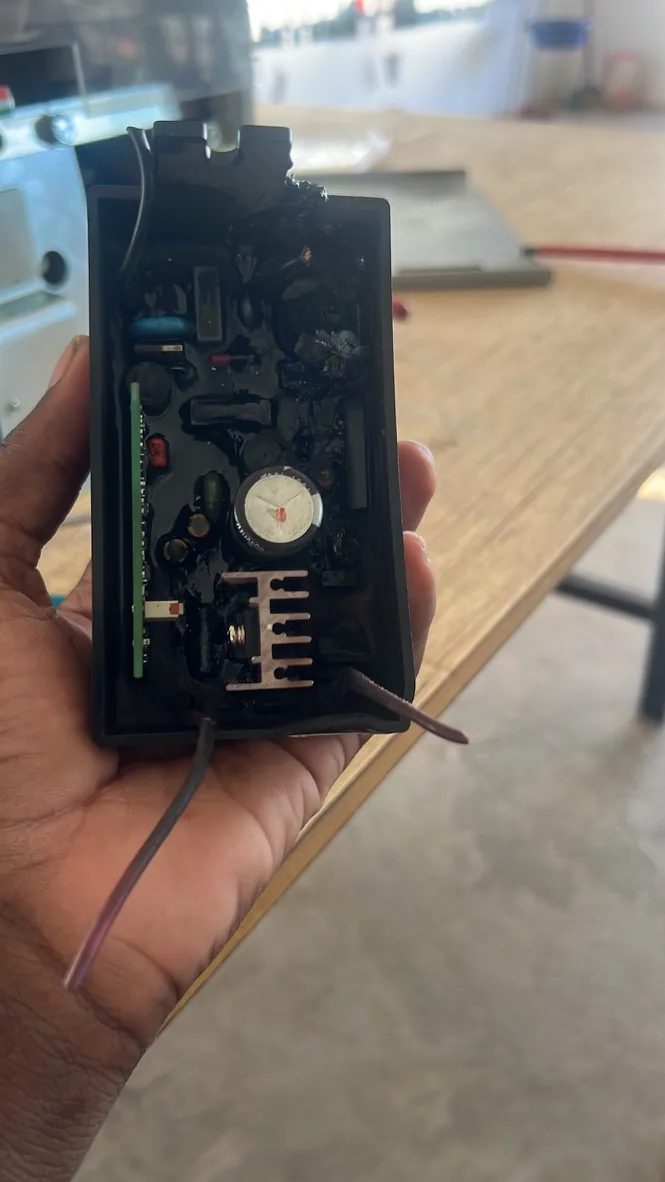
Yes. In many commercial and industrial fixtures, a failed LED array is caused by a single open-circuit diode or a blown driver filter capacitor. Technicians equipped with hot plates, hot-air rework stations, and multimeters can replace individual SMD chips or reflow faulty solder joints. For complex industrial electronics, facilities rely on experienced technicians specializing in repairing circuit boards and IoT hardware to restore high-value equipment without purchasing complete replacement fixtures.
Conclusion
Navigating the landscape of LED bulb circuit board pricing requires looking beyond the initial unit quote. While bare FR-4 boards provide an inexpensive baseline for low-power indicator circuits, high-performance illumination demands the thermal performance of aluminum MCPCBs or ceramic substrates. Balancing component package selections, driver architecture, volume tiers, and regulatory certifications ensures that your lighting hardware delivers long-term luminous efficacy without unexpected maintenance costs.
At HERO Control Systems Ltd., we deliver end-to-end electronics engineering right from our technical facilities in Lusaka, Zambia. Whether you need custom thermal PCB design, low-volume rapid prototyping, automated assembly, industrial electronic repairs, or specialized IoT firmware development, we provide complete lifecycle hardware support.
Explore our full range of electronics manufacturing and engineering services today, or connect with our engineering team to discuss your next solid-state lighting and control design.