Huawei rectifier repair: R4875G1 faults and how we fix them
On many Zambian towers the whole power system is Huawei: rectifier modules in a shelf, solar modules beside them, and a site monitoring unit (SMU) running the lot. During a recent proof of concept for a Zambian tower company, we repaired one unit from each link in that chain. Each one failed differently, and the differences explain a great deal about how site power wears out.
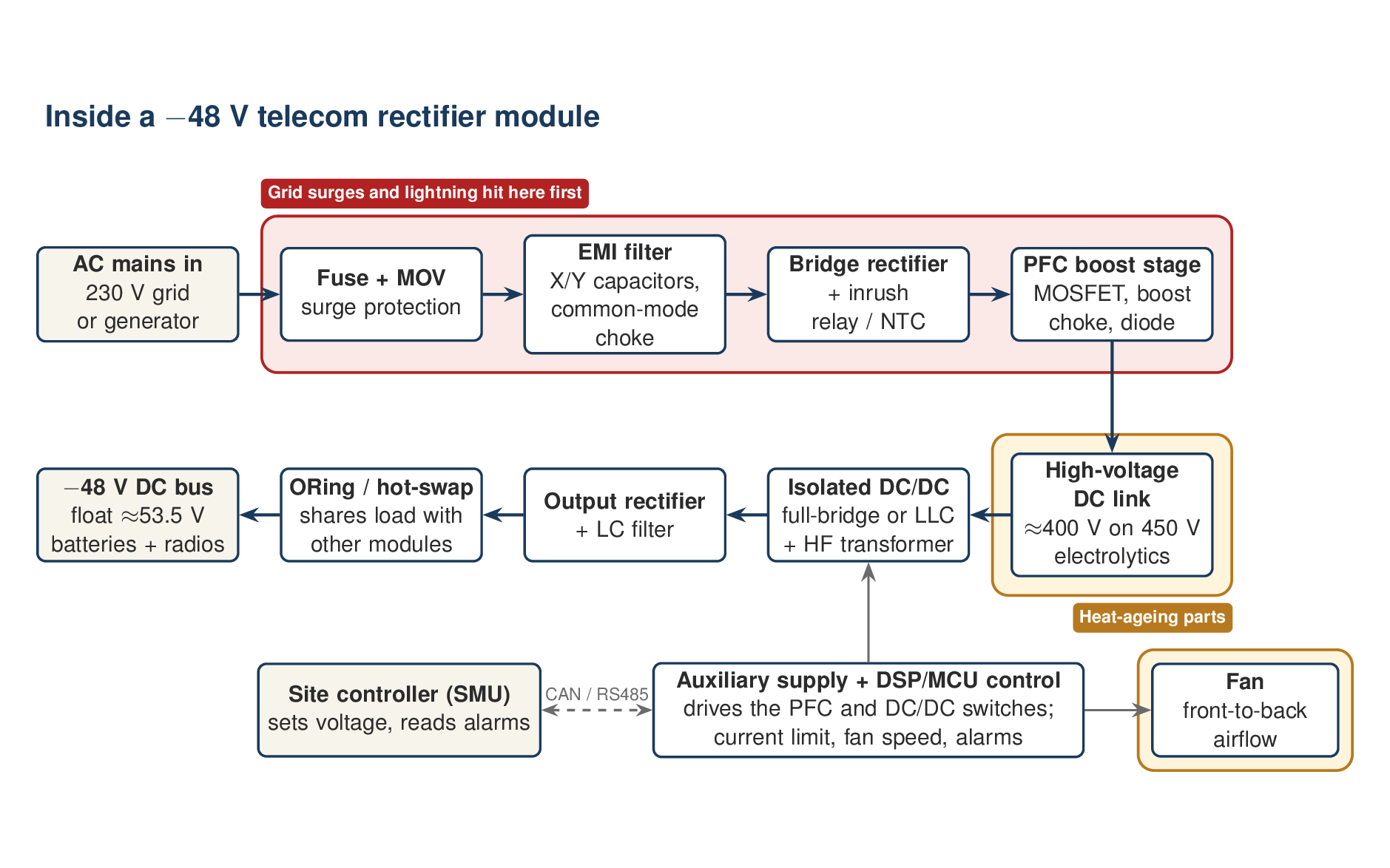
This is the Huawei companion to our article on how we repair ZTE telecom rectifiers. That article walks through the inside of a rectifier block by block. Here we focus on the Huawei units, what we found inside them, and how we test them.
The Huawei power chain on a hybrid site
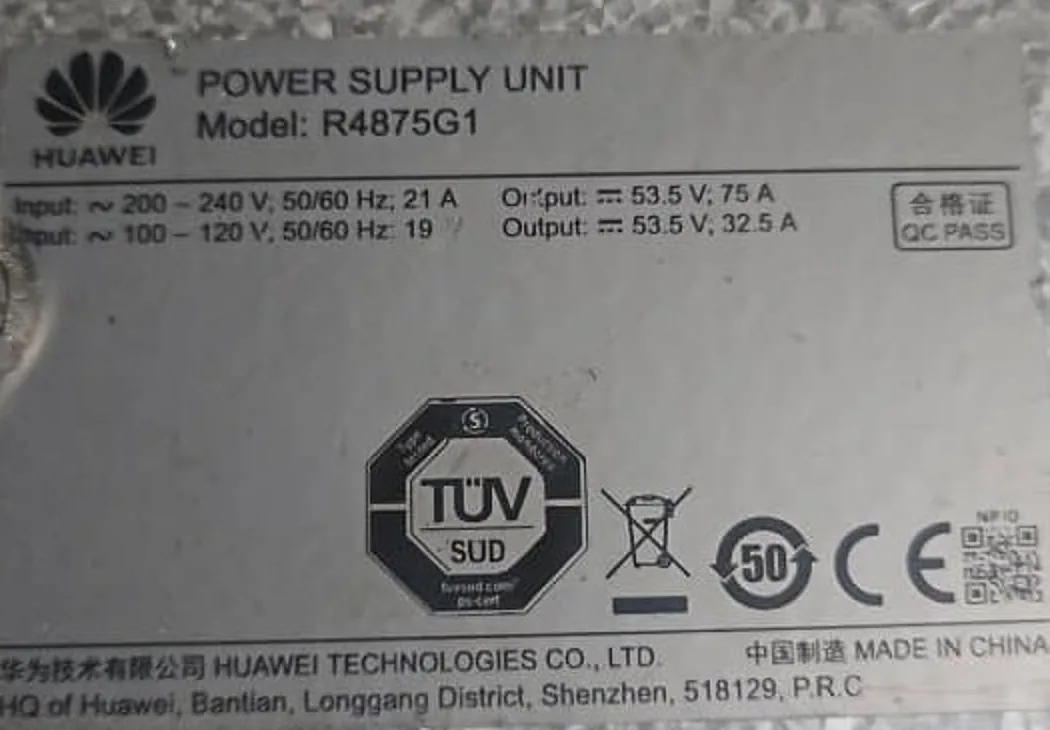
- R4875G1 rectifier. Its nameplate gives an input of 200–240 V AC and an output of 53.5 V at 75 A, about 4 kW from one hot-swappable module. Several sit side by side in a power shelf and share the load.
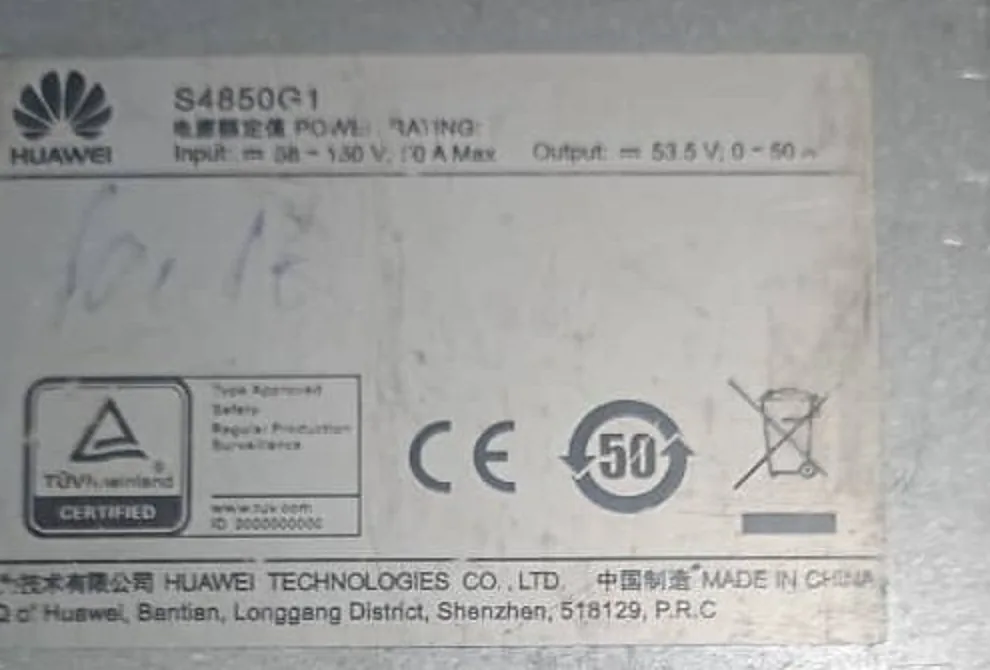
- S4850G1 solar module. This is a DC/DC converter with maximum power point tracking (MPPT). It takes the photovoltaic array's output and feeds the same bus, at 53.5 V and 0–50 A. On hybrid sites it lets the sun carry the load and cut generator hours.
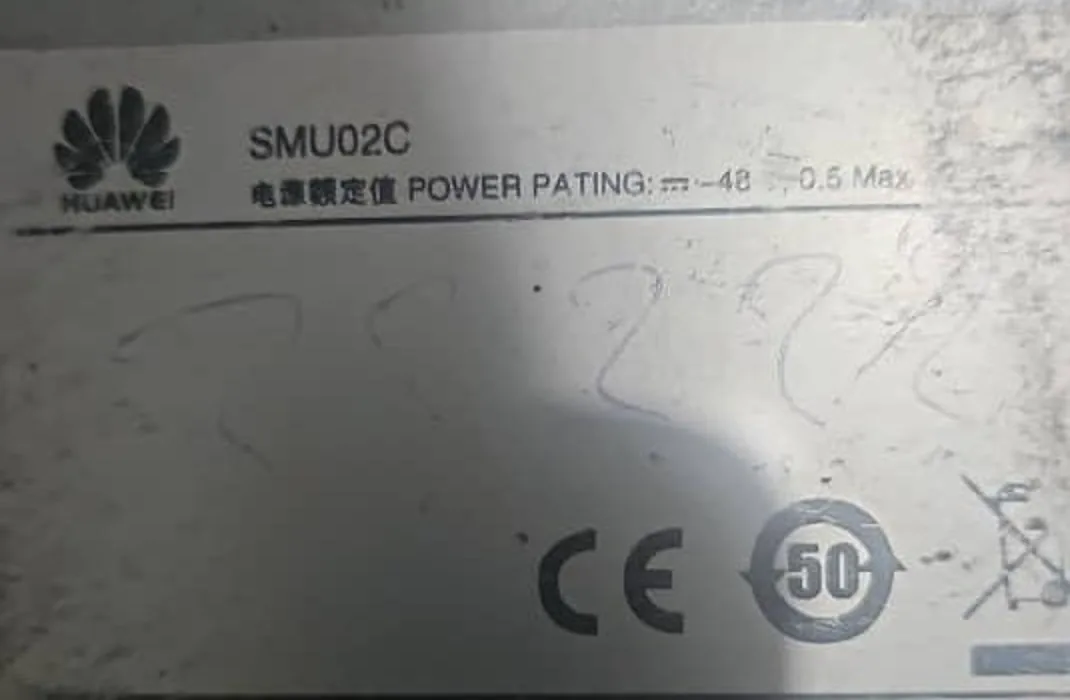
- SMU02C site monitoring unit. This is the brain. It sets the bus voltage, manages battery charging and disconnection, reads every module, and raises alarms to the network operations centre. Its own rating is modest: −48 V at 0.5 A.
Why 53.5 V on a "−48 V" system? Telecom DC systems ground the positive side, so the bus is negative with respect to earth. Its nominal voltage is 48 V, but it is held at the battery's float voltage. For a 24-cell lead-acid string at about 2.23 V per cell, that comes to roughly 53.5 V. Sites using lithium batteries are set to suit their packs.
What we found inside each unit
| Unit | Fault found | Repair | Test level |
|---|---|---|---|
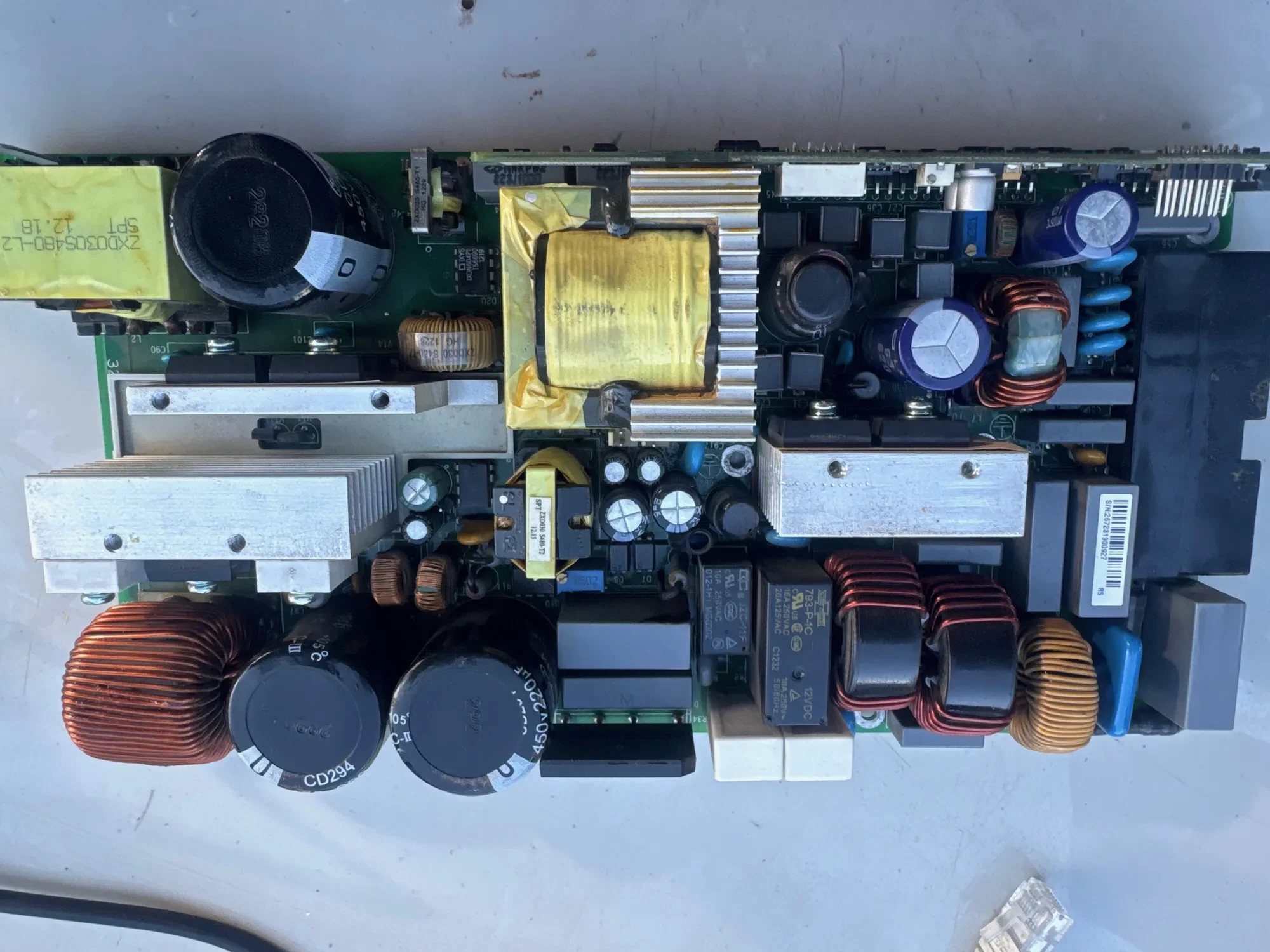
| R4875G1 rectifier | EMI filter and input protection blown, with the PFC stage failed behind them | Front end rebuilt; PFC stage restored to specification | Bench and load tested at rated output |
| S4850G1 solar module | Power MOSFET blown in the switching stage, with damage to its gate drive and snubber | MOSFET, gate-drive and snubber parts replaced | Bench tested; full load test needs a live PV array |
| SMU02C controller | Electrolytic capacitors failed on the supply rails | Capacitors replaced; rails and logic verified | Bench tested |
We state the test levels plainly. A solar module can only be fully proven by working into a live array and DC bus, so the last step for those two units is a monitored trial on a site.
Why each one failed
The rectifier: grid stress
The R4875G1 failed in the same place as the ZTE rectifier we repaired alongside it: the mains-side EMI filter, the input protection and the PFC stage. This is the signature of surges and poor power quality, not wear. Zambian sites take a lot of both. Load-shedding switches them between grid, generator and batteries several times a day, and the rainy season brings lightning onto long rural lines. When the input varistor can no longer absorb a surge, the energy runs through to the PFC MOSFET. When that MOSFET fails short it takes its gate drive, current-sense resistor and fuse with it.
The solar module: switching-stage stress
A solar converter's power MOSFET switches hard, many thousands of times a second, and it often runs hot inside a cabinet in direct sun. Its photovoltaic input arrives on long DC cables run across open ground, which pick up surges from nearby lightning. Once the MOSFET fails, the gate driver and snubber around it are usually damaged too. A lasting repair replaces the whole set.
The controller: ageing capacitors
The SMU02C draws little power, but it runs every hour of every day in a warm cabinet. Electrolytic capacitors dry out with heat; a common rule of thumb is that their life halves for every 10 °C rise. Once the supply-rail capacitors go, the controller resets, freezes or dies. A failed SMU is more serious than it looks. Without it, the site can lose battery management and alarms at the same moment.
How we repair and test a Huawei rectifier
The method is the same as for ZTE modules, set out step by step in the ZTE article. In short:
- Log the serial number, the symptom and the SMU's alarm history, and photograph the unit.
- Discharge the roughly 400 V DC-link capacitors safely before touching the board.
- Inspect under magnification, then cold-test the whole power path: bridge, PFC MOSFET and diode, primary switches, output rectifiers, gate and sense resistors, and capacitor ESR.
- Replace the full chain of damaged parts with genuine components of equal or better rating.
- Power up under current limiting, then load-test to the rated 75 A with a thermal camera on the board.
- Run the module in a shelf with an SMU and known-good modules. It must share current, communicate with the controller and clear every alarm.
- Burn it in, then return it with a report per serial number.
Huawei's modules pack about 4 kW into a slim case, so rework calls for patience with heat. Large copper areas sink heat away quickly, and neighbouring parts must be protected. Thermal imaging during the load test is not optional. It is how we confirm that nothing on the board is running hotter than its neighbours.
Keeping Huawei site power healthy in Zambia
- Protect both inputs. AC SPDs on the mains side and DC SPDs on the photovoltaic strings. Check their status windows after storms.
- Earth before the rains. Test earthing resistance before November, when lightning season starts.
- Watch module drop-outs. A rectifier that keeps leaving and rejoining the shelf in the SMU log is asking for attention.
- Keep a spare SMU in each cluster. It is the one unit with no redundancy on most sites.
- Repair in batches. Send failed modules with their alarm logs and turnaround is faster.
Local repair keeps forex in Zambia, cuts weeks of import lead time, and builds skills that stay in the country. We repair Huawei rectifiers, solar modules and controllers at component level in Lusaka. See our telecom repair service, or send us a nameplate photo and we will tell you whether the unit is repairable.