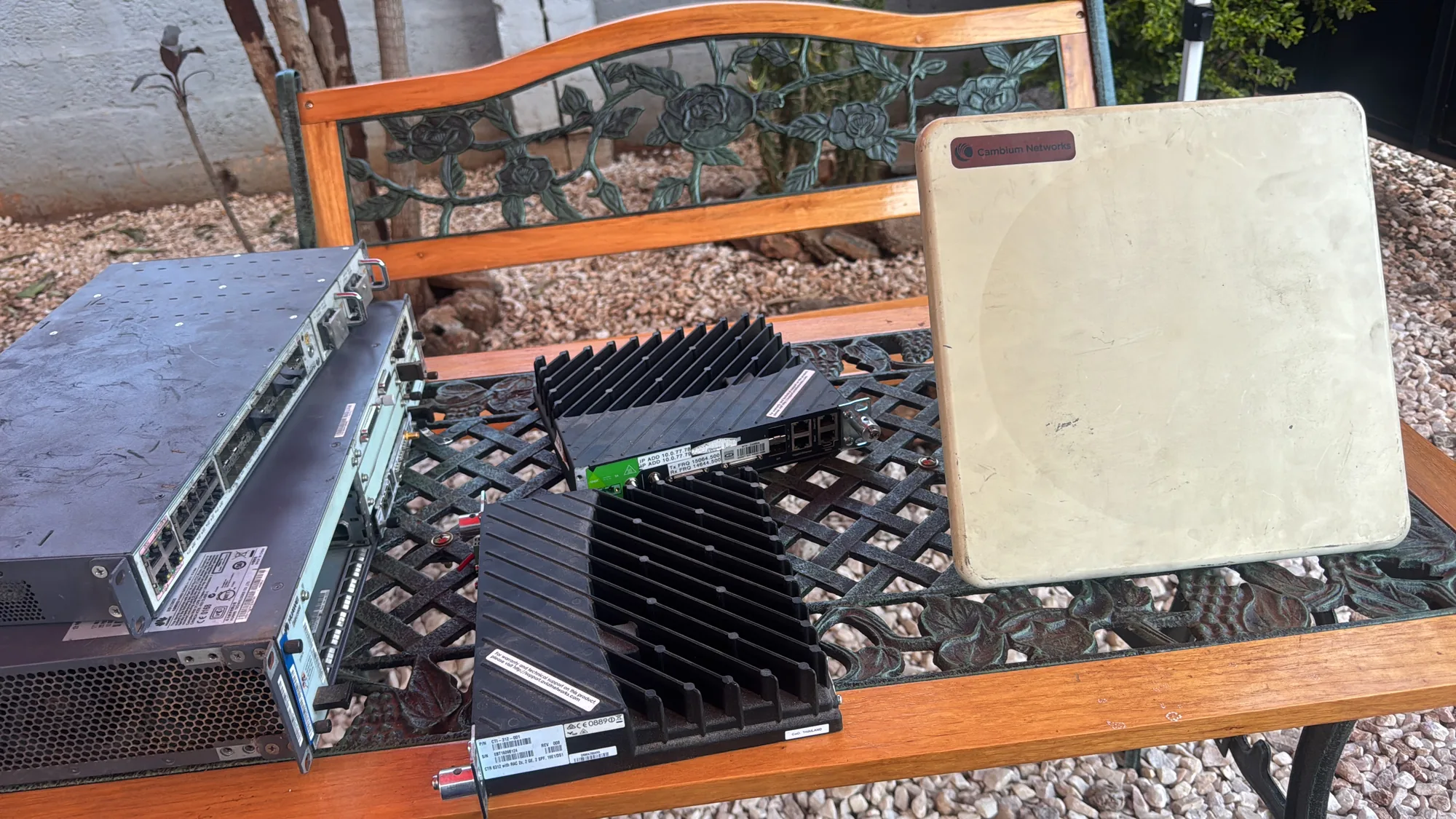
The electronics that keep Zambia's fibre network lit
Zambia's digital economy runs on glass. FibreCom, ZESCO's telecom subsidiary, told an ITU workshop in May 2026 that it runs more than 15,000 km of backbone fibre and more than 5,000 km of metro fibre, reaching all ten provinces (FibreCom presentation, ITU, May 2026). Much of it is strung on ZESCO's power lines. Zamtel, Liquid and other operators run fibre networks of their own.
The glass itself rarely fails on its own. Fibre links go down because of cuts, dirty connectors, or the electronics and power at either end. Every kilometre of fibre is only as reliable as the boxes that light it. This article explains what those electronics are, what fails most, and what can and cannot be repaired in Zambia.
The chain, from backbone to building
- Backbone and long-haul. Routers and optical transport (OTN) equipment carry traffic between towns. FibreCom describes its own path: from early links for grid control, through STM-16 and 10G DWDM, to high-capacity OTN today. DWDM (dense wavelength-division multiplexing) puts many wavelengths on one fibre, and optical amplifiers boost the light on long spans.
- Aggregation. Switches and routers in each town gather traffic from base stations, businesses and access networks.
- Access (GPON). An optical line terminal (OLT) in an exchange feeds passive splitters in the street, which feed an optical network terminal (ONT) in each home or office.
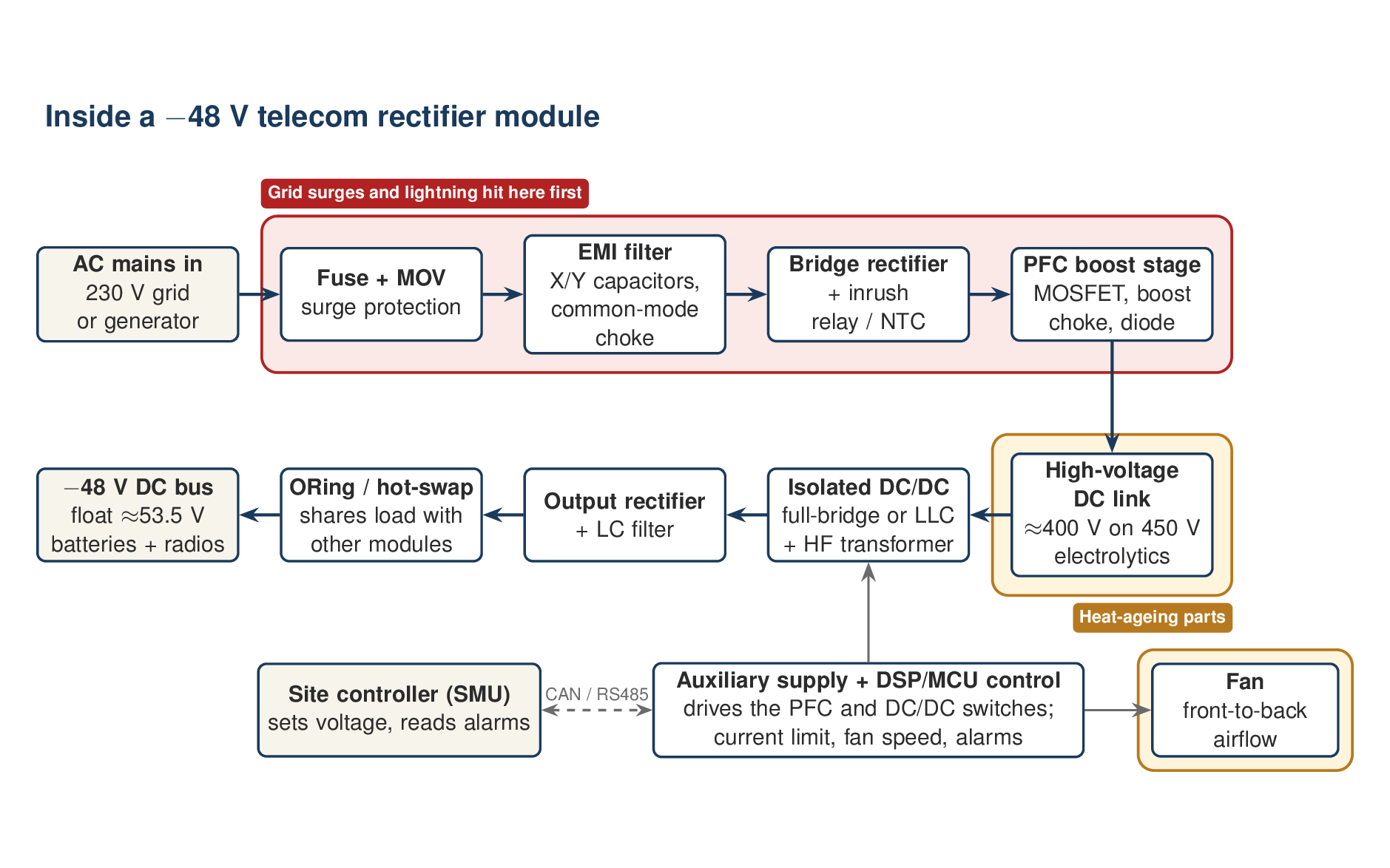
- Power at every active node. −48 V rectifiers, batteries and, more and more often, solar. FibreCom describes operators connecting to its solar-powered backbone.
The key electronics, one by one
Optical transceivers
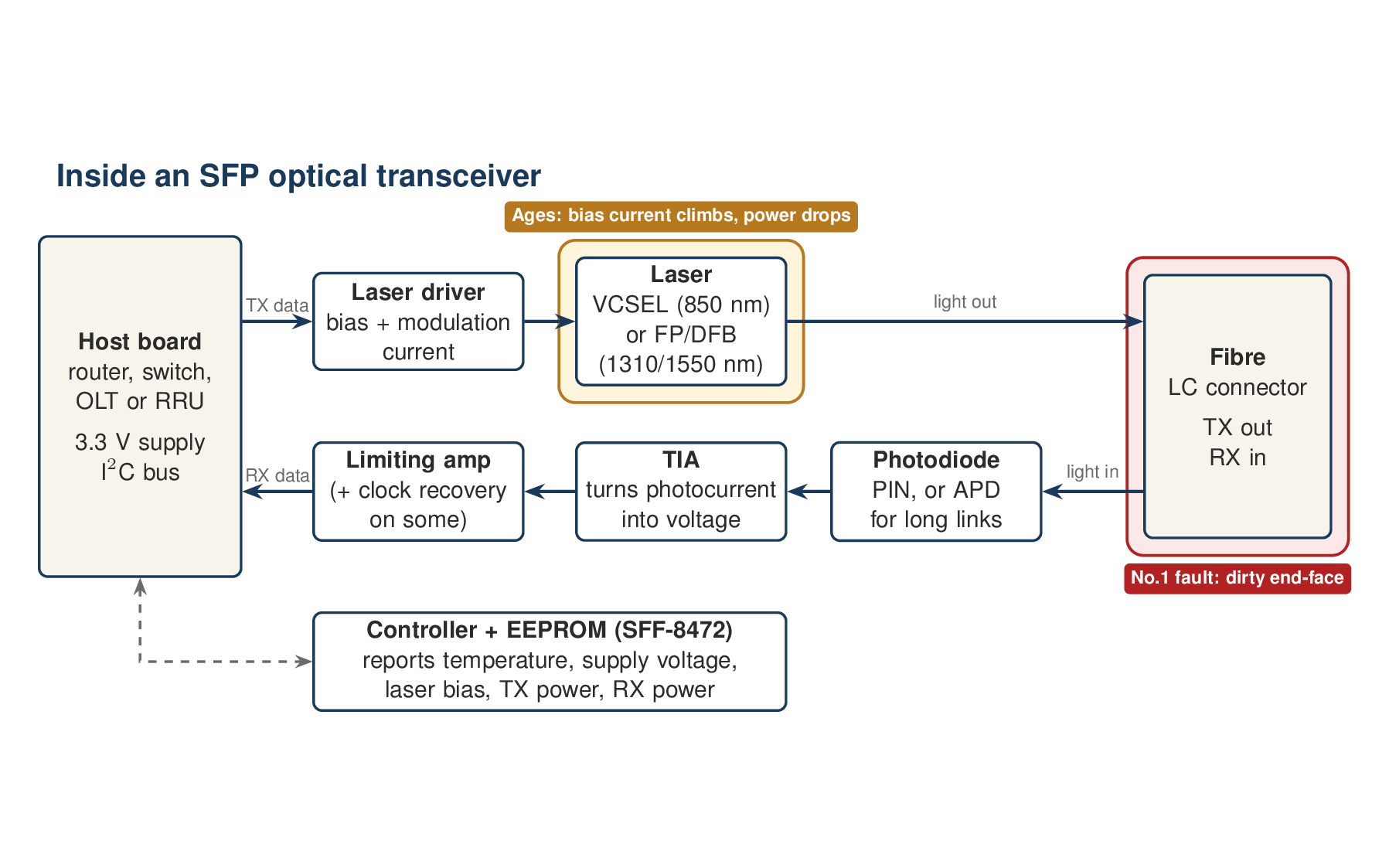
These are the SFP, SFP+ and QSFP modules that plug into almost every router, switch, OLT and radio unit. Each one is a complete optoelectronic system the size of a finger:
- A laser driver and laser. VCSELs at 850 nm drive short multimode links. Fabry-Perot or DFB lasers at 1310 or 1550 nm drive long single-mode links.
- A photodiode, either PIN or, for long links, an avalanche photodiode (APD). It feeds a transimpedance amplifier (TIA) and a limiting amplifier.
- A small controller and EEPROM with digital diagnostics (SFF-8472). It reports temperature, supply voltage, laser bias current, transmit power and receive power. This is the single most useful fault-finding tool on a fibre link.
Optical amplifiers and DWDM equipment
On long spans, erbium-doped fibre amplifiers (EDFAs) boost the signal without converting it to electricity. Pump lasers inside them are controlled by precision current drivers and temperature control. Transponders convert client signals to precise DWDM wavelengths.
OLTs and ONTs
The OLT holds line cards with high-power PON optics, plus control boards, power modules and fan trays. The ONT at the customer is a small router with an optical front end, fed by a plug-in power adapter.
Media converters and access switches
These small boxes convert between copper Ethernet and fibre, in thousands of offices and cabinets.
Test equipment
OTDRs, optical power meters, light sources and fusion splicers are electronics too. They need calibration and repair like anything else.
What fails most
1. Dirty or damaged connectors
Test-equipment makers widely cite contamination on connector end-faces as the leading cause of fibre link problems. One speck of dust on a single-mode core can block enough light to drop a link, and mating a dirty connector scratches both faces. The fix is a habit: inspect every connector with a fibre microscope (IEC 61300-3-35 sets the pass criteria), clean it, and inspect it again, every time.
2. Cable cuts
Road works, construction, vandalism and fires cut cables. An OTDR finds the break to within metres from the exchange end.
3. Optics ageing, or the wrong optics
Lasers age. Their bias current climbs while their output falls, and the digital diagnostics show this months before the link fails. The opposite problem is common too. A long-reach optic on a short link floods its receiver, so the link fails intermittently until an attenuator is fitted.
4. Power at the nodes
During load-shedding, a node runs on batteries and solar. A failed rectifier or a tired battery bank takes it dark, even though the fibre is perfect. The power chain is covered in our articles on ZTE and Huawei rectifiers.
5. ONT power adapters and surges
At the customer's end, the most common failure is often not optical at all. It is the power adapter, killed by surges or unstable mains.
6. Fans in OLTs and switches
As with base stations, fans clog and wear, and the equipment overheats.
How to diagnose a fibre link, in order
- Read the diagnostics at both ends. Transmit power, receive power, laser bias and temperature. Compare the receive power with the optic's sensitivity and overload limits.
- Inspect and clean every connector in the path, including patch panels.
- Loop back. Loop each end locally to test the optic and port without the span.
- Measure the loss with a light source and power meter, and compare it with the design budget.
- Locate the fault with an OTDR if the loss is high or the link is dead.
- Swap the optic with a known-good, correctly coded module, but only after the checks above.
What can be repaired in Zambia, and what cannot
Be honest about this. Optical transceivers are sealed, precisely aligned and inexpensive compared with the time it would take to rebuild one. They are replaced, not repaired. Splitters are passive and simply replaced when damaged.
A great deal of the rest is repairable at component level, locally:
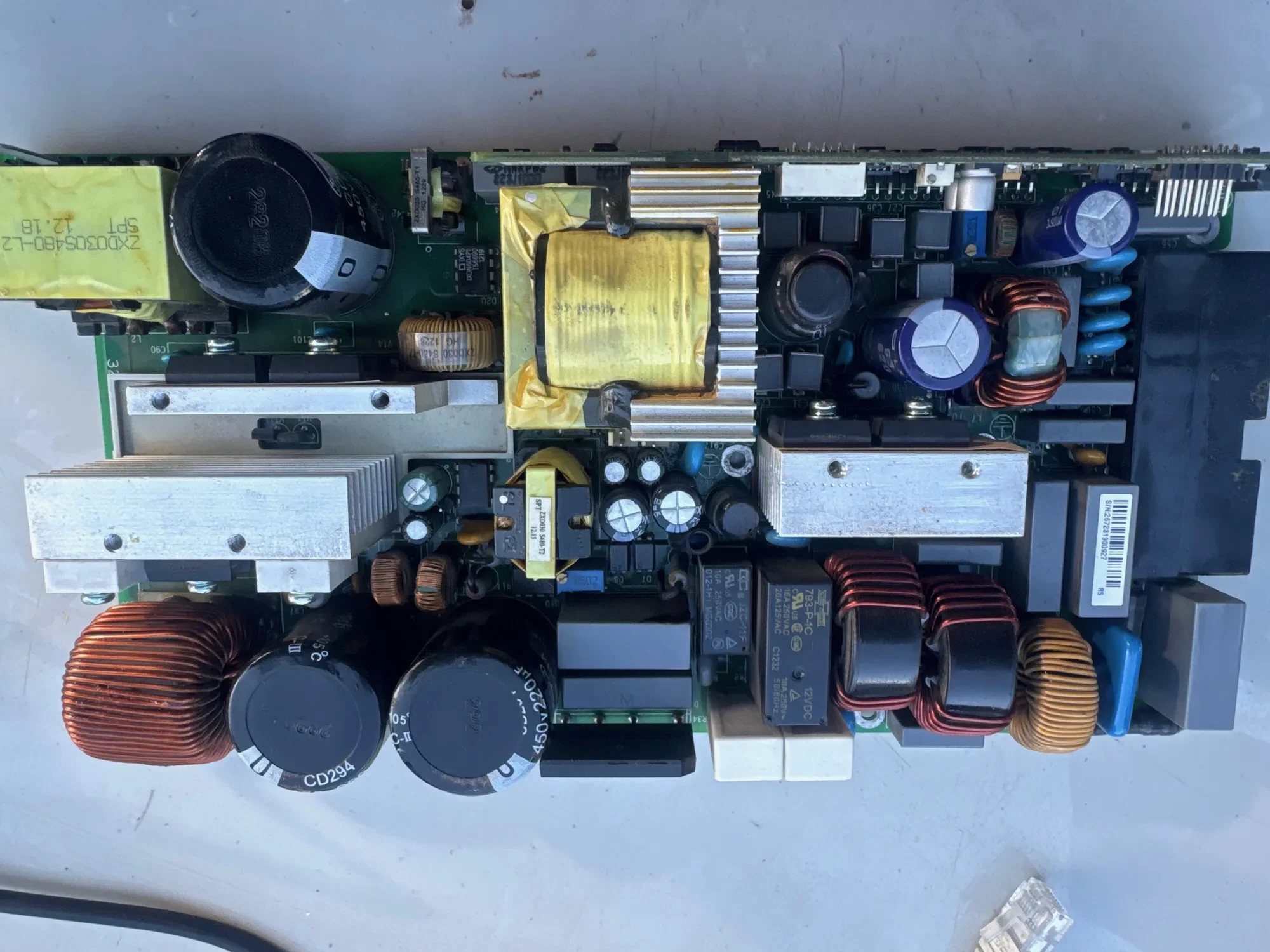
- rectifiers and power modules at fibre nodes and exchanges;
- power modules, fan trays and control boards in OLTs, switches and transport equipment;
- media converters and ONT power supplies;
- test equipment power, charging and control electronics.
Zambia has built real skill in laying and splicing fibre. The next step is building the same depth in the electronics that light it: reading diagnostics, finding faults on boards, and repairing power systems. That keeps more of the network's maintenance spending, and its know-how, in the country. Our training programmes are built for that.
We repair the power and board-level electronics behind fibre and telecom networks in Lusaka. See our telecom repair service, or contact us.