Discontinued worldwide: how we rebuilt a control card for Lusaka Water
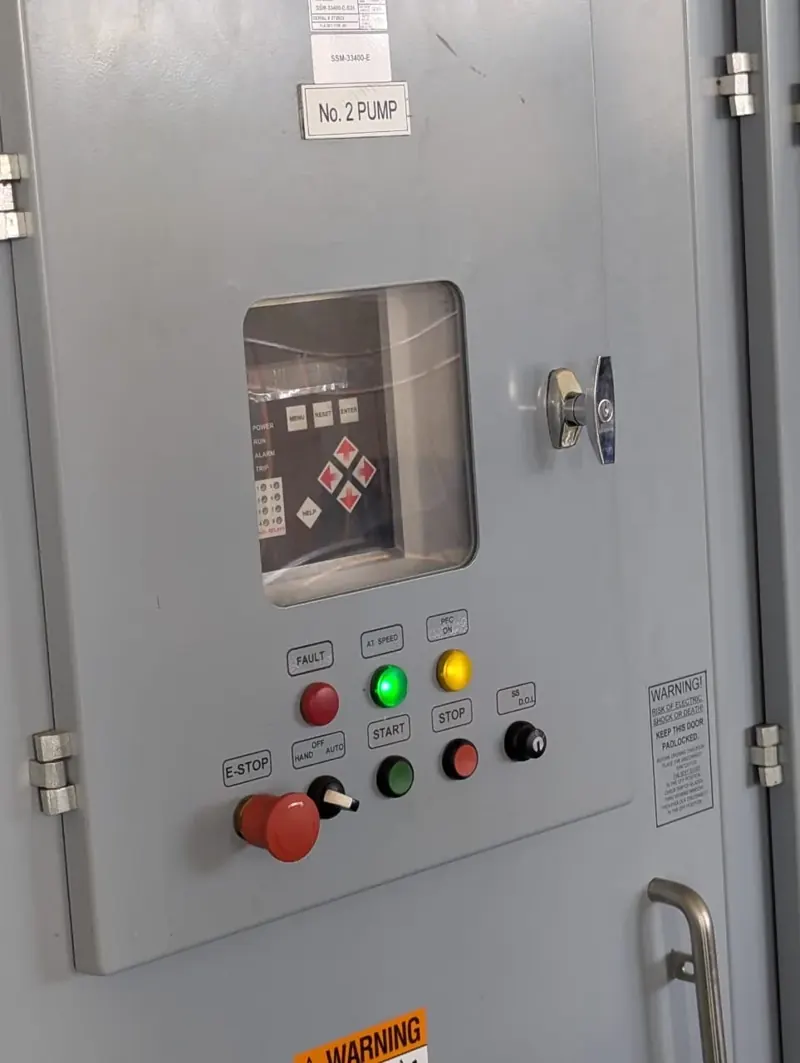
Lusaka Water Supply and Sanitation Company starts pump motors through soft starters. Inside each soft starter, a small control card switches the contactor that carries the motor current. At Lusaka Water's pump stations those cards kept burning out. When the maintenance team went looking for replacements, they got the answer every engineer in Africa has heard at least once: the manufacturer had discontinued the card, and a global supplier search found none anywhere.
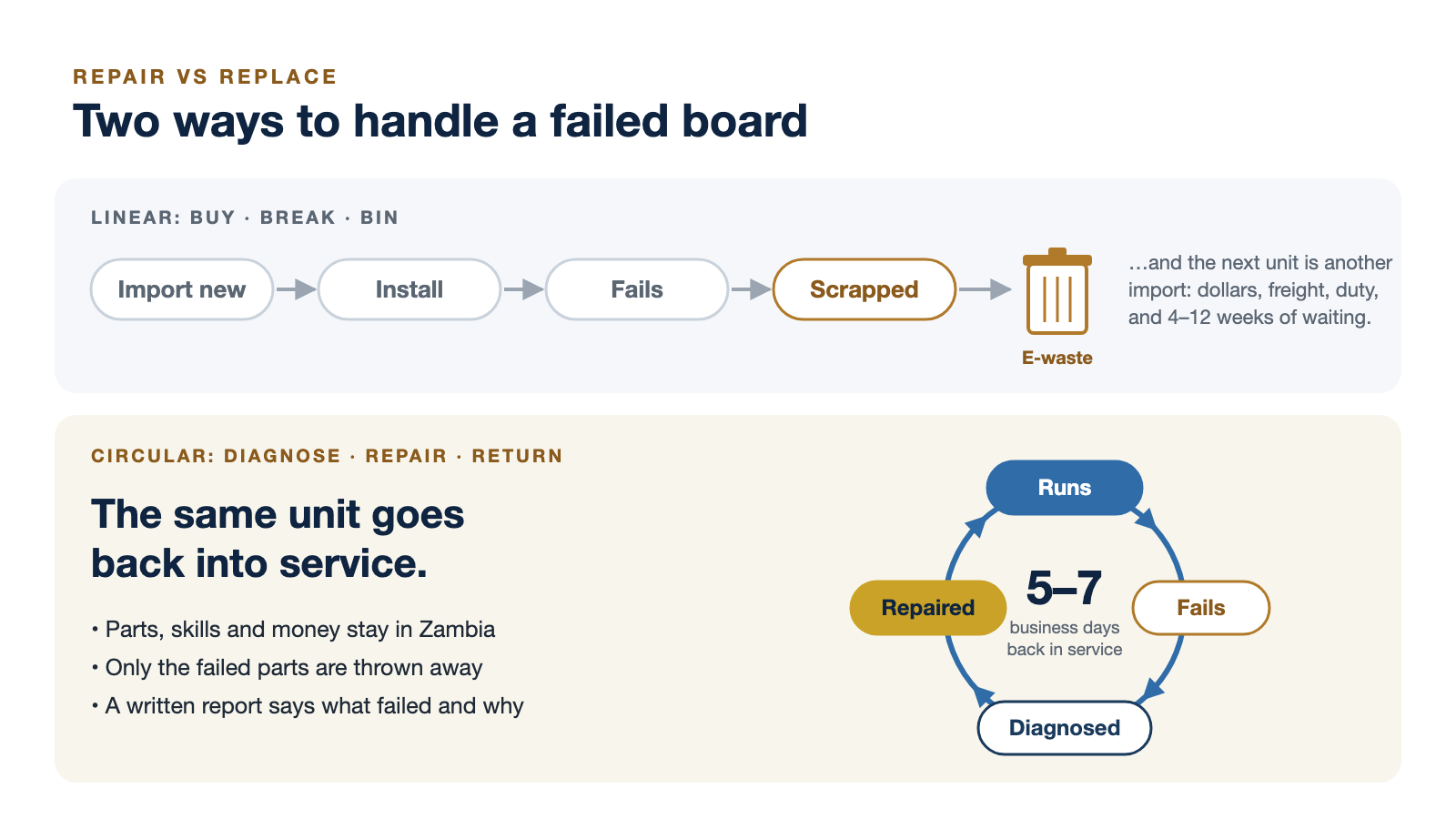
That usually leaves two options. Keep the pump down and wait for a part that will never come, or replace the machinery the card sits in. We took a third: design the card again, here in Lusaka.
Why the cards kept failing
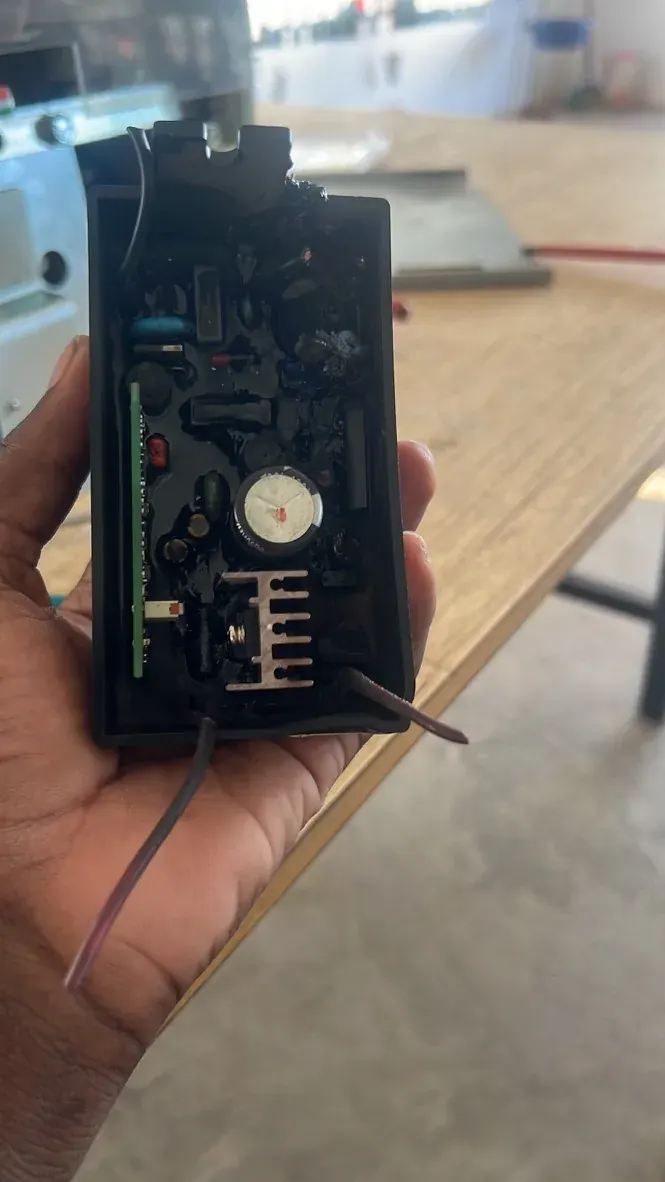
A failed board tells you a lot if you read it before you throw it away. These cards were not failing at random. Two things were killing them:
- Surges on the supply. Zambia's grid is surge-prone, and the input stage of the original card was not designed for it.
- Heat. A contactor coil needs a strong current to pull in, but much less to stay closed. The original design kept the coil at full power for as long as the pump ran, so the coil and the card heated up inside a closed panel, day after day.
A like-for-like copy of the old card would have failed the same way. The replacement had to remove the causes, not just replace the part.
What we built
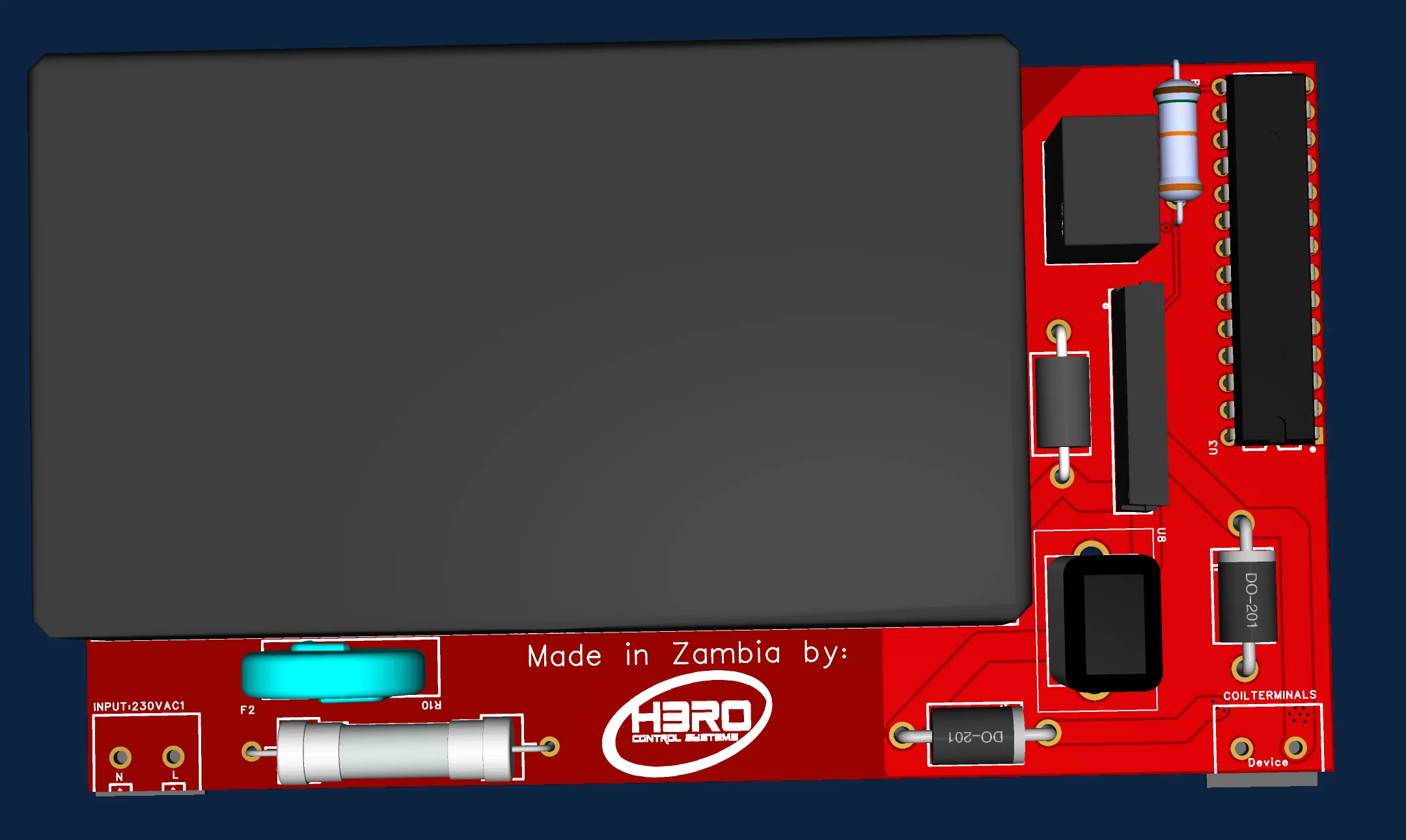
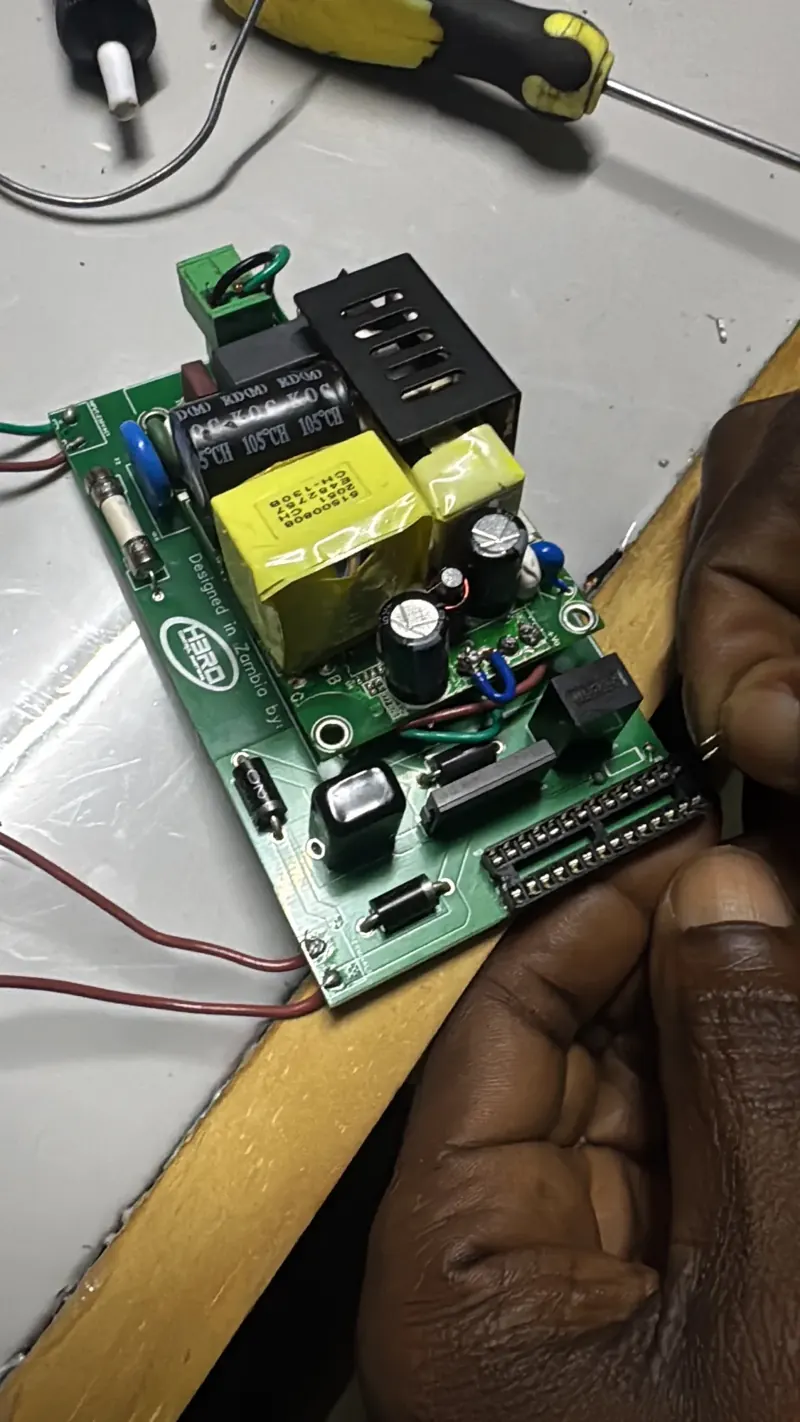
We started from the burnt original. Tracing its circuit told us what the card has to do: the switching logic, the signals it takes from the soft starter and the coil it drives. From there it was a new design, not a copy:
- Input protection for Zambian supply conditions: surge clamping, filtering and reverse-polarity protection on the control supply.
- A microcontroller running our own firmware. It energises the contactor coil at full pull-in current, then drops to a reduced holding current once the contactor has closed. This is the coil-economiser principle, and it takes away the heat that was destroying the original cards.
- Components that can be sourced regionally, so the board can be built again whenever it is needed.
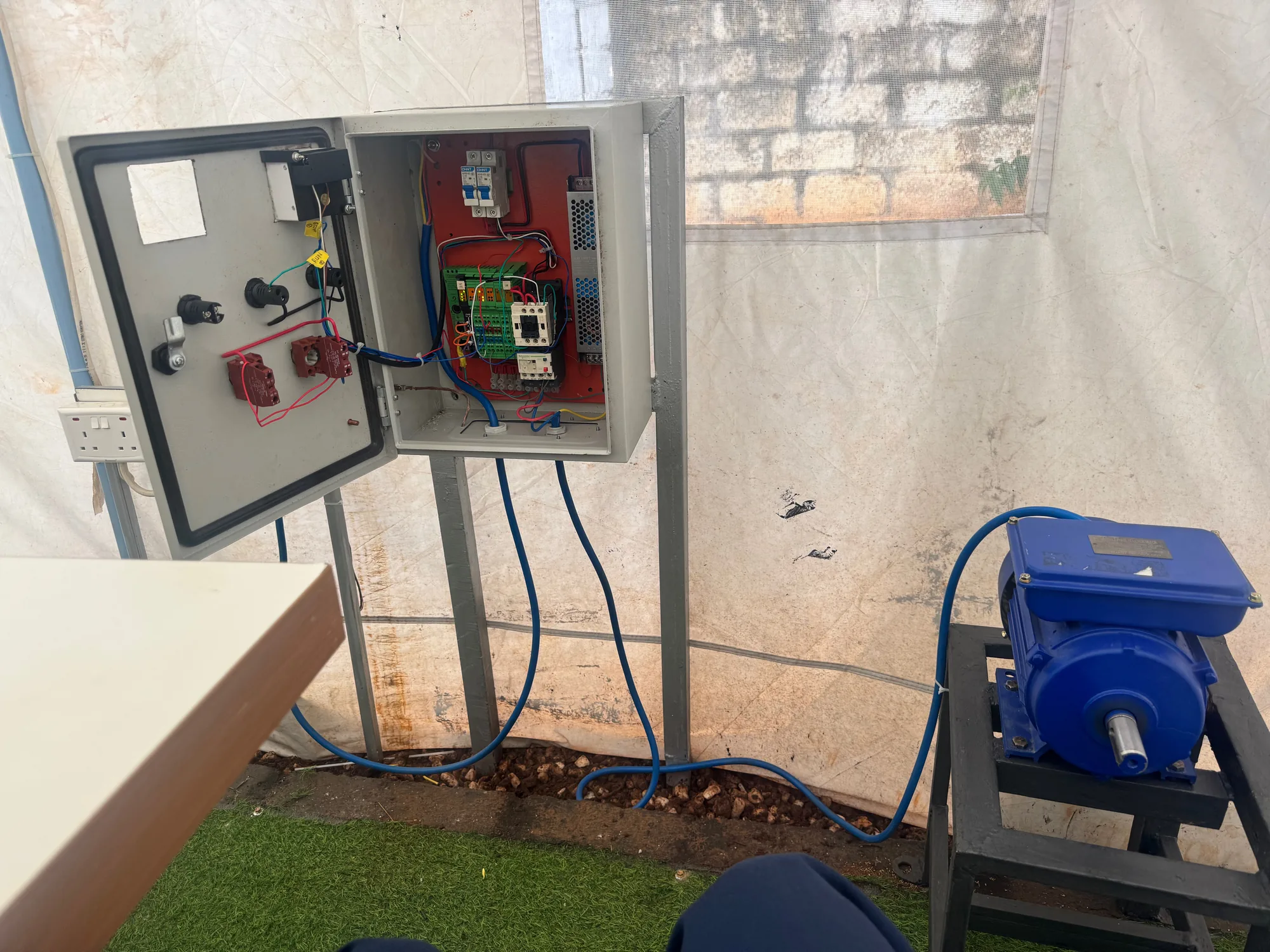
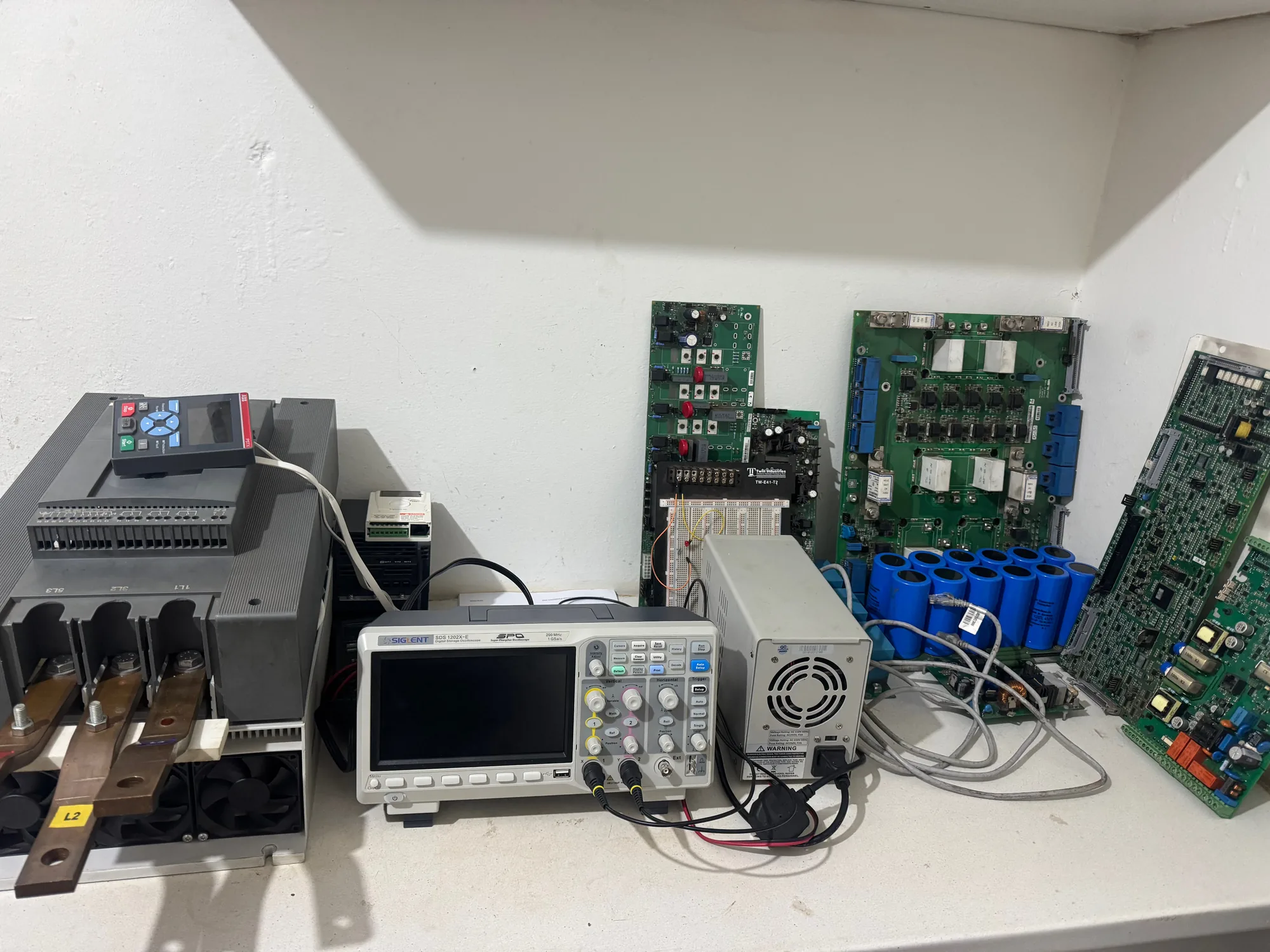
We laid out a new printed circuit board, wrote the firmware, built the board in our Lusaka workshop, tested it on the bench with Lusaka Water's own contactor and soft starter, and commissioned it on site. The board carries the line "Designed in Zambia by HERO".
The result
The replacement card has been running at Lusaka Water since February 2026 with zero failures. The pump runs instead of waiting for a part that no longer exists, and the machinery around the card did not have to be replaced. We have written the design up as a study, which has been submitted to the journal MDPI Electronics.
The same problem is probably in your plant
Lusaka Water is not unusual. We see the same pattern across Zambian industry: milling machinery, processing plants, telecom site power and broadcast transmitters all depend on control electronics whose manufacturers have moved on. The machine is sound. One board is not, and nobody sells it any more.
Before you scrap equipment, or budget for a full replacement because one card is discontinued, do this:
- Keep the failed board. Even a burnt card still shows how its circuit was built, and it is the fastest route to a replacement.
- Photograph it on both sides, together with the nameplate of the machine it came from.
- Note when it fails. After storms, or when power comes back? Suspect surges. In the hottest part of the day, or in a closed panel? Suspect heat. Often it is both.
- Check the enclosure. Blocked vents and dead cooling fans shorten the life of any electronics.
- Send us the photos. We will tell you whether the card can be repaired, needs a redesign, or is not worth either.
When the original manufacturer says "discontinued", we design the replacement and build it in Zambia. See our electronics design and PCB work, soft starter repair and the Lusaka Water case study, or WhatsApp a photo of your failed board to +260 974 546 632. You can also email sales@hcsys.co.